The character
Kermit is a green frog puppet created by Jim Henson. According to widely cited information, the character first appeared in 1955 on local television in Washington, and later became a central figure of The Muppet Show and Sesame Street. Kermit is a host, good-natured and a bit flustered, which makes him recognizable to several generations of viewers.
The character combines childlike softness with expressive mimicry, which makes him easy to carry over into different contexts. It is precisely this versatility that made him convenient material for internet jokes.
Early internet memes
In 2014, memes featuring Kermit drinking tea began to spread on social media. The character comments on events with an expressive look, and the format was used for passive-aggressive remarks and irony about norms of online behavior.
The same year saw the appearance of "Evil Kermit" — an image tied to the character Constantine from the film Muppets Most Wanted. It spread on Twitter and was used to describe temptation and bad decisions. In 2016, "Sad Kermit" gained popularity, becoming a universal expression of gloom and awkwardness.
The photograph in the catalog
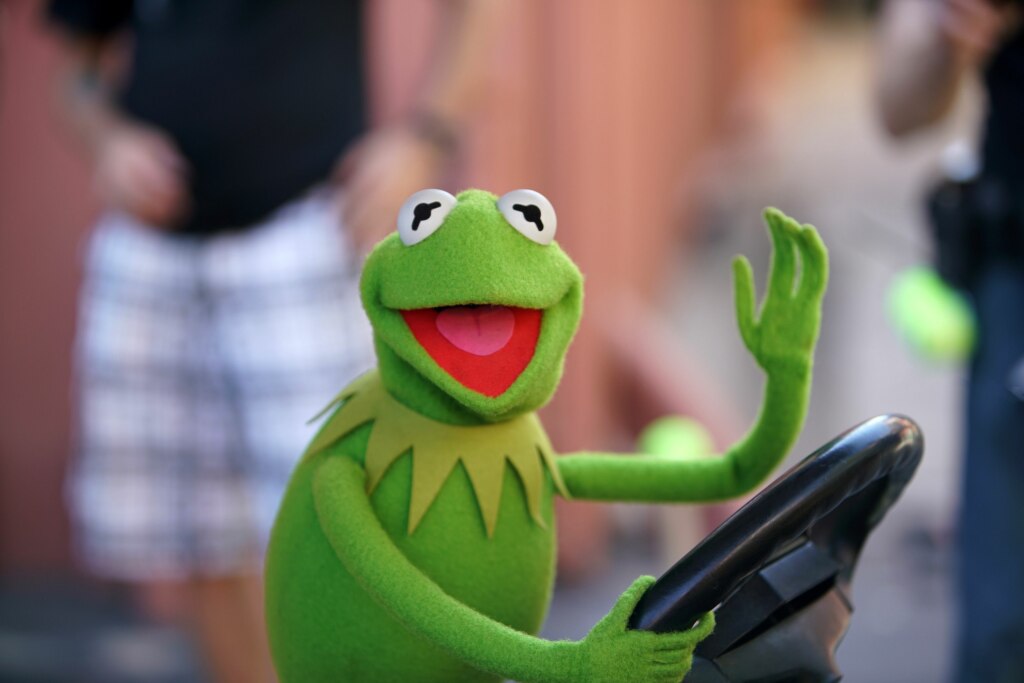
The image in the catalog shows the Kermit puppet behind a wheel, with a raised hand and an open mouth. The background is blurred, with figures of people visible behind it. The frame matches the character and the catalog's theme.
The origin of this particular photo as a meme has not been established: the context in which the photo first became part of internet jokes is not known, so it cannot be tied to a specific format or date.
Why Kermit became a meme
The main reason is recognizability. The character was known to many viewers long before the memes appeared, so his expressions are easy to read. The emotions he conveys — confusion, sadness, awkwardness — match everyday experience, which makes them easy to apply.
The second reason is the flexibility of the formats. The same image can receive countless captions, and GIFs and short clips allow action and intonation to be conveyed. Instagram and Twitter contributed to the spread, as images were reposted and reworked there repeatedly.
An additional factor, it seems, is that the character was originally conceived as a good-natured commentator on what goes on around him, rather than as a lead character with an elaborate storyline of his own, which makes it easy to transfer his reactions onto all sorts of everyday situations.
Durability of the image
Kermit remains one of the longest-used characters in internet culture. Images of him have appeared on different platforms, and new formats have arisen on the basis of older ones. This is tied not only to individual memes but also to the fact that the character is perceived as an emotionally clear sign.
It is important to separate the character himself, created within the tradition of children's television, from his use online. Memes do not change the character's origin, but they do shape how a wide audience perceives his image today.
Besides internet memes, Kermit's image has periodically been used in advertising campaigns and public initiatives, which, it seems, has also helped continually renew interest in the character among new generations of users. This overlap of commercial and meme-based use often extends the life cycle of popular images.