What's shown in the photo
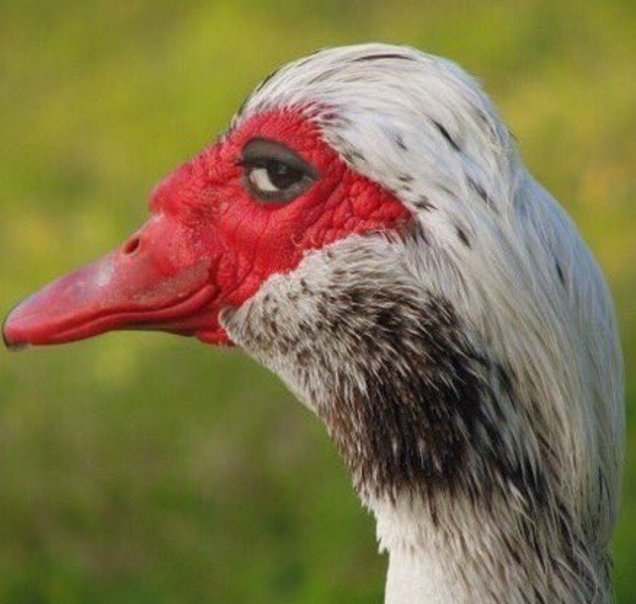
At the center of the shot is the head of a Muscovy duck (Cairina moschata), a large domestic breed raised on poultry farms and in private households. The bird is photographed in profile against a blurred green background. What catches the eye most is the bright red skin around the beak and eye, along with the pale plumage with dark speckles on the neck and the back of the head. The beak is adorned with a reddish growth resembling a small knob at its base.
The most important thing in the shot is the gaze. The bird's eye is turned toward the camera, and the white visible in the corner of the eye creates the impression that the duck is looking sideways, from under its brow. The expression comes across as sly and wary, as though the animal has something planned and is waiting for the right moment. It's precisely this effect that turned an ordinary photo of a domestic bird into a subject for jokes: the viewer fills in the story of a secret plan on their own.
Origin and spread
The meme's origin hasn't been established: the author of the original photo and the place where it first appeared online aren't reliably documented. The entry lists 2017, and that's the earliest date that can be relied on: earlier publications of the photo couldn't be verified. Given how quickly the image became recognizable from a single pose, it was well suited to short reactions in comments and discussions.
The name "Sly Bird" (known in English as "sly duck") became attached to the image during the process of its spread. It isn't tied to one specific caption but describes the expression itself. So the meme exists under several translated names and labels, and in discussions it's often referred to simply by the emotion it conveys.
How the meme is used
A typical caption follows the pattern "when ... and you've already figured it all out." The duck becomes a character who knows more than it's letting on. It's used to depict feigned friendliness, secret collusion, an attempt to look innocent after a prank, or quiet gloating. The image works as an "I see everything" reaction, so it's often placed under text where the other person is pretending nothing is going on.
Sometimes the meme is applied ironically to oneself: a user captions their own photo or message with it when they're trying to look calm while actually scheming something. The tone of the joke is good-natured: the target of the mockery isn't a specific person but a general notion of slyness, which is why the picture fits easily into any topic, from everyday matters to politics, while remaining harmless.
Why the meme became popular
The meme's strength is its simplicity. The shot reads instantly, without needing any context: a bird, a red beak, a sideways glance. One shot is enough for the joke, and the caption can be anything. Such images work well in a feed because they need no explanation and are understood by speakers of different languages, which matters for spreading through translations and local caption variants.
There's also a psychological mechanism at play. Animals that look at the viewer intently and somewhat distrustfully are easily anthropomorphized: we attribute human motives to them. The duck in the photo looks as though it knows a secret, so any caption about secrecy or cunning immediately starts to work. This effect is what makes the meme long-lived: it doesn't go stale, it just changes topic while staying recognizable.