Where the phrase came from
The expression "Oh my God" is among the most frequent exclamations in English speech, and its emotional charge is familiar to many thanks to TV shows and films. In the Russian-speaking internet the phrase began to be written phonetically, producing the variant "o may gad, o may gad." Repeating the two words in a row preserves the English intonation: it is exactly this repetition that makes the exclamation sound like genuine shock rather than a calm remark.
The distortion here is deliberate and comic. The phonetic spelling looks illiterate or pointedly colloquial, and this contrasts with the drama of the exclamation itself. That contrast became the basis of the meme: a serious emotion expressed through absurd spelling, with the cat in the picture adding yet another layer of absurdity.
The image of the cat
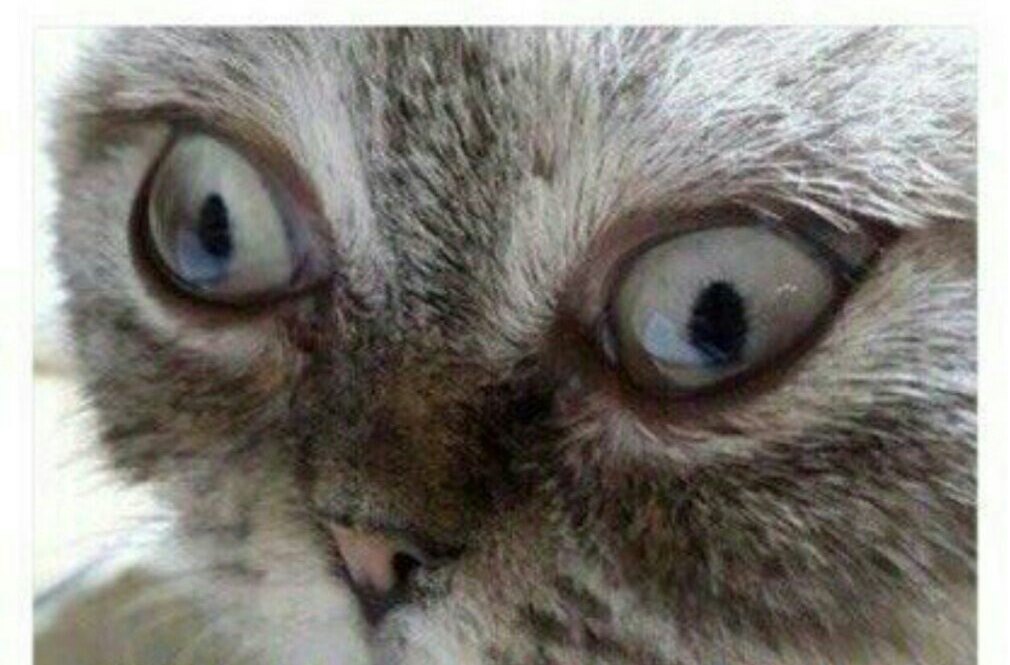
The photograph shows a cat's face in extreme close-up, shot almost point-blank. The fur is tousled, the nose and part of the whiskers are only partially in frame, and the main thing that draws attention is the wide-open round eyes with dilated pupils and pale irises. The gaze is aimed directly at the viewer, and it seems as though the animal has just seen something unthinkable.
This shot reads without a caption: the cat is clearly frightened or stunned. That is why users chose it for reactions to unexpected news, loud events, or situations that defy comprehension. Combined with the phrase, an ordinary photo turned into a complete emotional statement that could be sent in a single line.
Spread
The meme gained wide circulation in Russian-speaking communities in 2017, when the captioned pictures began appearing en masse in comments, on forums, and in private messages. The format was convenient: one image and a short line were enough to express an emotion without a long text.
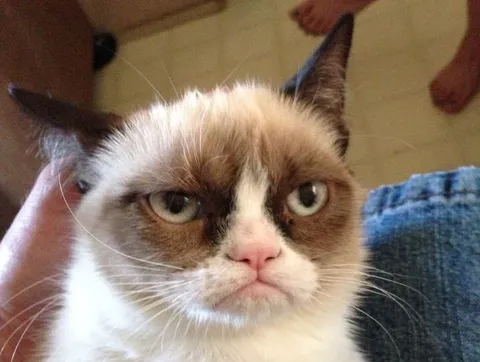
Like many reaction images of that time, the meme existed in a multitude of copies with different crops and captions. Users often changed the text above the cat while leaving the phrase itself unchanged, creating a series of images similar in mood. The meme is usually classed in the thematic group about animals, with cats taking center stage in it.
A separate point of interest is how the meme changed its form over time: the phrase was written in all caps, vowels were stretched out, or extra characters were added to convey an even greater degree of surprise. These changes required no technical skill, so anyone could adapt the picture to their own mood. In private messaging this practice continued even after the first wave of popularity had subsided.
Use and meaning
Today the meme serves as a short reaction to unexpected news, absurd situations, or one's own blunders. It works both as a joke and with a touch of self-deprecation: the person shows they are shocked but does not take what is happening too seriously.
It matters that the meme does not rely on mocking a specific person. Its meaning is centered on the emotion and on the contrast between the dramatic phrase and the bewildered cat, which is why it is easily adopted by different audiences, including both children and adults.