Caption examples and their logic
The template works when the phrase “I see him everywhere” collides with a familiar routine.
“Wherever I go, I see Monday everywhere.” The hero's image turns an abstract day of the week into a personal enemy. This shift of the object is what makes the caption funny.
“Wherever I go, I see a reminder from the bank.” The anxious pause and the epic pose create drama, while the occasion turns out to be a phone notification. The gap between scale and occasion works already by the second word.
“Wherever I go, I see that payday is still nine days away.” The character's emotion is recognisable, and the specific number adds precision. The more precise the detail, the higher the chance the viewer recognises themselves.
“Wherever I go, I see my cat on the windowsill.” Here melancholy turns into tenderness. The change of addressee shows that the template works for warm captions too, not only for irony.
What is visible in the frame
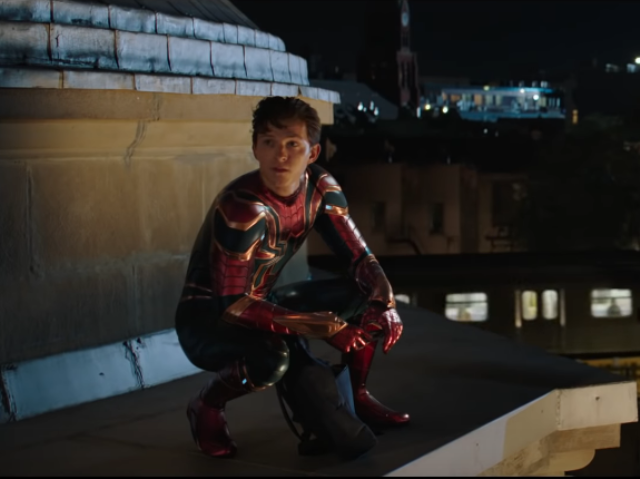
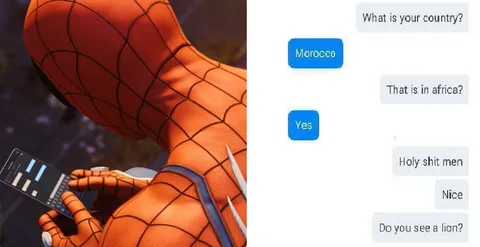
The hero is crouched on the edge of a flat rooftop beside a stone parapet. The suit is dark red with gold metallic details on the chest, arms and legs; he wears gloves on his hands and tall boots on his feet. The background is night: in the distance the lights of buildings are blurred, a dark spire is visible, and a lit building stands out. Light falls from the side and picks out the figure against the darkness.
The pose is calm but tense: the hero leans slightly forward and looks away from the camera, as if he has noticed something or is lost in thought. It is this expression that makes the image convenient for jokes: the viewer sees pensiveness or longing, and the caption supplies the reason. The frame itself carries no caption, and from it alone one cannot tell where the scene was shot, so the discussion below turns to the film and the trailer.
The scene the template grew from
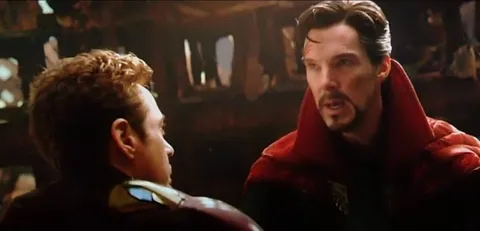
The film Spider-Man: Far From Home was released in cinemas in summer 2019. The trailer appeared on May 6, 2019. In one scene Peter Parker, played by Tom Holland, looks at graffiti of Iron Man and recalls Tony Stark. The hero's line, in Russian, sounds roughly like this: wherever he goes, he sees his face and misses him terribly.
The scene immediately drew viewers' attention, because after the finale of Avengers the theme of loss was still fresh. The meme rests on emotion: a sentimental moment is transferred to any picture, and the sadness becomes funny because of the mismatch.
The first versions online
According to data cited by meme reviews, the spread began on the day the trailer came out, May 6, 2019. The earliest known video version is said to be an Instagram clip that gained more than 1,600 likes within three days. Roughly an hour later another version appeared that received noticeably more views. The earliest known image is considered to be a Reddit post from the same day that collected more than 9,600 upvotes within three days.
The format then spread across Instagram and Reddit: ready-made templates appeared into which one could insert one's own picture, and video versions with different music. Which version was truly first has not been established for certain: the wording “earliest known” means that an earlier publication cannot be ruled out.
How to handle the template
The phrase in the template sounds sad, so it is better to use it where the object of the worry is harmless: a thing, a habit or a circumstance. Do not attach the caption to a real person who might recognize themselves and take offence.
If the caption is long, the effect is lost. One short phrase with a specific detail works better than a long explanation, and the frame itself sets the mood.