What can be seen in the frame
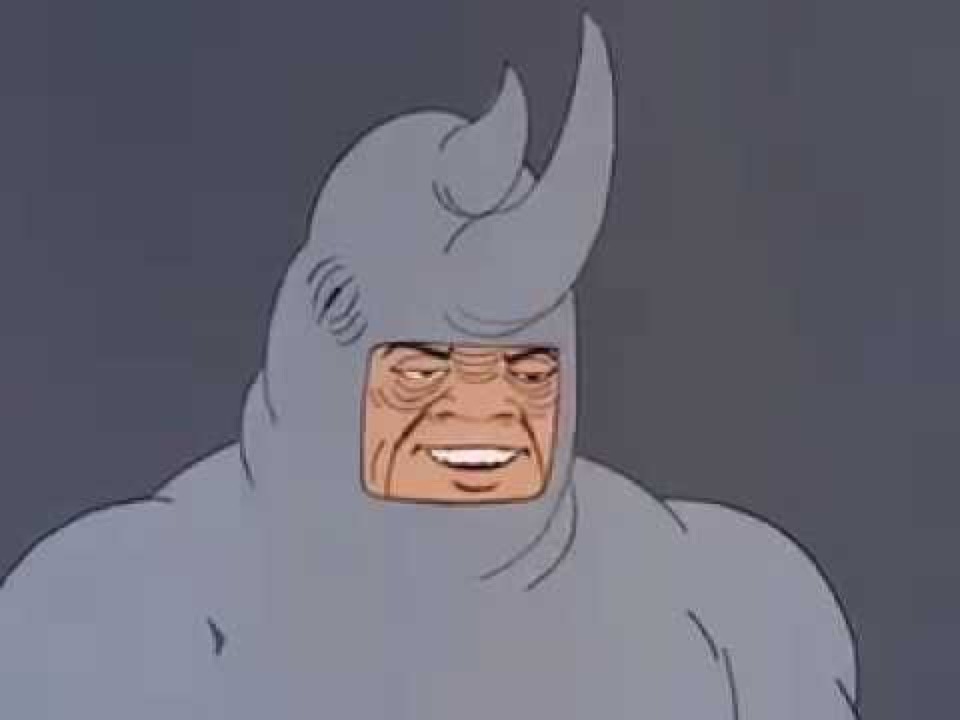
The picture shows a gray figure with broad shoulders and a large horn, above which a second, smaller one is visible. The background is flat blue-gray with no objects in it, so attention goes straight to the face.
The man's face sits in a rectangular slit in the suit. It is drawn in the same flat manner as the rest of the image: half-closed eyes, forehead wrinkles, and a wide grin with visible teeth. This grimace sets the tone for the whole frame: the character looks confident in himself, although no reason for that confidence is shown.
The series and the character
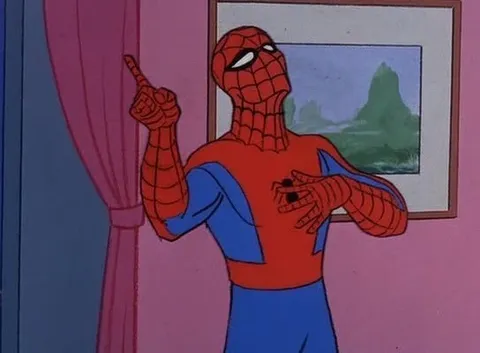
The animated series “Spider-Man” aired on ABC from 1967 to 1970. The Rhino is a villain from the Spider-Man comics, created by Stan Lee and John Romita Sr. The character is built on animal traits: a horn, a massive body, and brute force.
The animation in the cartoon is economical and sparse, so individual frames look stiff and facial expressions appear sharp and exaggerated. This very quality is what made many of the series' frames convenient for memes.
What is unknown
When exactly the frame began to spread as a meme, who captioned it first, and where it first appeared have not been established by reliable sources. Mentions of specific users do exist, but it is not worth tying the template to a single name.
So in describing the template it is more sensible to rely on the image itself and on how it is used now: as a reaction to a smug statement that has not yet been backed up by anything.
Caption examples
A few invented variants.
“Said I'd send the report on Monday, and have already repeated twice that everything is under control.” The caption describes confidence without evidence, and the grin shows that the person is pleased with himself even though the facts are not ready yet.
“When someone in the chat asked who did the renovation, and I can see that everything is crooked.” The reaction comes before the answer and gives away what one would rather not say.
“Explained why the plan works before looking at the estimate.” The joke is built on the shift from confident speech to a sudden fact, while the grin stays the same.
“Agreed to the meeting because I thought it would be short.” The grimace becomes a reaction to a meeting that dragged on.
What makes the grimace memetic
The face in the rectangular slit looks slightly tilted and seems to wink, and the half-closed eyes combined with the wide smile suggest that the character knows more than he says. This combination reads as smugness or mild slyness. The still background does not distract, and the crude drawing adds comedy: the emotion looks exaggerated, almost theatrical. Because of this, a caption can shift the meaning of the frame in any direction, from pride to barely concealed gloating, and the picture still remains convincing.
How to use the image
The frame works best where a reaction to a smug or overly confident statement is needed. The grin tells the viewer that the hero is pleased, and the caption specifies with what.
If you want to add your own variant, keep the facial expression as the main element and make the caption shorter. The fewer words there are, the better the contrast between the grimace and the text works.
Do not use the image to mock real people: it suits jokes about situations and habits, not about appearance.