Two versions of the hero and one phrase
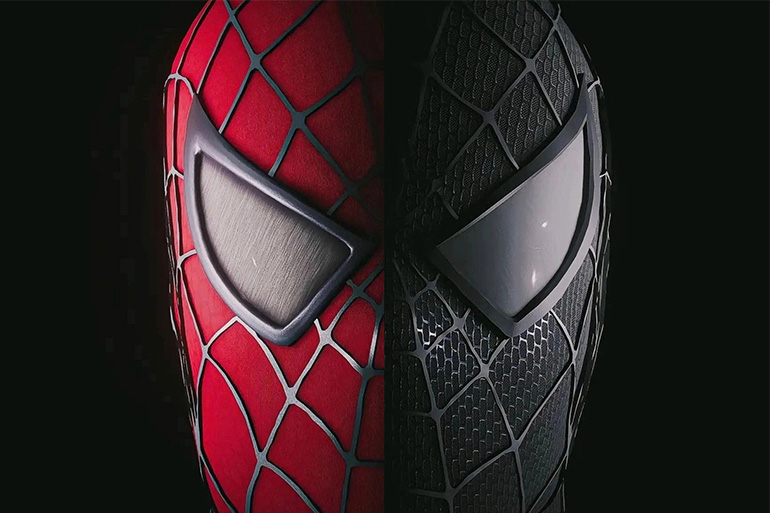
The local image shows large close-ups of Spider-Man masks side by side: the familiar red-and-blue webbed one and the dark version of the suit. The meme uses them as two sides of a single line. At first the phrase sounds ordinary, but on a second read it takes on a double or indecent meaning. The shift from the classic hero to the "dark side" visualizes the change in interpretation, not a separate transformation storyline.
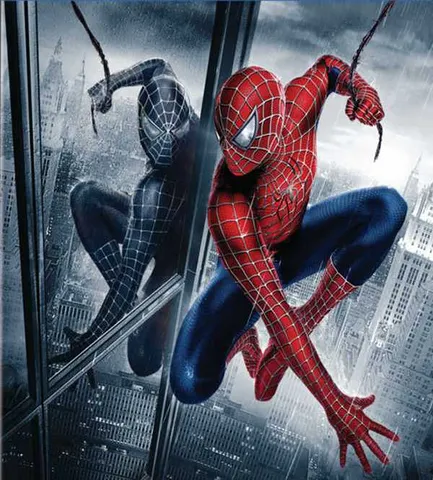
The format spread in short videos in late September 2023 and produced many user variants. It doesn't necessarily tell a canonical story about the character: the red-and-black pairing serves as a visual cue for the wordplay. In static remakes, other characters can appear instead of Spider-Man, but the principle stays the same — an ordinary reading gets replaced by one the viewer normally wouldn't say out loud.
Double meaning as the mechanism of the joke
The first part of the caption should sound natural and innocent. The second adds context that changes the meaning of what was already said. It's precisely this retrospective shift that triggers the reaction: the viewer goes back over the words and realizes they could have been read differently. If the double meaning is too convoluted or depends on a random homonym, the shift won't land; if it's too obvious, the joke loses its surprise.
The format often leans on adult or crude undertones. So it's important to consider the audience and not aim the double meaning at someone who doesn't want to be the subject of this kind of humor. Safe variants can be built around harmless words with two meanings: "hit the gym," "catch a wave," "pick up." The comedy can be ambiguous without being sexually degrading.
Examples with an innocent twist
One working version: "My friend finally caught my wavelength" — and the next shot clarifies it's just about both of them reacting the same way to a dumb joke, nothing more. Another: "My neighbor's going to go to the gym" — and the next shot shows not a gym, but a building residents' meeting. In both cases the first phrase allows a double reading, and the switch to the dark mask only hints to the viewer that an unexpected turn is coming; the reveal itself stays good-natured and doesn't need a crude undertone.
You could use the format in a study chat: "I finally figured out how to put a period on it" — the first version about punctuation, the second about the project finally being closed. For an everyday post: "Picked up" first reads as answering a call, and the next shot with grandpa's armchair and a pipe reveals a completely different kind of "pipe." When making the image, caption both readings clearly enough that the reader can see exactly where the meaning shifts.
Mind the boundaries and don't confuse canon
The meme suits wordplay, a quick wink, and situations where a single line gets a second reading. It works better with an audience that understands the Russian or English turn of phrase, and worse when the phrase needs a long explanation. If the meaning is indecent, don't spread it in a work or family context without understanding who the joke is aimed at.
Don't claim the image shows Peter Parker's official turn to villainy or a scene from a specific film. The local card uses the juxtaposition of costumes as a visual device; it isn't a historical illustration of the comics. The article should describe how the format works rather than attribute invented lines to the characters. That way the double meaning stays an original joke and doesn't get mixed up with the character's actual history.