From a pet photo to an exaggerated gaze
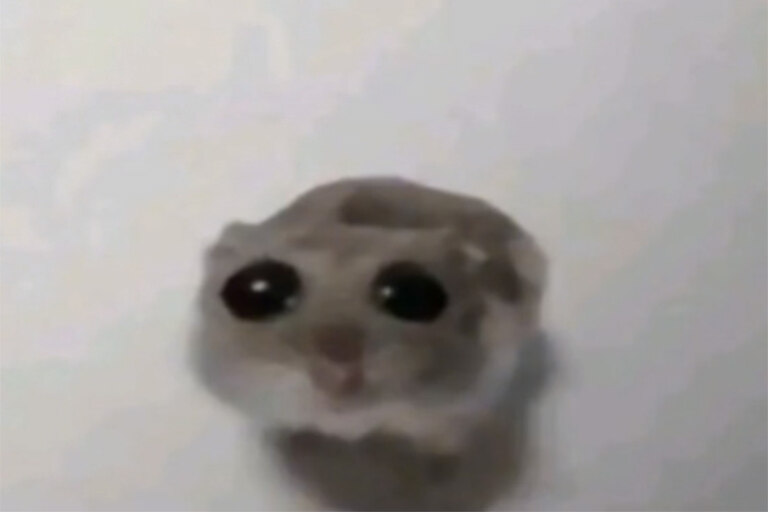
A picture of the pet who became known as Alto appeared online before the viral video template. In February 2024, the TikTok creator afekix posted a video with the hamster's eyes digitally enlarged and the tune "Woe Is Me!" by Richard Myhill, familiar from SpongeBob SquarePants. Soon captions about small defeats and self-pity were added to the image. Some write-ups trace an earlier photo to a 2014 Reddit post; that helps follow the image's history, but does not mean the current music meme already existed then.
The local picture is a very low-resolution close-up of a gray hamster on an almost white background, with dark round eyes and a small nose. It has no violin, captions, or obvious crying; the sadness is the meme's reading of the gaze. The image alone does not show the animal's actual mood.
Self-pity on a rodent scale
Most often the hamster is placed after a first line about a setback, and the caption provides the contrast: the problem seems huge to the narrator but looks small from the outside. The violin theme adds parodic sorrow, as if someone were already playing a doleful soundtrack for an unfinished coffee or a lost round. The big eyes heighten the feeling of a plea for sympathy, though this is not an objective description of the pet's emotion.
The template also has a mild reaction version, where the hamster simply looks at an unpleasant fact. It is important not to present the sad look as proof of suffering, and not to film an animal in a stressful situation to resemble the meme.
The video template changes the scale of the trouble: the narrator's big upset is reduced to a small pause that can be survived with theatrical self-pity. The comic effect comes from the narrator and the editing; it does not require believing that the pet is unhappy.
A small defeat with a sad soundtrack
First slide: "I ordered coffee without syrup to be a grown-up." Second, the hamster under sad music: "The barista asked if I was sure." The second line turns a minor awkwardness into a tragedy and explains the sad look. Another example: "When I opened the fridge for dessert and there was only a container of yesterday's rice." The musical pity turns out to be too strong for an everyday disappointment.
For school: "I prepared one answer out of twenty questions and really hope that's the one they ask." The humor here comes from the mismatch between optimism and preparation. All the captions are new, not quotes from afekix's video or from the pet's owner.
Make the reaction relatable, not cruel
In a short video, you can show the cause of the upset first, then a close-up of the hamster and a fitting piece of music. A static version also works if the caption is clear without sound. Knowing the original animal is not necessary: what matters is the contrast between big pity and a small problem. But if you use the pet's photo, do not attribute participation in a particular joke to its owner without grounds.
Do not digitally enlarge the eyes in a real video without a note, if viewers could mistake the effect for the animal's state of health. Do not shake the cage, scare the hamster, or provoke stress for a reaction. The meme already exaggerates the expression, so it is safer to use the existing template or draw a fictional creature.