From photograph to exception to the rule
The image had been known online already in June 2018: one of the early traces refers to a 9GAG post from June 7. Later the photo was spread in entertainment roundups. These appearances show that the picture existed before the famous dialogue, but they do not establish who first made or posted the photograph.
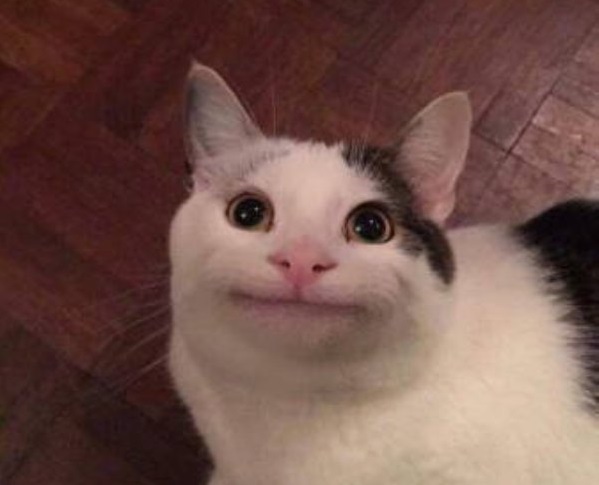
On July 2, the Instagram account livewithflip published an invented exchange between a tenant and a landlord. At first the landlord reminds of the pet ban, then sees the cat and agrees to an exception, because the cat looks polite. The next day the exchange was shared in Reddit communities. The portrait received the name Olly, and the formula for admission allowed the cat to be swapped for other unexpected candidates.
A smile without correspondence
Here the cat sits on the floor and looks straight into the camera. White fur surrounds the muzzle, gray patches are visible on the head, and a pink nose sits above the closed mouth. Round dark eyes and a small smile create the impression of attentive waiting. The image contains no messages, no landlord’s name, and no rental rules: only the portrait is left for an independent reaction.
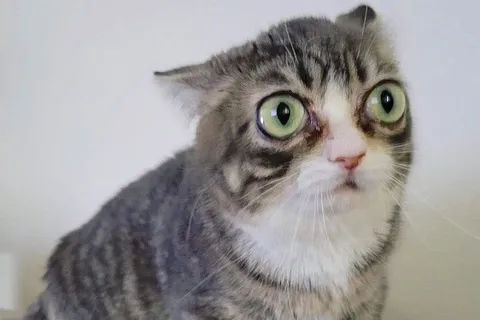
The famous picture has a separate grotesque remake in which the eyes are moved to the ears, and the nose and mouth are enlarged. It also circulated in summer 2018, but here the eyes are in their usual place. This difference changes the mood: this cat looks like a restrained guest, while the version with broken proportions works as an absurd, slightly unsettling creature.
Politeness the viewer completes
The comic effect comes from a human assessment of an animal. An ordinary cat cannot present references or promise to abide by a lease. Yet the calm little face becomes an imagined proof of good manners. The viewer seems to see a candidate who thanked in advance for the invitation, sat down neatly, and now patiently waits for an answer. It is precisely this completed role that explains the name.
Without a conversation, the portrait can depict a restrained request, an awkward thank-you, or a smile a person keeps on during a dull meeting. Its convenience lies in the weak emotion: there is no open joy, fear, or irritation. The caption determines what hides behind the politeness. It can show both sincere friendliness and a cautious “I understand everything,” behind which a small private wish remains.
Three invented polite requests
An invented example: “May I have one more piece? I haven’t even looked at the plate for the last three seconds.” The cat plays a guest who tries to present impatience as self-control. The second variant: “When you arrive before the hosts and smile at the door so it doesn’t feel pressured.” Politeness is transferred to an inanimate object, which makes it especially absurd.
Third scenario: “I’m at the cashier after asking whether there is anything smaller than my only bill.” The polite smile expresses readiness to cooperate with a complete absence of a solution. All these situations are invented and use the portrait separately from the rental story. If desired, the same image can end a short dialogue: a request is refused, then the cat appears, and the refusal suddenly softens. In this construction, outward good manners become an independent comic argument.