A reaction without an invented backstory
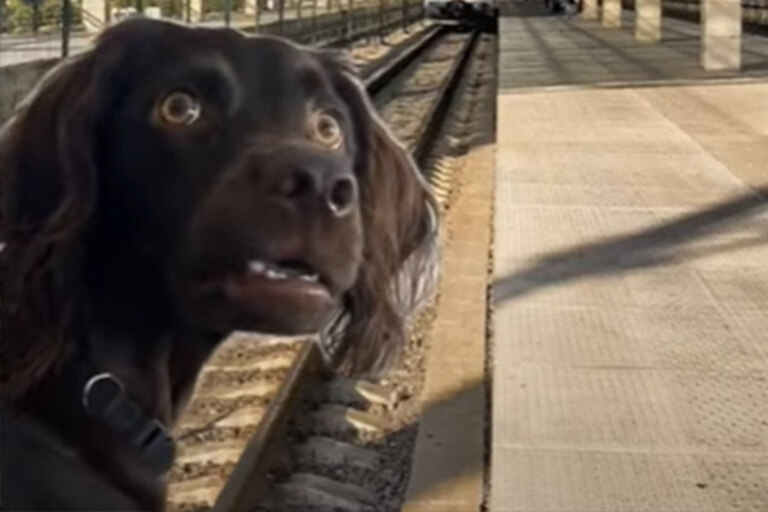
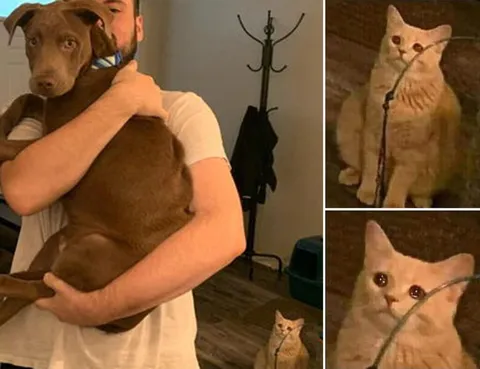
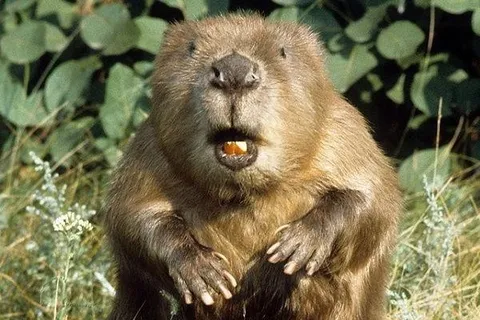
In the image, a dark-colored dog looks off to the side with wide-open eyes — the look reads as fright or surprise, but the animal's name, the location, and the reason for the reaction can't be determined from a single frame. Similar clips exist online with different dogs and captions, so it's safer to describe only the visible expression rather than attribute a confirmed backstory to this particular dog.
The meme became understandable through its universality: the animal looks as if it's been caught off guard. It could be fear, suspicion, bewilderment, or just a well-timed look — the comedic edge comes from the caption. The viewer recognizes the moment when the body reacts first and only afterward does the mind try to figure out what's happening. There's no need to claim the dog is actually frightened: the photo shows an expression but doesn't reveal its inner state or the cause.
A recognizable moment of confusion
This kind of frame works well as a silent response to an unexpected line. The first line can set up the situation, while the image conveys the inner question: "Is this seriously happening right now?" Unlike a grimace of anger, the frightened muzzle doesn't accuse the other person; it captures the brief pause when someone hasn't yet figured out how to react.
The joke is stronger when the occasion is very specific and trivial. For example, someone hears that a meeting was moved five minutes earlier, or learns that a friend put salted syrup in their coffee. Ordinary news gets a dramatic reaction. At the same time, the meme can also express genuine discomfort, and in that case it shouldn't be used as a substitute for a direct explanation if the person is asking for the jokes to stop.
Captions for chats and everyday life
In a group chat: "When you said 'be right there' and then saw the delivery had already arrived." The situation is familiar to many, and the frightened look conveys the sudden realization that there's no time left at all. Another option: "A friend texted 'got a question' with nothing else." Here the image illustrates the anxious wait between a short message and its explanation.
In a family chat you could add: "When you heard that tonight's dinner is being made by the person who usually only picks the recipe." This isn't a judgment of a specific relative's cooking skills, but a joke about an unexpected swap of roles. For originality, it's best to pick situations specific to your own circle: a popular reaction feels fresh when the caption hits your group's shared experience exactly, rather than repeating an abstract "me, when..."
The ethics of using an animal's image
The template suits surprise, awkward suspicion, an unexpected request, or a moment when plans suddenly change. It can be used in light correspondence and reaction posts. If a more precise shade of meaning is needed, the caption should set the context: without it, the image reads equally as fear, delight, or bewilderment.
Don't claim the animal was put under stress for the sake of the shot, and don't retell an unverified story about how it was filmed. Also, don't make jokes that encourage scaring pets to get a similar reaction. The most responsible use sticks to the expression already visible in the frame and maps it onto human bewilderment. That keeps the meme funny without turning the dog's actual well-being into grounds for provocation. The caption can point to an unexpected remark, a sudden change of plans, or a strange request, leaving the viewer room to recognize their own reaction rather than ascribing a precise emotion to the animal.