What the nicknames mean
The word "улыбака" ("smiley") is formed from the verb "улыбаться" ("to smile") following the pattern of colloquial nicknames, while "подозревака" ("suspicious one") comes from the verb "подозревать" ("to suspect"). Both words express an emotion the viewer sees on the animal's face, suggesting the dog is somehow taking part in a human situation. These word forms belong to colloquial speech, and such coinages are usually easy to understand without a dictionary, since they're built on familiar verbs.
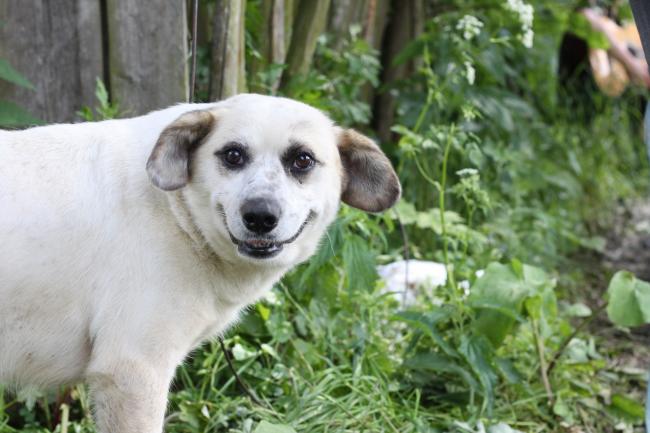
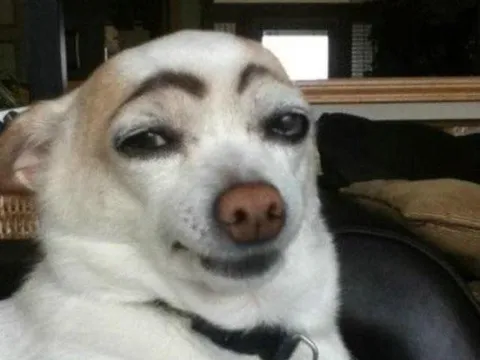
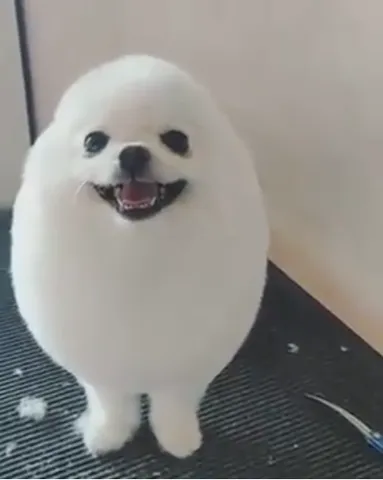
In the photo that usually gets labeled "the smiley one," a white dog with dark ears stretches its muzzle into a grin, showing its teeth, and looks off to the side with a cheerful squint. The expression comes across as good-natured and a little sly at the same time.
Origin of the tradition
The tradition of naming dogs after their facial expressions arose in Russian-speaking communities, where users actively traded photos of their pets. The reference point is 2009, though who first proposed nicknames like these has not been established. Photos of dogs were widely posted on social networks in that era, and captions for them quickly became their own genre of comment.
Nicknames like these are convenient because they convey character in a single short word. Instead of a long description, it's enough to name a photo with one concept, and the other person immediately understands what emotion is meant. Similar nicknames often sprang up under photos in the comments, where caption writers tried to capture a mood in one word. Comparable nicknames can be found in other language communities too, where users describe animals by their facial expressions, but the Russian-language tradition settled specifically on these two words.
How the joke works
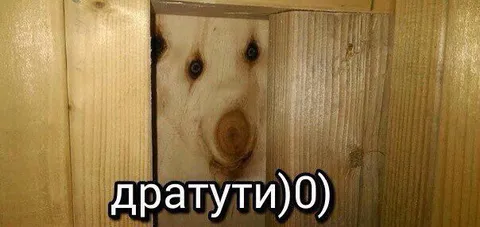
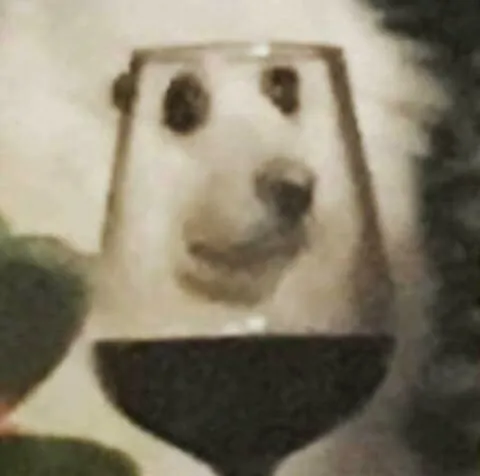
The meme runs on anthropomorphism: people are naturally inclined to see human emotions in animals' faces. The dog in the photo really does look as if it knows something funny, and the caption adds a conspiratorial edge to that impression. It's worth the reader keeping in mind that such readings are subjective and have nothing to do with the dog's actual mood. The viewer picks up on the emotion instantly, because the animal's face resembles human expressions: raised lips or narrowed eyes.
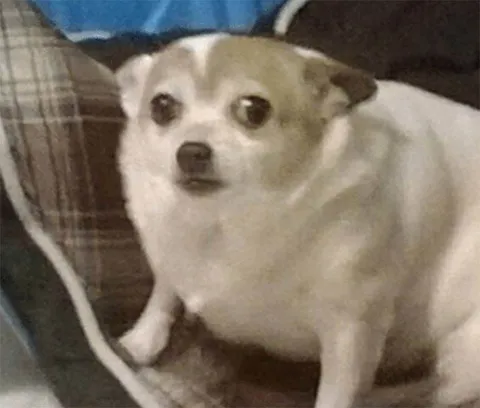
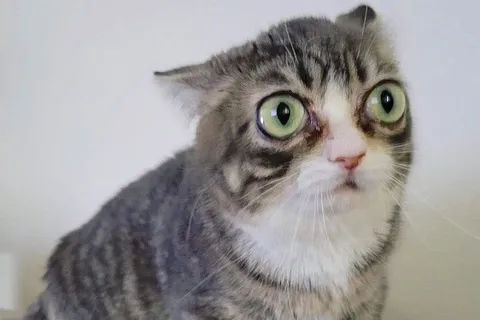
The pair of nicknames forms an amusing opposite. The smiley one looks pleased with life, while the suspicious one eyes what's happening with distrust, as if expecting some trick. Together they describe two poles of canine expression and let the same photo be played for different meanings.
Spread
The nicknames spread through themed public pages, comments, and collections of funny photos. Users captioned pictures of their own pets with them, creating their own versions, which kept the tradition open to anyone who wanted to join in. In themed groups, the nicknames were often accompanied by short explanations, and those explanations helped newcomers understand exactly what was meant.
Over time, other nicknames appeared on the same principle, for example for dogs with a sad look or an especially serious expression. This kind of wordplay became part of everyday language among animal lovers, which is why the meme carried easily into new discussion threads.
Current usage
Today the nicknames are used in conversations, photo captions, and joking collections. They remain understandable without explanation, since they rely on recognizable expressions. In conversations about dogs, these words function as a shared code, a way for participants to show they understand each other without spelling things out.
It's worth noting that the meme is rooted in good-natured humor: it doesn't mock the animal but highlights its expressiveness, which endears it to viewers. That's exactly why nicknames like these are still found in conversations about dogs.