What the picture shows
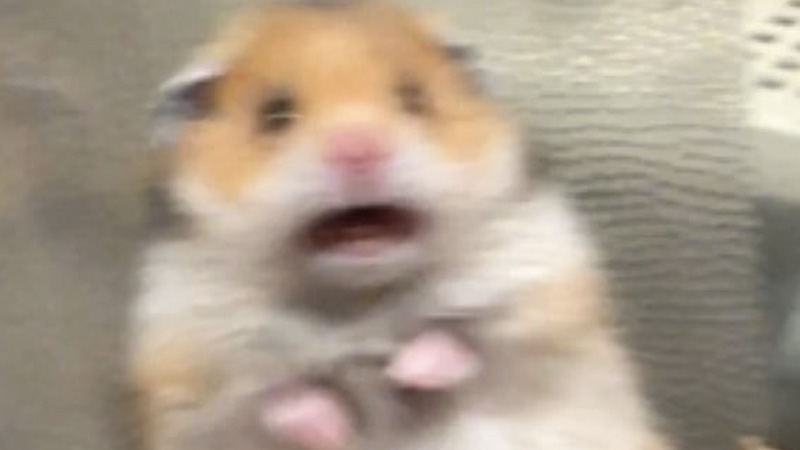
The frame is large and smeared: the hamster fills almost the entire screen, and its red cap on the head and light fur on the muzzle and chest are blurred, as if the camera jerked at the moment of shooting. The mouth is wide open, with a dark gap inside, and small black eyes look straight into the lens. The pink paws are raised and pressed to the chest, and the pose reads as defensive.
The background is gray-beige, and in the upper right corner there is a light grid-like detail that resembles the edge of a cage or carrier. There is no text or caption in the frame, so the meaning of the joke is created entirely by the expression on the little face and by whatever the author adds to it.
What is known about the origin
The reliable original source of the frame is unknown: neither the author of the shot, the exact date of first publication, nor the original clip has been established. It is often said that the picture was cut from a video, and the blur does look like a freeze frame of moving footage, but this is only a plausible assumption.
Do not confuse this frame with other hamster memes. There are separate hamster stories, each with its own years and its own history of spread, and their origins cannot be transferred to the scared hamster.
The emotion in the picture is what the viewer sees, not a proven state of the animal. The hamster could have been yawning, sneezing, or simply turned its head sharply. The meme holds on to the reading of the frame, not on a known story about a specific event.
Why viewers read fear
Scale contrast is at work here. A tiny creature with its mouth wide open looks more dramatic than a person in the same pose: a small being experiences a “big” catastrophe. The blur adds a sense of sudden movement, as if something happened a split second ago.
The smearing also erases detail. It is not visible what exactly frightened the hamster, and the imagination supplies the cause on its own. That is why the caption can be anything, from an everyday trifle to an absurd threat, and the frame fits all of them. The paws pressed to the chest give the familiar human gesture of “oh, not this” and strengthen the resemblance to a bewildered person.
Caption examples and how they work
“When I realized Monday started before my alarm went off.” The caption moves the frame into the morning: the animal becomes a person who suddenly remembered their tasks. The laughter comes from the contrast between the tiny size and the enormous reaction.
“They said the payment went through, but the card is empty.” The effect rests on a shift of expectation: the message is calm, while the face screams. The viewer immediately fills in the situation, and no explanation is needed.
“Saw “let's schedule a call” in the chat.” A short line and a reaction to it work as one signal and one response. The pause between the text and the frame makes the joke quick.
“Came to work and found out there's an all-day meeting today.” The fear is exaggerated here, so people laugh at the situation rather than at a person. The more general the caption, the easier it is to recognize.
How to use the frame
The frame suits reactions to surprises, short captions in comments, and stories about sudden news. The blur is not a flaw but part of the image: it is better not to sharpen the picture or crop the muzzle, or the sense of motion will disappear.
Since the origin of the clip is not confirmed, the hamster is not credited with the name of a camera operator or an invented story. It is enough to briefly describe the situation in which the viewer would be “scared.” Captions in one line work best, where the cause of the panic is named right away and the frame serves as the emotional point. If the caption is long, the joke gets lost: the hamster should react to one clear thing, not to a whole list of problems.