What can be seen in the frame
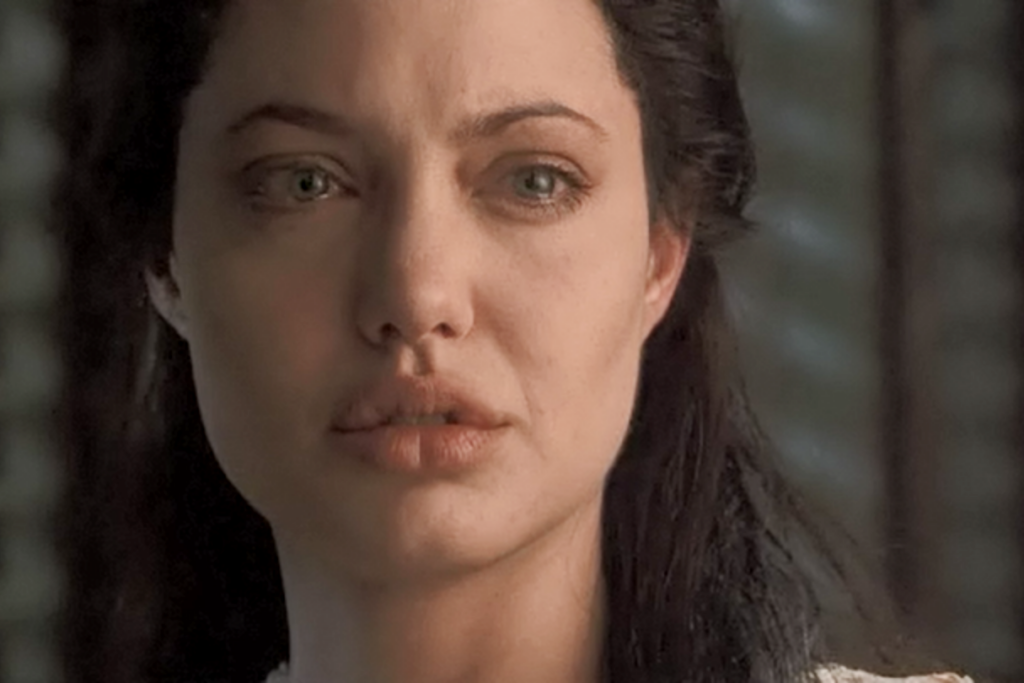
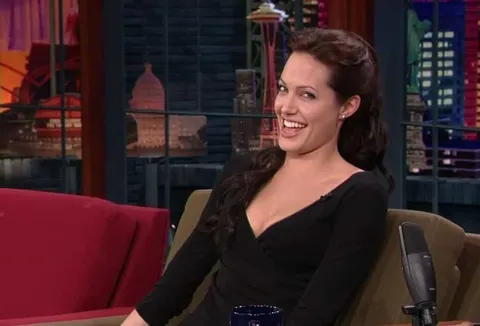
The shot is a close-up: a woman with dark hair looks straight into the camera. Her brows are slightly drawn together, her lips are slightly parted and tense, and her light eyes glisten. The background is blurred, with dark vertical stripes resembling blinds, and the color of the picture is muted, like a frame from a film.
The expression is restrained, without large movements or any obvious gesture. It does not look hysterical, and that is precisely why the viewer can decide for themselves what lies behind it. Shiny eyes do not prove that the person actually cried: the caption is what puts the emotion into the frame.
The film associated with the frame
According to descriptions of the meme, the image is attributed to the film “Original Sin,” released in 2001. It was directed by Michael Cristofer and stars Antonio Banderas and Angelina Jolie. The action takes place in Cuba at the end of the 19th century, and the plot is built on deception and mistrust between the characters.
Which exact scene served as the source of the frame has not been precisely established, so the link to the film remains plausible but unproven. For the joke this does not matter: the picture can be used without knowing the plot.
How this kind of reaction works
Restrained sadness is simple: the face explains nothing, and the caption provides the reason. The smaller and more mundane the cause, the stronger the contrast with the seriousness of the gaze. The viewer needs no explanation: it is enough to see the shiny eyes and understand that the reason matters less than the reaction.
The pause between the caption and the picture works like a short theatrical scene. While the viewer moves their gaze from the text to the face, they manage to insert their own situation, which is why the reaction suits a wide variety of occasions: from a minor failure to a serious disappointment.
Caption examples
The captions below were written independently. In each one the cause is small and the reaction is enormous.
“One drop of sauce fell on my clean shirt five minutes before I left.” A minor mishap gets the scale of a tragedy, and the difference in scale is the main joke.
“Checked my card balance right before payday.” The caption does not explain the figures; the frame does it instead, and the emotion becomes the explanation.
“Was told the shift isn’t cancelled, and the coffee has also run out.” The coincidence of two misfortunes doubles the reaction, and the viewer recognizes a familiar situation.
“Found my favorite series on another service, but there are only the first two episodes.” The caption plays on expectation: the hope at the start of the phrase breaks down by its end.
How to use the frame and what is known about its origin
Who first used this frame as a reaction and when is unknown: no reliable first post or author of the joke can be named. It is only known that the image has long since spread through reaction collections and templates.
Short captions about everyday irritation and silly little things work well. It is better not to use the frame for jokes about real grief or about specific people: the reaction stays funny when it is about a situation, not about someone else’s misfortune. A caption needs to rest only on what is visible in the frame itself — shiny eyes, drawn brows and pressed lips — rather than on assumptions about the woman’s name, the exact scene or the film. This restraint is what makes the frame a convenient template: it works equally well in a comment under someone else’s post and in a private message.