The film still
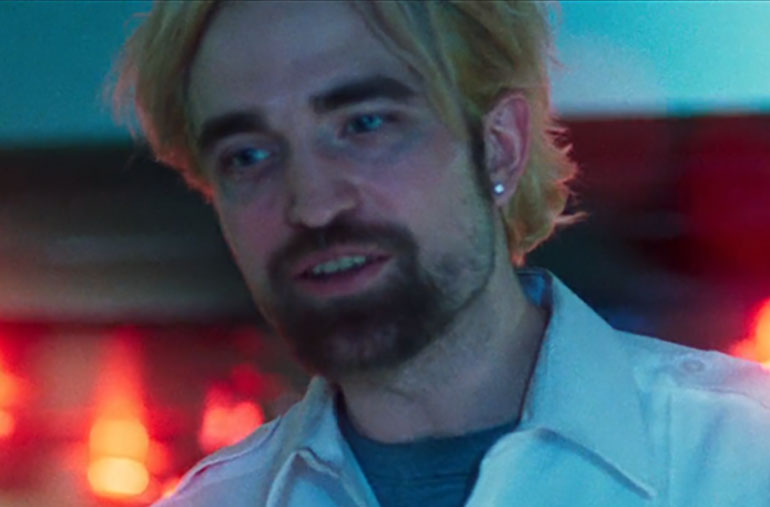
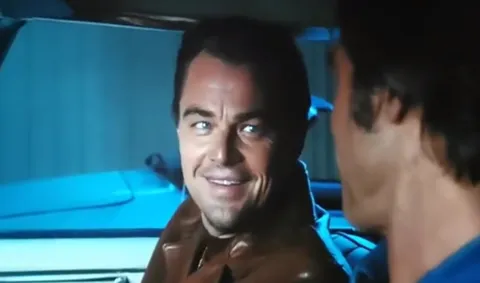
The image is a close-up of a man with tousled light hair and a short dark beard. He has a small earring, his head is tilted slightly, and his mouth is slightly open as if he's saying something. He's wearing a light-colored collared jacket over a blue t-shirt. The background is blurred: warm red and orange lights, with his face lit by a bluish glow.
This is a still from Good Time with Robert Pattinson, who plays Connie Nikas. It's not about the face itself: the meme is built on the line, and the image just helps people recognize it.
What the film is about
The crime drama by brothers Josh and Benny Safdie premiered in the US in August 2017, after debuting at the Cannes Film Festival that May. Connie tries to get his brother Nick, whom he himself dragged into a failed bank robbery, out of custody. A night spent chasing money turns into a chain of dangerous situations, with Connie manipulating both acquaintances and strangers along the way.
One such scene is a conversation with Ray, a recently released acquaintance played by Buddy Duress. That's the episode the meme's lines come from. You don't need the full plot to get the joke, but it's worth knowing the film is anything but a comedy.
How the meme spread online
According to an English-language meme database, the pair of lines "you think you're better than me" and the reply "I am better than you" became a two-panel format: one panel shows someone doubting, the other someone confident in their own superiority. The earliest known example dates to February 19, 2020: a Reddit post in a film community comparing two arthouse movies. That's an early known instance, not a proven first post.
After that came comparisons of all sorts: versions of cartoons, game mechanics, school subjects. Descriptions of which character says which line vary across different retellings, so captions are better built around the meaning rather than an exact assignment of roles.
Example captions
Example one: "You think tea is better than coffee?" — "I'm better: at least my hands aren't shaking at eight in the morning." The caption shows the format: the question raises doubt, and the answer doesn't address it directly but delivers a punchy clarification that slips coffee's confidence in almost as an aside.
Example two: "You think my playlist is worse?" Funny because the speaker is clearly unsure of themselves and is on the defensive.
Example three: "You think your morning alarm is better than me?" — "I am better: I'm only five minutes later." Here the unexpected twist makes the character not a winner, but just lazy.
Example four, for a two-image version: on the left, the old version of a program, on the right, the new one, with the same lines underneath. Note that the two things compared should be similar — comparing an apple to a rock just doesn't work.
How to use it
Take two closely related things and have one of them "voice its grievance." The single still works well as the second, confident panel, while the first will need a different image.
Remember that the joke is about the comparison, not about the actor himself: the still is just a vehicle for the line, and you shouldn't attribute Pattinson's own qualities based on the caption.