What's in the picture
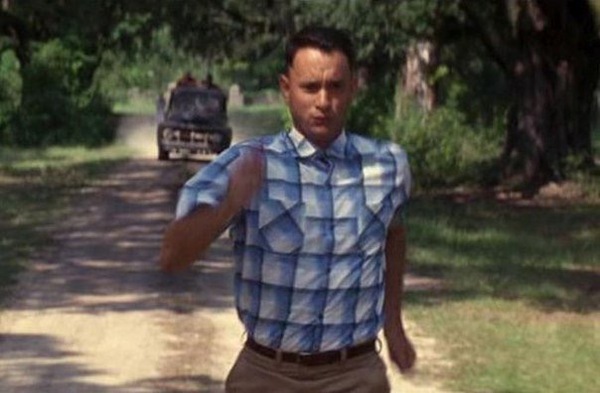
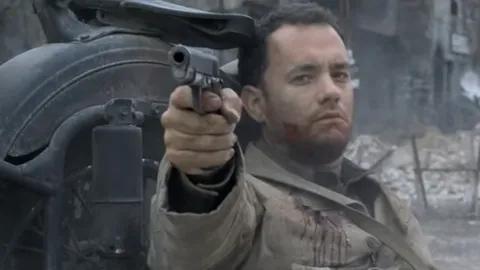
The shot shows Tom Hanks as Forrest Gump running down a dirt road lined with trees. He's wearing a blue-and-white checked short-sleeved shirt, brown trousers, and a belt. His arm is bent at the elbow, his gaze is focused, and behind him on the road a dark car is visible, which looks almost insignificant next to the main character.
The shot doesn't look like typical action: it's a calm landscape of the American South, where the hero's running looks both ridiculous and deeply determined at the same time. It's exactly this combination of simplicity and persistence that made the scene so recognizable and suited to all kinds of captions.
Origin of the phrase
The phrase is spoken in one of the key childhood scenes of the film by director Robert Zemeckis. Young Forrest, bullied by local kids, tries to run away, and the girl Jenny shouts to him: "Run, Forrest, run!" He runs so fast that the metal leg braces on his legs actually break, and this moment becomes a symbol that he's capable of more than people think.
The film came out in 1994 and won six Oscars, including Tom Hanks's award for Best Actor. Later, the running is echoed again in the character's adult life, when he crosses the country on foot for several years straight. Because of this, the phrase came to be seen both as an image of persistence and as a quick reminder that sometimes running is the best option.
The exact moment when the phrase started living on as a standalone internet meme hasn't been documented. Online, it was gradually adopted as a caption for the shot, with no single known original source, and that's exactly what let the format spread across different communities.
How the meme spread
The meme's strength lies in the simple transfer of meaning. A phrase from one specific scene became a universal signal that fits all kinds of situations. The picture of Tom Hanks running conveys the emotion right away, and the caption often ends up being almost unnecessary.
In both the Russian- and English-language segments of the internet, the format spread through image macros, GIFs, and short videos, including TikTok clips: fragments of the run are repeated to music tracks, and popular edits built around this scene rack up countless repeats. The meme also frequently appears as a parody, where the character's running accompanies unexpected everyday situations, such as being late for a meeting or a boss suddenly showing up at the office.
Typical use
The phrase is used in two main senses. In the first, it expresses an urgent wish to flee an unpleasant situation: a boring meeting, a clingy acquaintance, or a difficult conversation. In the second, it serves as a joke about being in a hurry: when there's little time left before a deadline or before a train departs, the caption "Run, Forrest, run!" signals that the situation calls for immediate action.
Captions often keep the original line intact, but there are also variations where the role of Jenny goes to one of the people in the conversation, while the post's author is the one running away. This device works well because the film's plot is recognizable even to people who haven't seen it.
Why the meme works
The main reason is recognizability. "Forrest Gump" became one of the most-quoted films of the 1990s, so the phrase doesn't need any explanation. Running is a universal action that transfers easily to any situation, from a literal sprint to a figurative meaning.
The second reason is ambiguity. Running can be a panicked flight, a joyful start, or naive persistence, so the caption works in both an ironic and a sincere register. The meme is funny and warm at the same time, which helps it stay in circulation far longer than most one-day jokes.