What's shown in the picture
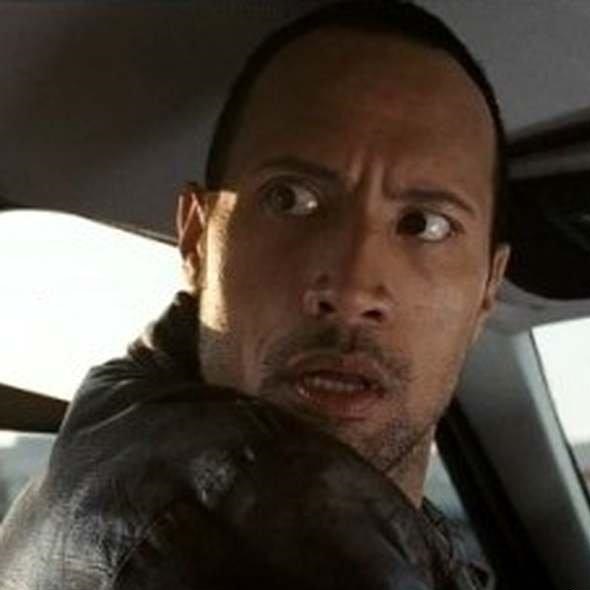
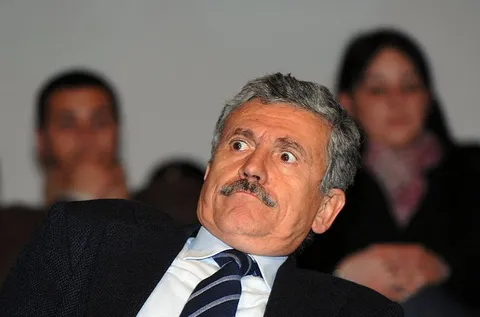
The close-up shot shows a man inside a car: he's turned his head to the side, his eyes are wide open, and his mouth is slightly ajar. His expression is both frightened and bewildered, as if the driver has just realized something is wrong. A bright strip of road is visible through the window, and in the foreground is the dark sleeve of a leather jacket.
The image comes from a film, so the facial expression here isn't a staged internet gag but a moment from the movie itself. It's precisely this natural, non-caricatured reaction that made the frame so suited to captions: the viewer instantly reads the emotion and fills in the context on their own.
Origin
"Race to Witch Mountain" came out in 2009 and was based on the 1975 film "Escape to Witch Mountain." Dwayne Johnson played a taxi driver, Jack Bruno, who helps two teenage aliens escape their pursuers. The character combines irony with sudden seriousness, which is why emotional shots of him transfer so easily into other contexts.
The meme spread in the Russian-speaking segment around 2014. No source ties the caption "Where are we driving?" to a specific line from the film, so it shouldn't be treated as a quote. It's more likely a Russian-language caption that stuck to the frame as a universal reaction to events taking a dangerous turn.
How the meme is used
A typical scenario: someone proposes a clearly bad idea, and the other person replies with the frame and the question "Where are we driving?" The caption works as an ironic warning: the person isn't arguing, they're showing surprise, as if they can already see how it's all going to go wrong. The meme often accompanies stories about risky trips, spontaneous decisions, and situations where nobody thought the route through.
Over time the caption also came to be applied to cases that have nothing to do with transportation. It's used when some absurd piece of news shows up in a chat, when plans fall apart on the fly, or when friends are about to do something questionable. The question is rhetorical, so no answer is usually expected from the other person.
Sometimes the caption is used the other way around: the author posts the frame after their own risky decision, turning a bad move into self-deprecating humor. That way the meme becomes a way to admit a mistake with a smile, without going into detail.
Why the meme works
The meme's power lies in the contrast between the calm form of the question and the anxious facial expression. The short caption doesn't explain the situation, only hints at it, and the viewer fills in the absurdity themselves. This device works well in short messages and comments, where speed of reaction matters.
The actor's expressive face also plays a role. The frame reads without sound and without context, so it's easy to carry from one occasion to another. The meme remains recognizable even to those who haven't seen the film, and thanks to that the film itself has gotten a second life in internet culture.
On top of that, the caption works well as a reaction to someone else's plan. It lets you push back without arguing: instead of a long counterargument, one frame and one question will do. That's why the meme often shows up in group chats, where a discussion turns into a pile of proposals and each new one raises the alarm a bit more.