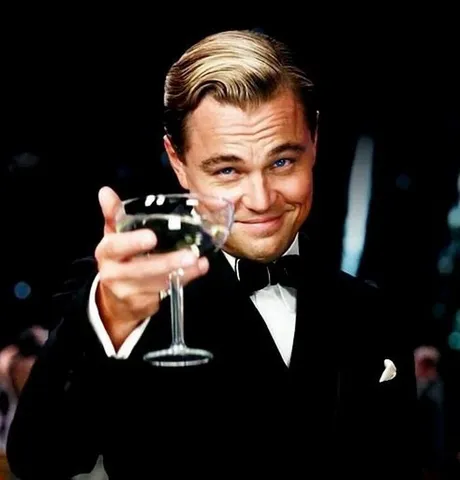
Who is in the frame and where it is from
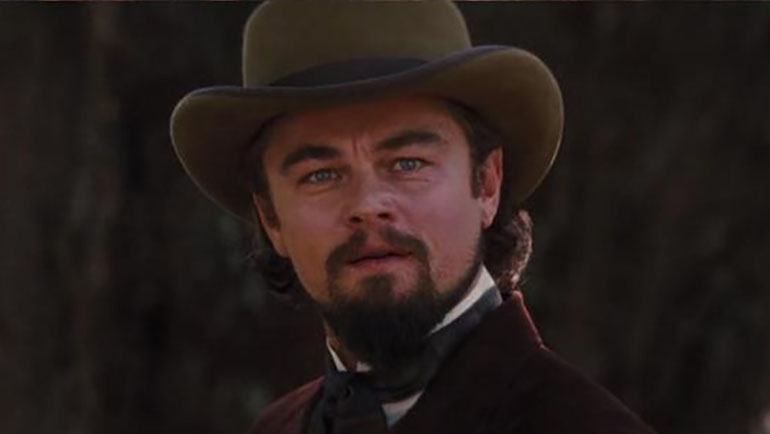
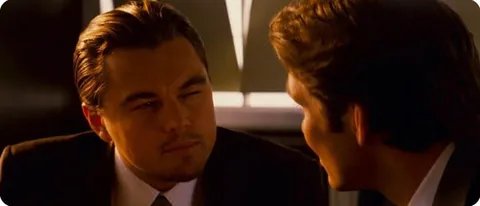
The frame shows a man in a dark hat with curved brims, a dark frock coat and a bow tie at his neck. He has a neat mustache and a small beard, light eyes, and his expression can be described as wary surprise: brows slightly drawn together, lips slightly parted, gaze directed off-camera. The surroundings are in dim light, the background is blurred, and all the attention is on the face.
The frame is taken from Quentin Tarantino's Western Django Unchained, released in 2012. The character Calvin Candie, a wealthy plantation owner and master of the Candyland estate, is played by Leonardo DiCaprio. He is one of the film's most prominent antagonists.
What exactly this frame shows
The exact scene the frame was cut from is not known, so it is better not to retell it. In memes it lives independently of the plot: the viewer sees a man listening to someone, unsure he heard correctly, and getting ready to object.
It is important to separate two levels. In the film the character is cruel and dangerous, while the meme reaction takes only the facial expression from him. The caption has no connection to the character's nature and should not transfer any judgment onto the actor or the role. It is enough that the face looks as though its owner is about to say "Excuse me, what?"
Why the expression works
The combination of raised brows and slightly parted lips reads as "Seriously?" There is no overt aggression or panic, so the reaction comes across as politely skeptical. That is exactly the tone needed when someone doubts the other person's words but does not want to start an argument.
The period costume and hat add contrast: a modern everyday situation is described through a face from the nineteenth century, and that gap alone brings a smile. The dim, cinematic light lends even a minor trigger excessive drama. The result is a deliberately serious reaction to a trivial topic, and the joke is built precisely on that mismatch.
Caption examples
The picture works well with a short line from the other person. A few invented examples.
Colleague: "I'll just check my email, it'll take a minute." The catch is that everyone knows how such minutes end.
Salesperson: "This vacuum is quieter than a whisper." The expression underlines distrust of advertising exaggeration.
Friend: "I'll definitely be on time, I left ages ago." The reaction gains meaning from accumulated experience: if the friend was late before, the face says more than words.
Neighbor: "The renovation will be finished next week." A universal situation where doubt is perfectly justified.
How to use it
The template fits discussions and comments where a polite form of doubt is needed. For open irony it is too calm, and for real anger it is not expressive enough, so do not expect sharpness from it. It works best where the doubt is polite and the other person's answer is predictable in advance.
If you make a captioned version, put the other person's line at the top and leave the frame itself free of text that covers the face: the face and the hat must be fully visible. Avoid captions where the character is used for jokes about the real historical tragedies the film deals with: the meme reaction is built on facial expression alone.