Scene from a film and return to the feed
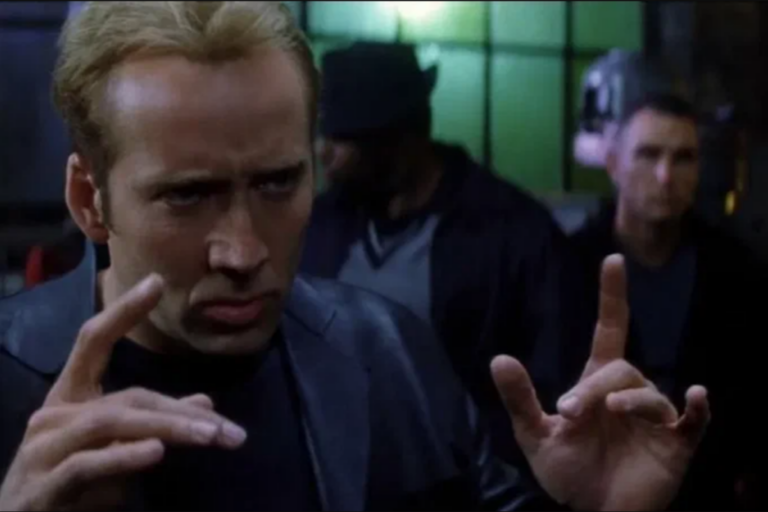
The line belongs to Randall Raines (Nicolas Cage) in Gone in 60 Seconds, released in 2000. The film follows a former car thief who assembles a team to steal fifty vehicles to save his brother. Viral re-sharing of the specific fragment is linked to a TikTok video by the account print_market01 dated October 21, 2024, which added captions about rising taxi prices and app updates. That video's date is known, but that does not mean the scene wasn't used earlier.
In this version of the meme, Cage is shown in close-up with raised fingers and a focused expression, other men visible behind him. The scene in the film ties to team assembly before a car heist and a musical moment; the meme video strips the team from its story and makes it a universal sign of action. The sound and gesture were repeated in new videos, so the template works even without knowing the full film.
Small decision with heist-sized scope
The words 'to the cars' literally mean it's time to get in the vehicle, but the meme function is broader: the action is ready to begin, discussion is over. Cage's solemn delivery gives grand scope to simple plans — calling a taxi, getting coffee, or ending the workday. There's also a choice variant: the hero wavers between two paths, and the team becomes a decisive move toward one of them. The effect disappears if the situation is already dramatic: comic scale comes precisely from the mismatch between an epic presentation and a small task.
How captions reveal 'To the cars'
A video of someone spending ten minutes comparing restaurants: 'Finally picked a place to eat: to the cars!' A long negotiation is set against a decisive command, so the final gesture seems out of proportion. For a chat, this works: 'The taxi got 100 rubles more expensive, but we already ordered it: to the cars!' This example references the video that helped popularize the sound and mocks the habit of deciding after endless price refreshes.
A third option can show an open laptop: 'Friday, 6 PM. All emails closed? To the cars!' The meme turns the end of the workday into the start of an operation. These captions are created new and show how to use the formula, not cite actual trend participants.
When the command fits
The gesture lands best as a short finale after visible hesitation — the ten-minute restaurant debate, the haggling over a taxi that got 100 rubles more expensive, or the stack of closed emails at 6 PM — followed by the raised fingers and the one-line command. Say the line once the group already knows the scene; repeating Cage's gesture on video works the same way for viewers unfamiliar with the film. Away from cars entirely, the command still reads as 'stop discussing, start moving' as long as the caption marks exactly what just got decided.
Don't assign real intentions or the actor's actual behavior to the fragment: this is a fictional character. Also, the meme doesn't fit situations where real departure involves danger, coercion, or emergency evacuation — parody tone can cheapen the event. In a friendly context, aim the joke at your own indecisiveness and ordinary tasks, keeping the adventure scale light.