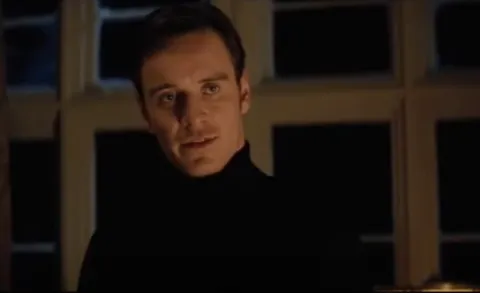
The scene the picture grew from
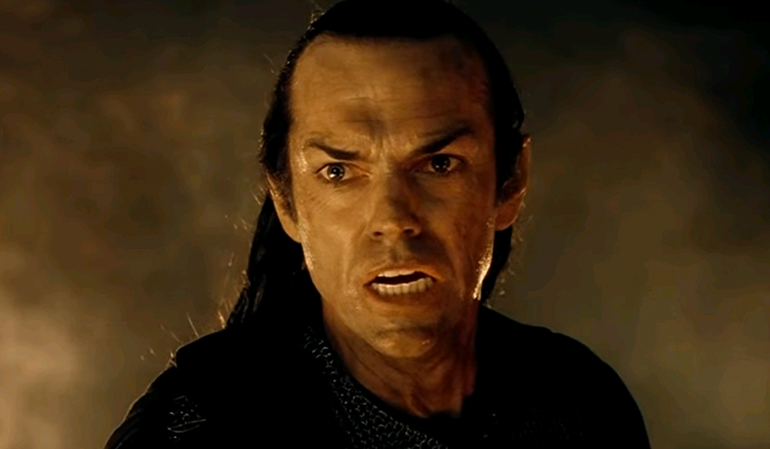
The frame is taken from the prologue of The Lord of the Rings: The Fellowship of the Ring (2001, directed by Peter Jackson). The prologue shows the battle for the One Ring: Elrond, played by Hugo Weaving, sees that Isildur, who severed Sauron's finger bearing the Ring, does not want to destroy it and demands that it be thrown into the fire of Orodruin. Isildur refuses and keeps the Ring for himself. In the history of Middle-earth this becomes the start of long misfortunes: the Ring passes from hand to hand until it ends up with the hobbits.
The date of this frame's first appearance as a joke and the first post with it could not be established, so they are not given here. It is only known that the phrase about the fire has long lived separately from the film and is used as a formula for situations in which a person cannot part with an object that harms them or is simply not needed.
What is visible in the file
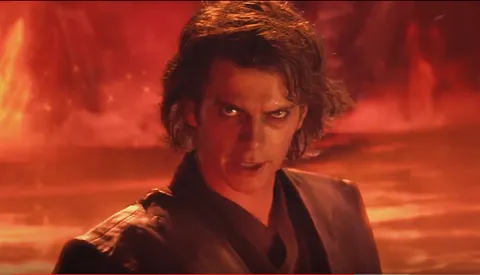
The file shows a close-up of a man with long dark hair combed back. His brows are drawn together, his mouth is slightly open, and his eyes look straight ahead and slightly to the side. The background is dark, a warm brown tone, and blurred, as if the light source were somewhere nearby. A dense texture resembling chainmail is visible at the collar.
There is no ring, no fire, and no second character in the frame. The entire load falls on the facial expression: it reads as anxiety, insistence, or anger, depending on the caption. That is why the format depends on the text, and the picture serves to show that someone is insistently demanding that an item be let go.
Why the refusal is funny
The original scene is dramatic, but the meme turns it into an everyday gesture. The item that needs to be thrown away becomes the One Ring: the person understands the thing is useless or even harmful and keeps it anyway. Viewers know this well: old chargers, empty boxes, half a jar of jam on the shelf.
It is also funny that the scene is grandiose while the reason is petty. The solemn “throw it into the fire” collides with the trivial value of the object, and the gap between the scale of the words and the significance of the item creates the joke. Many memes built on serious scenes from films work this way.
Caption examples for this template
Below are four captions that rely on a single object and a stubborn refusal. Each names the thing that is hard to part with.
“The box from a phone that was sold long ago.” The box is empty and useless, yet it stays on the shelf. Refusing to get rid of it looks as dramatic as refusing to give up the Ring.
“The old TV remote that will definitely come in handy.” The word “definitely” sounds like a promise that will never be kept. The hero's serious face underlines the irony, because the item is of no use at all.
“The receipts from last year that I promised to sort out.” A promise that no one will keep is placed beside a solemn expression, and the difference between them makes the caption funny.
“The festival T-shirt I haven't worn in ages, but it's a memory.” The justification sounds like a legitimate reason to keep the item forever, and it is exactly this attempt to sound reasonable that will make people laugh.
How not to overdo the template
The format works best with a single object. If the caption lists five things, the character's face loses its meaning and the joke drags on. A short phrasing with an object and a promise is usually better than a long one.
A reference to the film is not required: the meme is understandable without knowing The Fellowship of the Ring. But those who remember the scene will read the caption more precisely right away. The template should not be used to mock anyone's habits or state: the frame is about an object, not about people.