What the frame shows
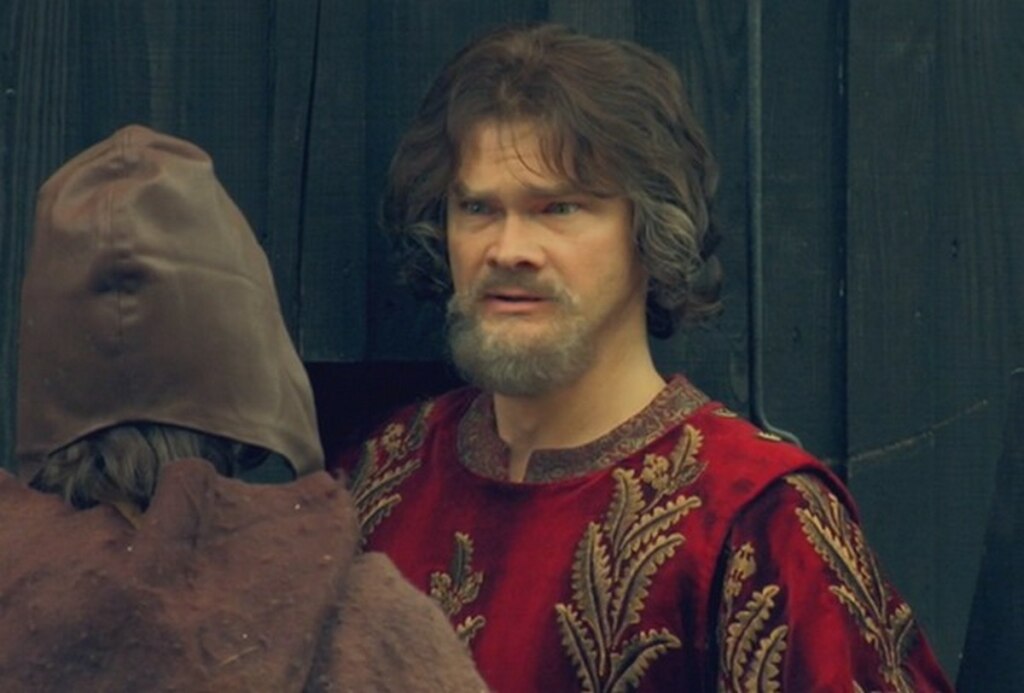
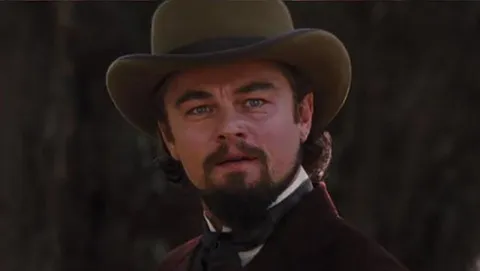
A man with wavy chestnut hair and a beard touched with gray has parted his lips and drawn his brows together. He wears a red robe that looks like velvet, with gold embroidery in the shape of leaves on the chest, shoulders and collar. His expression reads as disbelief: it is how someone looks at an interlocutor who has said something incomprehensible and absurd.
On the left, the blurred silhouette of a person in a brown hood is shown from behind. It helps establish the balance of power: one character in rich clothing, the other in plain clothing. For a meme that is enough. No backstory is needed, because the clothing and the face already show who is wealthy and who is not.
Where the frame comes from: what is known
According to reports, the frame is taken from “Horrible Histories,” a British sketch show about historical events. The series aired on the children's channel CBBC, but its creators aimed to make it interesting for adult viewers too. Its scenes are grouped by era, and its sketches play with historical facts in a grotesque style.
The specific sketch, episode and year of release are not confirmed in verified sources, so neither an episode number nor a plot summary is given here. It is only known that the costumes and setting of the frame match a medieval atmosphere, and that the character's facial expression has long since taken on a life of its own, separate from the scene.
How the phrase works
The joke is built like the line of a self-satisfied person: they hear a simple request or an ordinary complaint and take it for a bad joke that is “too rich” for them to understand. The humor lies in combining a polite tone with complete incomprehension. The speaker is not angry; he is sincerely puzzled.
That is why the template suits situations where one side lives in a different reality: prices, queues, small everyday inconveniences. The frame signals in advance that the speaker isn't noticing this, and the caption stays short.
Captions of rich incomprehension
The examples are made up for this frame.
“A coffee to go costs four hundred rubles. Excuse me, is this some kind of peasant joke?” The speaker considers an ordinary price absurd. The humor is that he sees mockery in an ordinary purchase.
“The boutique offered to wait until they bring in the right size. Excuse me, is this a peasant joke?” Waiting is presented as an unthinkable humiliation for someone used to getting everything at once, and that is what keeps the “too rich” theme going.
“I took a laptop on vacation for work. I was told it isn't needed at the beach. Excuse me, is this a peasant joke?” The contrast between wanting to rest and the habit of working creates self-irony, and the phrase itself keeps the same formula of arrogant bewilderment.
“There were no seats left in first class. Is this a peasant joke?” The smaller the cause, the more visible the arrogance of the reaction.
How to use the template carefully
The template works well for self-irony: when a person comically overvalues their own life or an ordinary purchase. Don't apply it to real people who are genuinely in need, because then the joke turns into mockery of poverty.
It is best to crop the frame so the character's face and part of the hood in the foreground are visible. That way the viewer immediately sees who sets the tone, and the caption can be short. The formula that works best has two parts: an everyday trigger and a question in the spirit of “is this some kind of joke?”