Who's in the shot
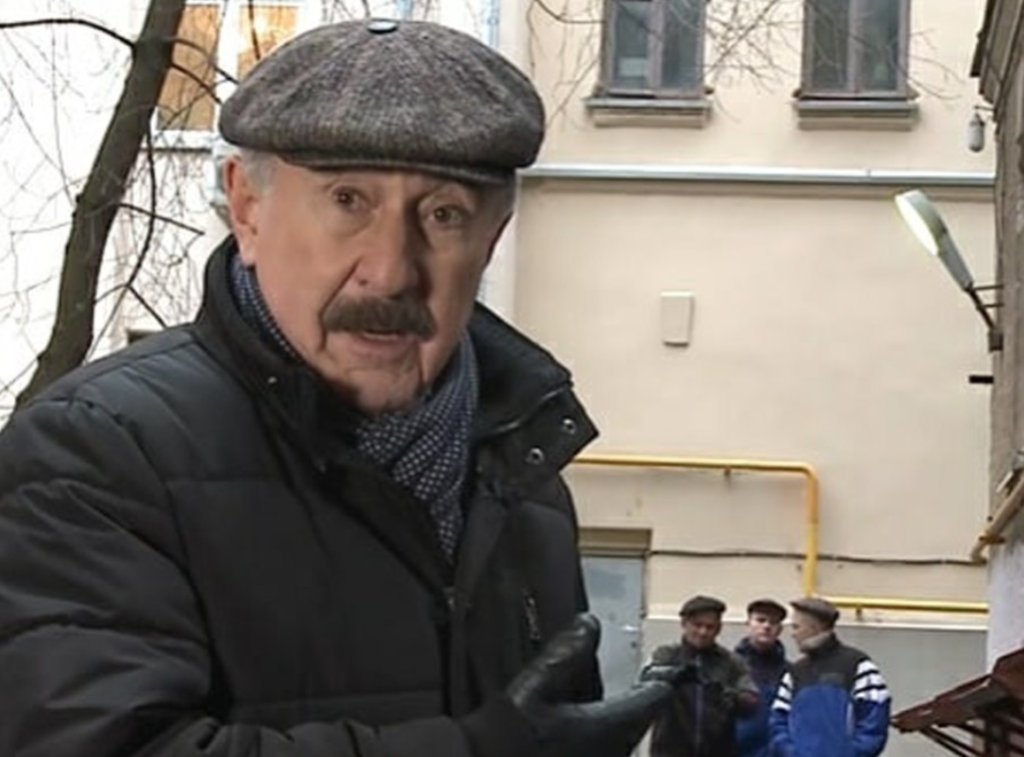
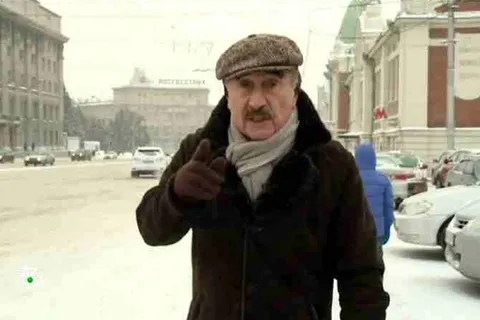
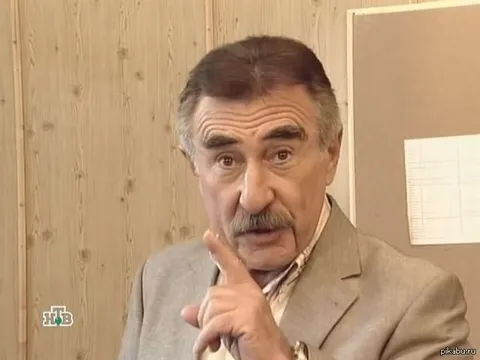
In the foreground is an elderly man in a cap, a black jacket, and a dark scarf. He has a mustache and an attentive gaze, and he's addressing the camera while pointing off to the side with a black-gloved hand. According to descriptions of the template, this is Leonid Kanevsky — the actor who has hosted the NTV documentary series "Sledstvie Veli..." since 2006.
Behind him, in a courtyard next to a yellow gas pipe, three men in caps and jackets can be seen. All that's known about them is that they happened to be in the shot. They have no connection whatsoever to the caption or to any crimes, and the meme isn't about them.
Where the tone comes from
Memes featuring Kanevsky grew out of the show's delivery style. The host speaks in measured tones, adds period-specific everyday details, and the episodes' closing lines have become catchphrases: "But that's a completely different story."
The grave delivery is funny on its own in memes: when a voice like that comments on trivial things, the result is comic overstatement. This still is one such case: the elderly host points toward the people behind him almost conspiratorially.
What's known about the shot itself
The episode this still is taken from, and the date the captioned image was first posted, haven't been reliably established. All that's visible is that it's a screenshot from a TV broadcast: the host is standing in the courtyard of an apartment building, with a group of people some distance behind him.
The word in the caption is judgmental and crude. It should be used carefully: it works as comic overstatement aimed at made-up groups, not as a description of real people.
Captions and breakdown
"My neighbors when I ask them to keep it down." A joke about a noisy crowd: the host's gaze gives the complaint the look of an official investigation.
"Chat members once the topic runs dry." Kanevsky seems to be pointing at the crowd, and the word works as a jokey nickname for a noisy community.
"Delivery guys while I'm hunting for the intercom button." Here the judgment is softened by self-deprecation.
"The dacha neighbors who said they'd leave at exactly six." The contrast between the promise and reality.
Composition and gesture
The composition of the shot deserves a separate mention. The host is filmed in close-up, while the group of people stays small and indistinct in the background. This is the classic "one character and a crowd" setup: the speaker looks like a witness, and everyone else looks like the subject of the conversation.
The hand gesture generates captions all on its own, because the direction it points in sets up the story: someone's standing where they shouldn't, someone's being loud, someone's late. The more specific and harmless the situation, the easier it is for the reader to take the joke without an unpleasant aftertaste.
How to avoid missing the mark
The meme works when the group standing behind the host is a made-up, collective one — "people who talk during movies," "passengers arguing over a seat" — rather than someone specific from the viewer's real life.
The joke's meaning rests on Kanevsky's intonation, not on the word itself: without it, the caption turns into a plain insult, but with it, it becomes comic overstatement in the spirit of the TV show.
The test is simple: say the caption out loud slowly, putting weight on the last word, the way the host would. If, without that manner, the phrase just sounds crude, it should be rewritten — replacing specific people with a situation or a fictional group.