Characters from short sketches
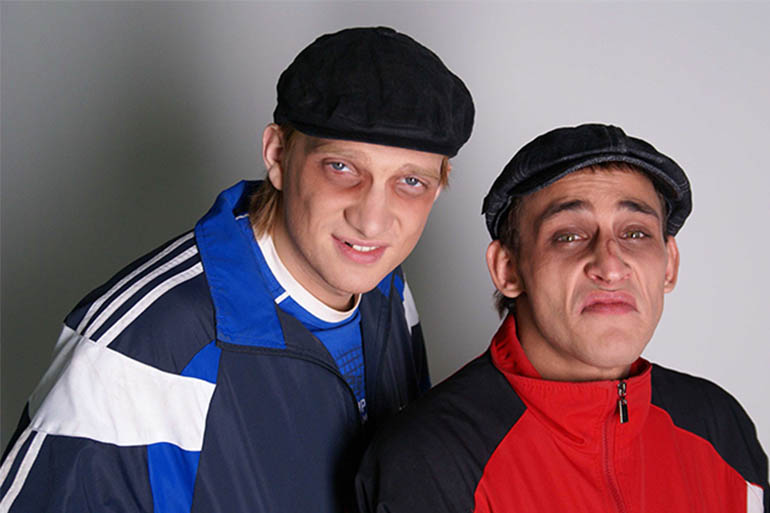
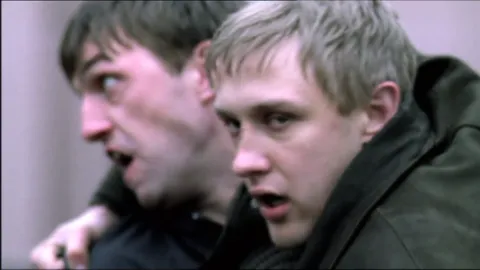
The image shows two young men in warm jackets and knitted hats: the character on the left smirks, while the one on the right purses his lips. They are Rzhavy (“Rusty”) and Bashka (“Noggin”), characters in the comedy sketch show “Dayosh Molodyozh!” Rzhavy was played by Andrey Burkovsky and Bashka by Mikhail Bashkatov. The characters speak in street slang and regularly end up in situations where self-confidence, petty gain, and friendly teasing collide.
The show aired on the STS channel from 2009 to 2013 and consisted of short self-contained sketches with various recurring characters. Thanks to their compactness, the sketches were easy to quote, and the images of Rzhavy and Bashka outlived the TV format in clips and pictures. This particular image contains no text and does not point to a specific episode; the meme meaning is usually added later by users’ captions.
A contrast that reads instantly
The two facial expressions create a simple visual dialogue: one seems pleased with what is happening, the other does not share his joy. This difference is easy to apply to any decision that one friend considers a great idea and the other meets with doubt. More broadly, the picture represents a familiar pair: the optimist and the skeptic, the initiator and the one who sees the consequences in advance.
The viewer does not need to remember a specific line from the sketch. It is enough to know that this is a duo of friends from a comedy show, and the contrast of the faces does the work. Still, it is better not to attribute real words to the characters without checking the episode: online, individual images often get new captions. The characters’ names provide a reference, while the specific joke on a meme card belongs to its author.
How to remake the template
For example, you can label the left figure as the person who suggests spending the evening on a new game, and the right one as the friend who remembered that tomorrow means an early start. Or: one is delighted by a sudden sale, the other reminds him that a discount does not make a purchase necessary. Short parallel captions help keep the rhythm and give each face a clear role.
The format also suits teamwork: “I added one more feature” and “we promised to freeze features before the release.” Here the comedy comes from a recognizable argument, not from mocking the characters’ looks. If the audience is not familiar with the show, the caption can be self-sufficient. The image works as a mini-dialogue even without the series’ name, but mentioning Rzhavy and Bashka helps fans of the source material recognize the characters.
Satire and the limits of the image
The show’s characters use a recognizable TV parody of street slang and a stereotypical image of working-class street youth. They are scripted characters, not a documentary portrait of young people or of residents of a particular neighborhood. In descriptions and new captions, do not transfer caricature traits to real people on the basis of clothing, place of residence, or social status.
Meme use is usually gentler than the original sketches: the facial expressions become a reaction to an everyday decision. To keep the joke kind, aim it at the situation, such as an impulsive purchase, a dubious plan, or a difference in mood, rather than at humiliating a person. The exact episode for this particular frame has not been established, so it is safe to name the characters and the show but not to describe a plot that supposedly occurs in the episode.