A portrait without a key
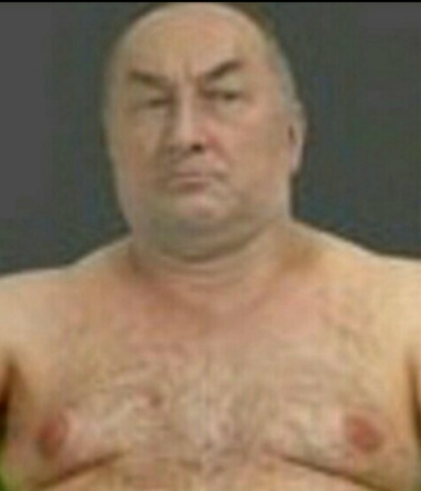
The frame shows a close-up of an elderly man with a bare torso. This is Nikolai Petrovich Voronin from the television series “The Voronins”; the role was played by Boris Klyuev. The portrait is grainy and cropped so tightly that the face and body leave almost no surrounding context. This simple, slightly awkward look makes the picture resemble both a random photograph and a deliberately chosen sign. In some early layouts it was surrounded by a black frame with the caption “ьпрь рпьп,” but here there is no frame and no words: only a photographic fragment.
From community to a new wave
One early account of the meme links it to the Е 8 А 7 Ь community. Its administrator, Toivo Tov, named Ivan Zhozhin as the author of the picture and dated its creation to around the beginning of 2017. In 2018, the image appeared in new layouts. Among them was the pair “Ideal male body: before/now,” which set Voronin against Arnold Schwarzenegger; in August, the meme was also discussed on 4chan. In this way, the picture acquired two modes of existence: a meaningless portrait with an incomprehensible line, and a recognizable participant in a visual comparison joke.
Why nonsense works
The phrase “ьпрь рпьп” offers the viewer no ready-made decoding. It looks like a set of letters that could be a message, but it does not form a normal sentence; an attempt to find a password in it inevitably postpones the joke. The frame also nudges the viewer toward expecting an explanation: the stern expression and almost official portrait seem to promise an important conclusion. Instead, a phrase with no clear meaning appears. The comedy arises not from a secret fact about the hero but from the collision between a serious presentation and a refusal to explain. In the comparative version with the “ideal body,” the task changes: now the contrast between two images and the caption “before/now” creates a self-contained joke, even if the viewer has never seen the original absurd version.
Invented captions
An imagined photo of a man solemnly studying the manual for a microwave could be captioned “ьпрь рпьп”: the context looks important, but the line explains nothing. This is an invented caption, not a variant from an early publication. Another invented twist is to set a confident portrait of Schwarzenegger against Voronin under the words “I'm in the photo for my résumé / I'm on day three of my vacation.” The first character performs a carefully prepared self-presentation, the second a relaxed, at-home look. Here both images receive human roles, and the exaggerated contrast replaces the cryptic line: the joke becomes understandable even without knowing its origin. For correspondence, one can also imagine a third situation: an acquaintance sends a photo of a disassembled alarm clock captioned “fixed it,” and the reply is just “ьпрь рпьп.” The answer neither argues nor praises the repair; it pretends that the very enigmatic quality is the reaction. These examples are invented; they show different ways of reading the same set of characters: as an empty reply, as a caption for a contrast, or as a comic refusal to explain.