What's shown in the picture
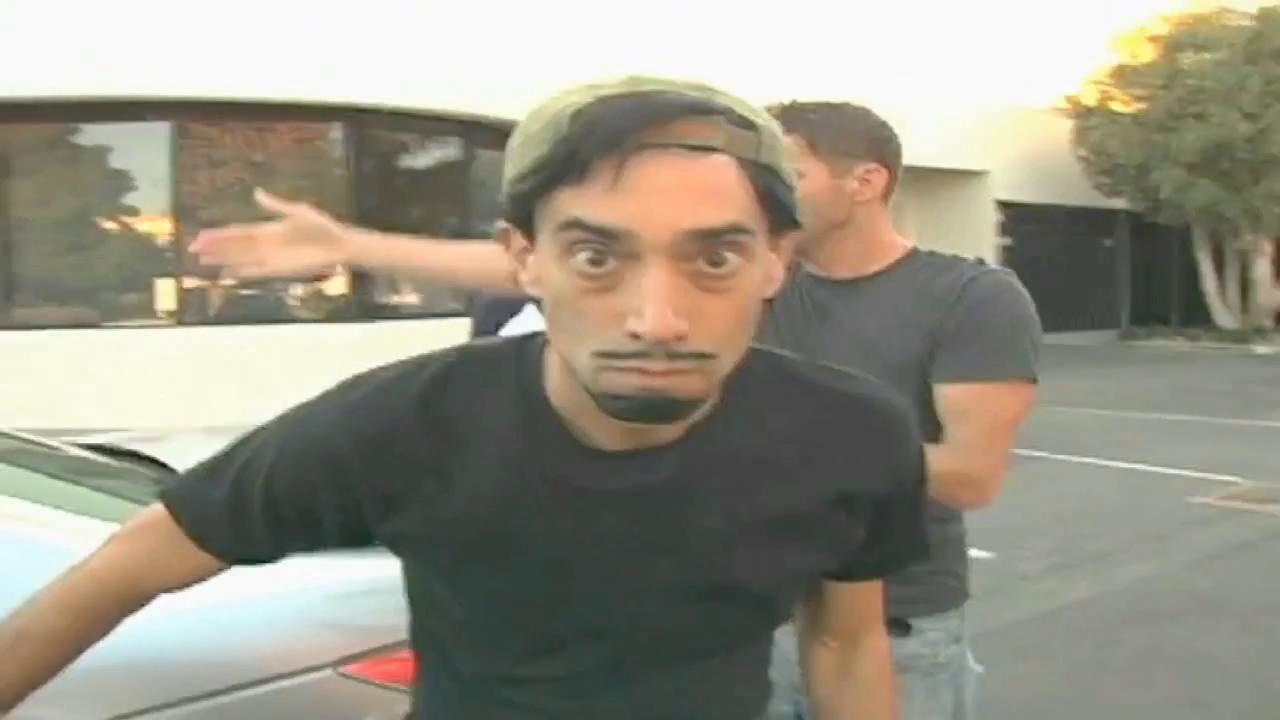
In the frame, a man in close-up looks into the camera with wide-open eyes and pursed lips. Above his upper lip and below his lower lip, a black mustache and goatee are drawn on, and his cap is pushed back with the brim facing backward. One arm is stretched out to the side, and in the background a car and a second person watching what's happening are visible.
The shot looks like a fragment of street footage: a parking lot, parked cars, and passersby create the feel of a random, almost documentary moment. This kind of presentation is typical for street tricks and pranks. The parody tone is built on the contrast between the serious look of the filming and the deliberately exaggerated facial expression of the character.
History and origin
The original series "Street Magic" with David Blaine aired on American television in 2001 and showed tricks the illusionist performed in front of random passersby. The format was parodied by many comedians, and online there appeared videos in which comedian Mitch Silpa played the magician. His parodies spread across video hosting sites in 2006–2008.
In the Russian-speaking internet, popularity went to the translations of these videos made by Andrei Bocharov, known as Bocharik. The dubbing was deliberately crude and unliterary, which turned individual phrases into standalone quotes. That's how the expressions "Feet in my mouth" and "Fuck my brain" appeared, which then migrated into comments and memes.
Today the phrase lives on mainly as an internet quote with no direct connection to its original context. Many users know it but don't remember where it came from, and it's exactly this forgetting that makes the meme resemble a fixed linguistic expression.
How the meme is used
The phrase "Feet in my mouth" is usually used as an ironic reaction to an awkward or absurd situation. It gets written under posts about failures, ridiculous incidents, and one's own blunders. The meaning amounts to an admission that the situation is getting out of hand, but delivered with maximum exaggerated outrage.
The picture with Blaine or Silpa is used as a reaction to tricks, pranks, and suspicious promises. Sometimes it's used in chats as a joking "well, here we go again." Thanks to its crude wording, the meme stayed popular for a long time in circles that value irony and a deliberately harsh style of speech.
In the original videos the delivery was serious, and it was exactly the crude translation that created the main effect for Russian-speaking viewers. Hence the gap between the original material and how it was received by Runet users, who turned translation blunders into a standalone genre of jokes.
Why the meme works as a joke
The main mechanism is the mismatch between the host's calm, almost scientific tone and the harsh phrase used in translation. The viewer expects street magic but gets a crude line that sounds unexpected and funny. This duality of tone makes the joke recognizable even without knowing the original.
The second factor is the play with a well-known figure. Blaine was recognizable thanks to his manner, so the parody was easy to read instantly. At the same time, the meme draws on nostalgia for the early Runet, when translations and dubbings spread through forums and video hosting sites, and their authors became unofficial heroes.
Finally, the phrase is short and easily carried over into any situation. It can be dropped in response to almost any post and understood without explanation, which is what gives the meme its long life.