What is visible in the frame
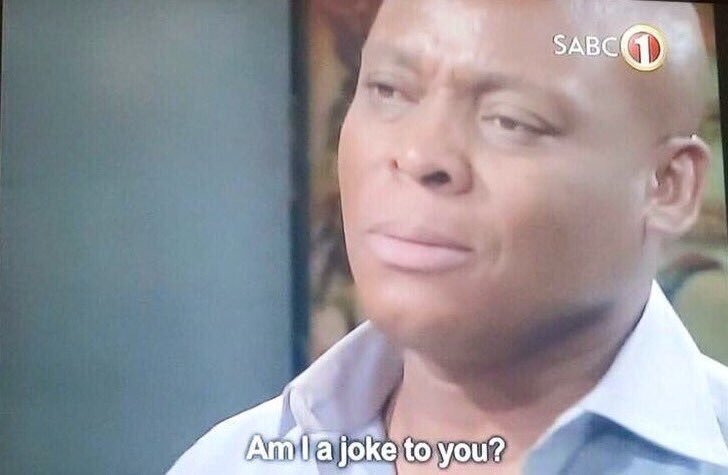
The image shows a bald man in a light lilac shirt with an open collar. He looks slightly away from the camera, his lips are pressed together, and his gaze expresses disbelief tinged with hurt. In the upper right corner is the SABC 1 channel logo, and at the bottom, white letters form the subtitle “Am I a joke to you?”.
The image resembles a photo of a TV screen: the colors are muted and there is visible graininess. From the picture alone it is impossible to tell what came before the line or who it is addressed to. The meaning rests on the subtitle: without it the frame looks like just a surprised face, but with it, it becomes a complaint.
Where the frame comes from
The frame is linked to the South African soap opera “Generations: The Legacy,” which aired on SABC 1. Its creator is named as producer Mfundi Vundla. Reports say the line belongs to a character named Tau Mogale, but the exact episode and filming date are not confirmed, and the performer's name is not given here.
Importantly, the line was originally an ordinary remark by a character in a scene of the series. It became a meme later, when the frame started being inserted into other people's stories. Information about the first posts is contradictory: reportedly, early examples appeared in the mid-2010s on Twitter, and then the template spread to Reddit and social networks. The first publication has not been reliably established.
What this reaction means
The joke rests on the gap between the trigger and the reaction. The hero does not shout or threaten; he is bewildered and slightly offended, and his question sounds almost childlike: do you really think I am not taken seriously. So even a minor trigger looks like a serious injustice, and the viewer laughs at the scale of the offense.
There is a second layer. The question is rhetorical: no answer is expected, and the question itself turns into an accusation. The caption shows a situation in which the other person has already responded through action, that is, by disregarding the request.
Caption examples
Invented captions where an important trigger is described first, followed by a reply that devalues it.
“I asked support to help with my plan and was told to restart my router.” A serious question collides with a canned answer.
“I said the project was important, and they replied: it's just a weekend hobby.” The words “important” and “hobby” are set against each other, and the hero's expression emphasizes the disappointment.
“I suggested swapping seats for better light, and they said the window was a luxury.” An everyday trifle becomes a drama, because the caption presents it as a question of respect.
“I wrote in the chat asking about the date, and someone replied: oh, I didn't read it.” The other person's passivity turns into a reason for offense.
When the template fits
The frame suits situations where someone brushes off a request, an idea, or an accomplishment: work chats, studies, arguments over small matters, games. The smaller the trigger and the more serious the face, the stronger the effect.
If the trigger is genuinely serious and the person is hurt, the joke sounds out of place, so a sense of proportion matters more here than any template. The caption is better kept short: the subtitle already takes up the lower part of the frame, and extra text over the face makes it harder to read the expression.
A two-part formula works well: first the trigger, then the other person's unexpectedly petty reaction. The hero's own question does not need to be repeated, since it is already written on the picture.