The blog and the first wave
The phrase is associated with the video blog of Nick Joseph and Dan Ryu, two friends from Baton Rouge. The series was called #ThatsTheOne and was published on YouTube. According to publications from that time, the first episode appeared on March 4, 2017, and a note about the phrase spreading as a meme is dated March 24 of the same year.
The phrase became noticeable on Twitter, where it was passed around together with short video clips. Where exactly it was first said is not specified in the available publications, so the exact origin of the words should be considered not fully established. Which accounts picked it up first, and on what day, is also unknown.
What is in the frame
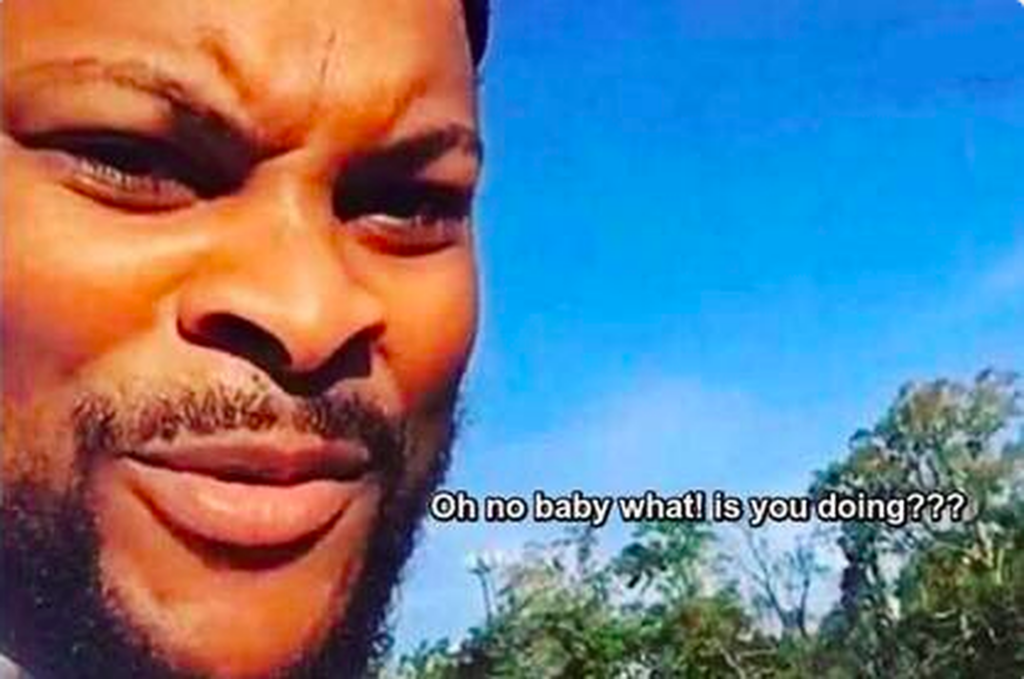
This is a close-up of a man: his face takes up almost the entire left edge, his brows are furrowed, there is a faint smirk on his lips, and his beard is short. On the right are bright blue sky and the tops of trees. In white text with a dark outline in the lower right part of the frame is written “Oh no baby what! is you doing???”.
From the picture alone it is impossible to determine which video the frame comes from or who exactly is shown in it. The phrase is associated with the video blog, but for this particular shot such a link is not confirmed. So this section is about the phrase and its origin, not about the subject of the frame, and captions should not be tied to the identity of the person in the photo.
Why the phrase is funny
The construction of the phrase is theatrical horror stretched across syllables. “Oh no” and “baby” signal alarm, while “what is you doing” is deliberately incorrect grammar that sounds like a burst of emotion. It is this imperfection that makes the phrase lively and memorable to the ear.
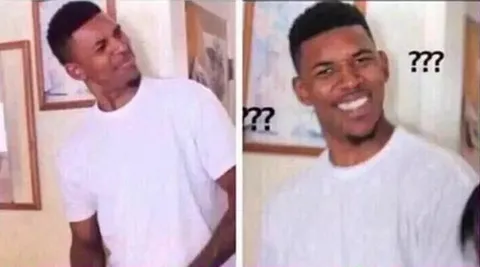
The joke works through distance: the viewer sees that the situation is not a catastrophe but foolishness, and the reaction seems excessive. Many reaction templates work the same way, where the face expresses “what did you do” before the other person has a chance to explain. The furrowed brows and crooked smirk in the frame only strengthen this effect: the person is simultaneously indignant and amused.
Four captions for the template
The captions below were invented for this article. Each has a short setup and a reaction to it.
“Said I would assemble the wardrobe myself in one evening. The evening passed, and the wardrobe has an extra door.” The ending works as the reaction in the frame: the mistake is visible, and the viewer immediately grasps the scale.
“Promised not to open the work chat on vacation. Already six unread messages and a meme from a colleague.” Here the setup is tied to a habit, and the reaction turns it into a familiar situation.
“Decided to add just a little more salt to the soup. The soup is looking at me with reproach.” The turn shifts the reaction onto an inanimate object, which adds absurdity.
“Volunteered to help with the move and said I’d take the heavy stuff. Took the empty box.” The contrast between the promise and the deed rests on a single concrete image, so the caption is short.
How to caption the frame
It is better when the caption is short: one phrase about the plan and one about the result. The facial expression already conveys the emotion, so the text should not explain what the viewer is feeling. The caption can be placed over the sky in the right half of the frame, where there is free space, without covering the face.
If the template is used for someone else’s mistake, keep it at the level of the situation rather than the person: no names, addresses, or details by which a specific individual could be recognized. Then the joke is about the awkwardness, not the personality. Everyday occasions work well: cooking experiments, repairs, furniture assembly, weekend plans that fall apart at the first step.