The "Patty Hype" frame and the 2016 tweet
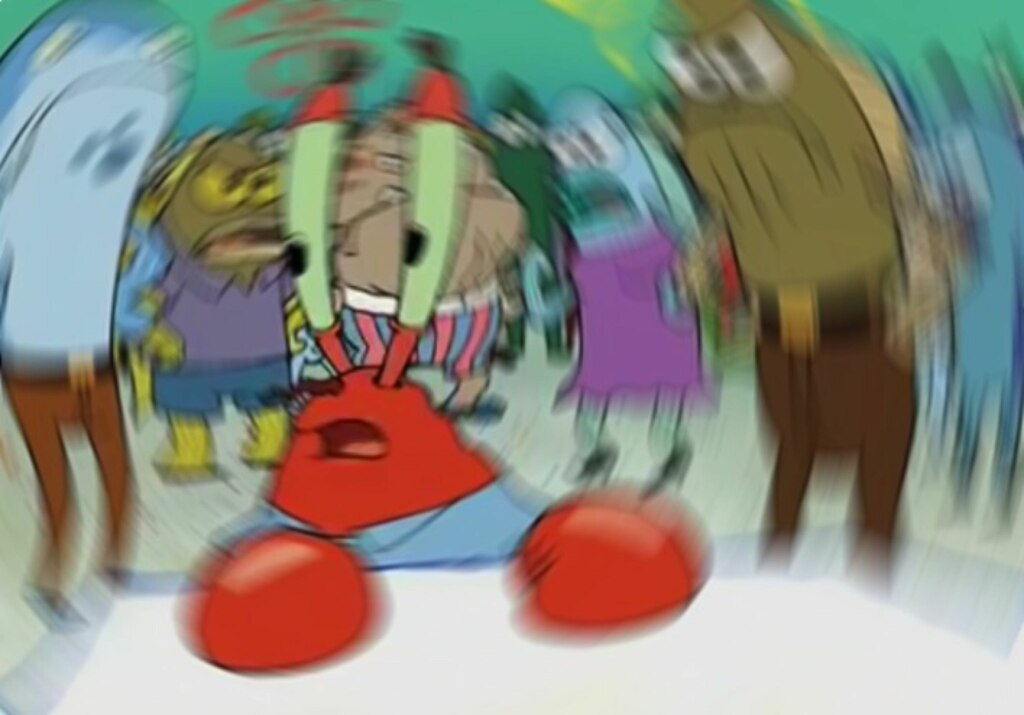
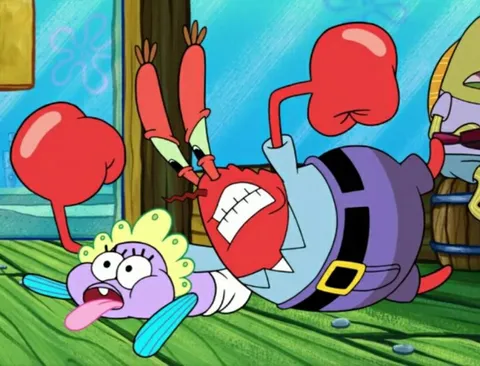
The SpongeBob SquarePants episode “Patty Hype” aired on Nickelodeon in 2001. In it, SpongeBob sells colorful Pretty Patties, the residents come back with side effects, and Mr. Krabs ends up facing an angry crowd. Fifteen years later, on January 31, 2016, Twitter user isthatahmed posted an edited frame with a caption about waking up from sleep while the parents are already yelling.
The episode and the meme have different dates: 2001 refers to the original animation, January 2016 to the well-known early posting of the edit. In the following days other accounts reposted the picture, and then it appeared in Reddit communities. This is the early history of the captioned variant, not proof that every file with Krabs and blur comes from that very tweet.
A whirlwind around a frozen expression
In this frame the hero is hard to make out at first glance: the red claws and eyes hold the center, while the figures around stretch in a circle. Against the motion, Krabs's face remains relatively calm, creating the sense that the scene is spinning faster than he can grasp what is happening. The effect amplifies the confusion but does not say what caused it; that leaves the reason to the caption.
In the original episode the character is not literally caught in a whirlwind. The blur was added when the meme image was made, to visually translate sudden disorientation into a graphic effect. That is why it is so easy to substitute a new event: instead of “what happened?” one can imply a chaotic day, an unfamiliar program, or an argument in a group chat. The caption usually names the moment when a familiar situation fell apart.
A picture instead of a clarifying question
The early caption about waking up after sleep names the moment when a person has not yet tuned in to what is going on. In a chat the picture can also be posted after someone else's message: it then answers not by retelling the event but by demonstrating that the information doesn't fit in one's head. That response differs from a request to repeat what was said. It lets the interlocutor see the degree of confusion and lets other participants recognize their own feeling. The blur turns a lack of understanding into a visible image, so even a short remark before the picture gives it a new cause.
Examples where the cause changes the joke
“Caption example: I opened the router settings to change the password and accidentally landed on the provider's configuration page.” Here the chaos arises not from the number of tasks but from sudden technical depth. “Caption example: When I came in for a single certificate and the window asked for four more documents that weren't on the list.” The cause is different — a bureaucratic twist — although the visual reaction is similar.
A reference to the cartoon is kept in the caption about the sales scene: “Caption example: I just wanted to look at Pretty Patties, and ended up in a queue sorting out orders.” The viewer reads the confusion from the unclear surroundings and the recognizable figure in the center.