The frame people recognize instantly
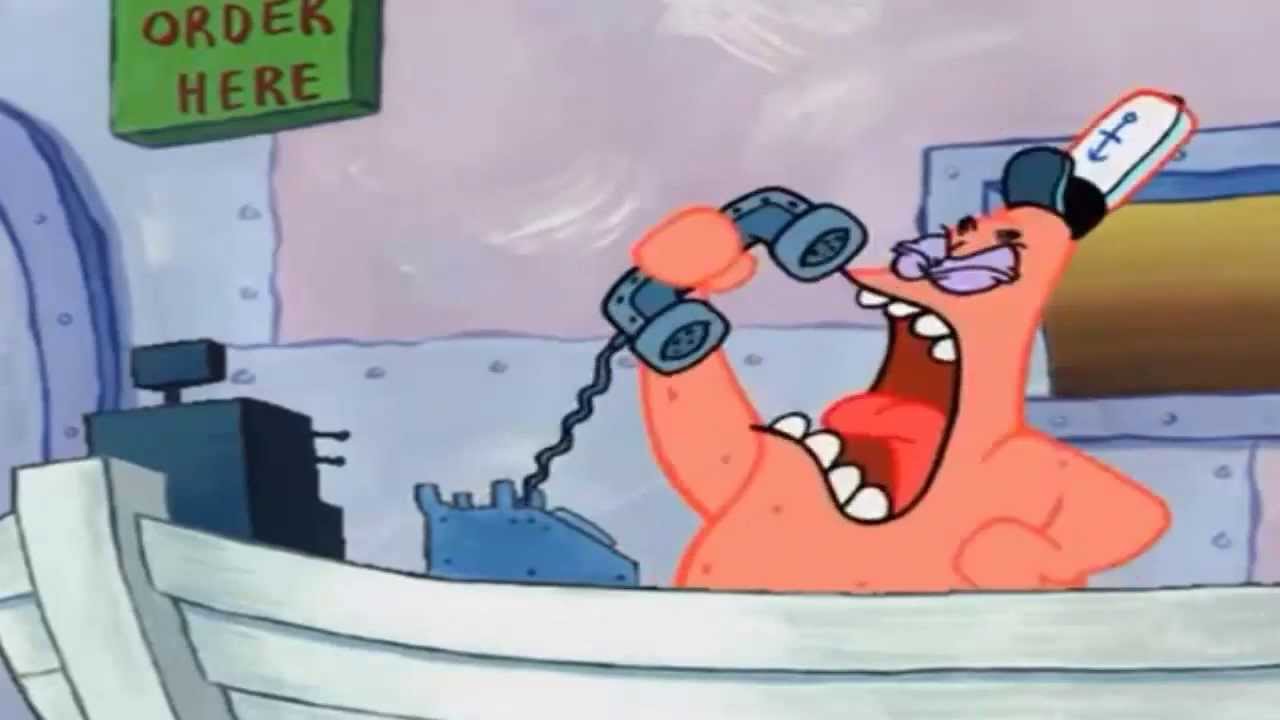
The picture shows a pinkish-orange Patrick with his mouth wide open and his eyes squeezed shut, holding a blue telephone receiver to his face with both hands. He wears a white cap with a blue anchor, and in the background there is a green sign reading “ORDER HERE,” a gray-blue cash register and a light counter. This is a still from the cartoon, without captions or editing inserts.
The expression reads as irritation or indignation. It matters that this is a character's glance within the scene, not a personal reaction of a real person: emotions like this are deliberately exaggerated in animation, which is why the frame works as a template.
Where the line comes from
According to reports, the scene is from the second-season episode “Big Pink Loser.” Patrick takes a job at the Krusty Krab but does not realize he is answering the restaurant's phone. His shout “No, this is Patrick!” ends a short excerpt of about twenty seconds. The exact episode number and air date are given differently across sources, so it is better not to rely on them.
The character's motives also vary between retellings: in one version, he takes the job out of envy of SpongeBob's awards. This motive is not confirmed everywhere, and the joke does not need it.
How the line became a template
When exactly the line became a meme is not firmly established: sources name different periods, from the second half of the 2000s to the early 2010s. These should be treated as stages of spread rather than as a single date.
A popular technique was edits with a scene from the film “300,” where a character shouts “This is Sparta!” This made the line a short insert that is easy to drop into any video that calls for a loud, absurd answer.
Captions for your own template
“Hello, is this the accounting department?” — and in reply, the picture says “No, this is Patrick!” The question sets up an expectation of an organization's name, and the answer gives a character's name. The effect is built on substitution: the listener hears something other than what they expected.
“You've reached the department where nothing gets decided.” Here the caption itself becomes a question, and the picture answers with a mocking protest. What is funny is that the answer sounds confident and loud, even though the situation is obviously wrong.
“Mom, you dialed the wrong son again.” The caption turns the frame into an everyday scene. The character answers as if the call were addressed to him personally, and it is this confidence in the wrong recipient that amuses.
Each example works on the same mechanism: a question, the expectation of an answer, and a loud “no” that turns the situation around. That is why the picture fits both a serious tone and a silly everyday joke.
Why this line is funny
The humor comes from a mismatch: at a restaurant, people are waiting for an order, but the character answers as if it were an important call about himself. The volume, the wide-open mouth and the squeezed-shut eyes push the reaction to its limit, and the short excerpt gives the viewer no chance to catch their breath.
When using the template, it is worth remembering that the joke is about the situation, not about a real person. Captions about specific people or their private lives go beyond this meme and stop working as a recognizable reference to the scene.