What's shown in the picture
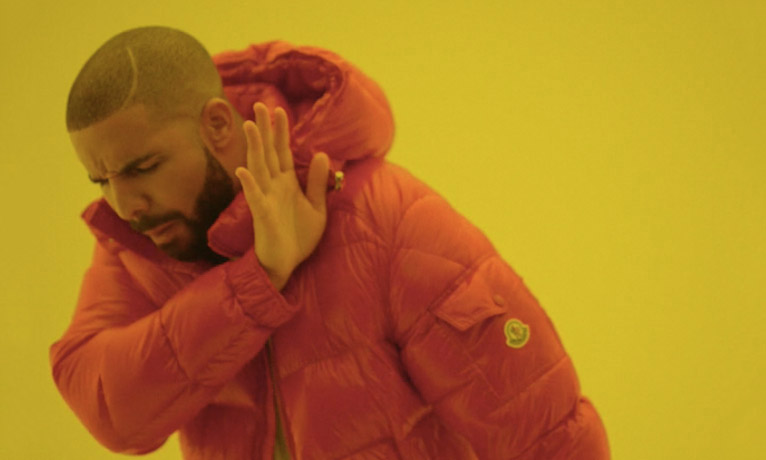
In the frame, Drake is shown in close-up wearing a bulky, bright orange hooded jacket with a Moncler logo. He turns his head away, grimaces, and extends his hand palm-forward, as if refusing an offer. The saturated yellow background makes the outfit stand out even more, and the whole scene looks staged and deliberately expressive.
The frame is taken from the music video for "Hotline Bling," directed by Anthony Mandler and released in the fall of 2015. In the video, Drake carries himself in a relaxed way and gestures in his signature manner, and it's exactly this gesture that became the basis for the future template. The meme itself works independently of the song, so you don't need to know the video's plot to get the joke.
History and spread
The meme appeared at the end of 2015, when users on Twitter, Tumblr, and English-language imageboards started overlaying two images with captions on the frame: on top, the thing that's disliked; on the bottom, the thing that's chosen. The authorship of the specific template couldn't be established, so the format's origin can be considered unidentified: the first versions were created anonymously and copied quickly.
The name drakeposting took hold as it spread, and in the Russian-speaking segment the meme is often called "Selective Drake." The format arrived in Russian communities shortly after the English-language surge and became one of the basic templates for comparison images. It's recognized even by people who've never listened to Drake, since the gesture reads without translation.
The format quickly became the subject of parodies: users put all sorts of things into the top and bottom panels, from programming languages to types of tea and board games. The template was used both in advertising compilations and in news pieces, so over time it moved from being a single joke to a universal language of comparison.
Typical captions and areas of use
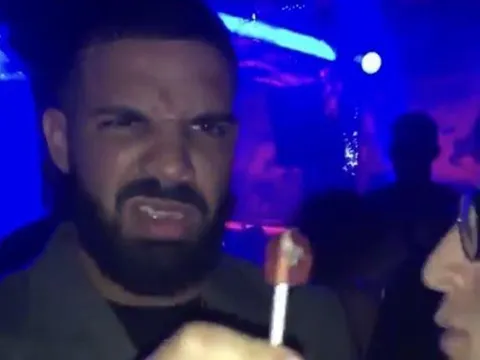
The classic layout consists of two panels. The top one rejects a bad or boring option, the bottom one shows the one the author chooses. The captions can be anything: from everyday choices, like "cooking at home" versus "ordering delivery," to jokes about programming, school, food, and TV shows. The top part is usually short and dismissive, the bottom one more detailed and enthusiastic.
Sometimes the format is expanded to four panels with intermediate options, but the meaning stays the same: comparing two similar things. The meme is often used in comments and threads to explain a position without a long text. There's also self-irony, when the author rejects their own old habit in favor of a new interest.
Why the template caught on
The main mechanism of the joke is the contrast between two reactions expressed with one gesture. The dismissive wave reads instantly and needs no language, so the meme is understandable to people of different countries and ages. The viewer sees that one thing is rejected and another approved, and all that's left is to fill in the picture with their own caption.
The second reason is visual vividness. The orange jacket against the yellow background reads well even when shrunk down, and the facial expression adds theatricality to the scene. The format is easy to copy, so the meme regularly returns in new waves as users come up with unexpected comparison pairs and reinterpret the template.
It also matters that the picture doesn't require knowing the song: it's enough to see the gesture to understand which panel is rejected and which is accepted. That's exactly why even new users, far removed from pop culture, quickly pick up the template and start using it in their own captions.