What is shown
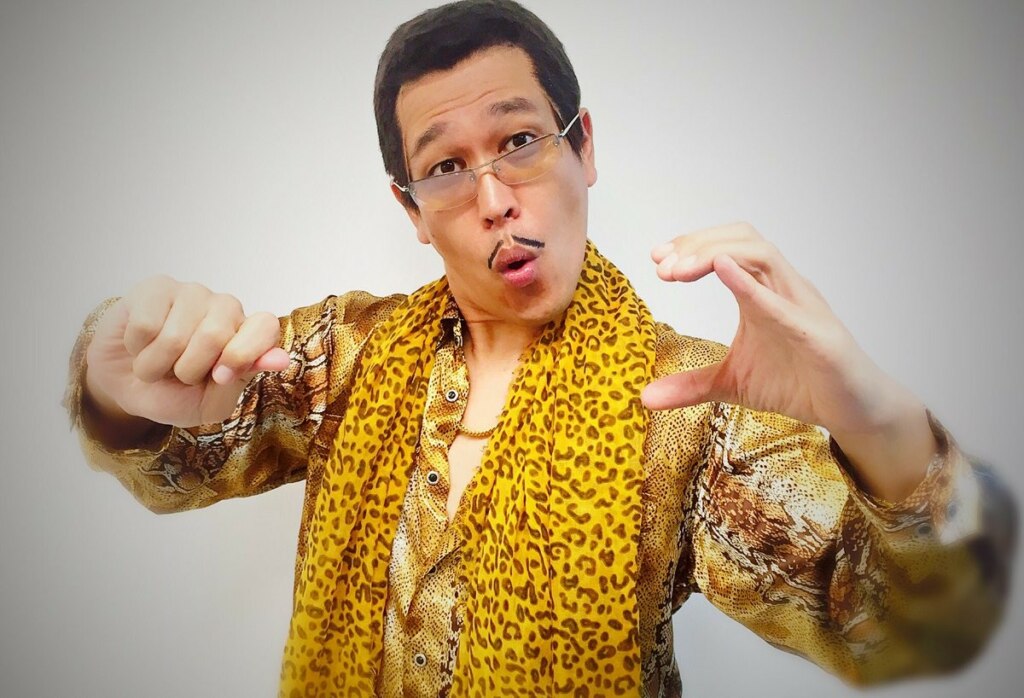
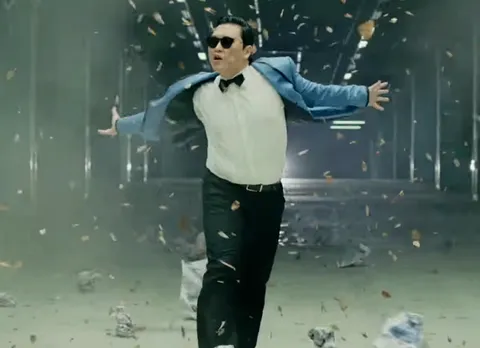
In the well-known shot, Piko-Taro stands against a plain background in a flashy outfit with a leopard-print scarf and a shiny jacket patterned like snakeskin. He has thin glasses, short dark hair, and a small mustache. He raises his arms in a signature gesture, as if about to show off or catch something, looking both serious and comical at the same time.
It's exactly this contrast between the performer's serious look and the absurdity of what's happening that became the visual foundation of the meme. The viewer immediately understands this isn't an ordinary music video, but a deliberate parody of flashy pop productions taken to an absurd extreme. The shot is recognizable even without sound: the pose and the bright costume alone are enough to bring the whole tune to mind.
Origin
Piko-Taro is the stage name of a Japanese comedian who performs short comedy skits. The song "Pen-Pineapple-Apple-Pen" was released on YouTube in 2016. The lyrics follow a simple structure: the performer names, one by one, objects that he "has," accompanied by a repetitive chorus in which the pen, pineapple, and apple combine into a recognizable phrase.
The video quickly spread across Western social media and then caught the attention of major media outlets. Piko-Taro himself expressed surprise at the attention. The viral success can be explained by how easy the clip is to reproduce: the simple dance and short tune can be repeated without any preparation, which led to a wave of covers, parodies, and videos imitating the dance. Many parodies kept the original's basic structure and only swapped out the objects, which firmly established the song as a recognizable template.
Usage and typical captions
Online, the name "PPAP" is used as a caption for all sorts of absurd situations: when something repeats endlessly, when a set of objects seems random, or when someone goes about a ridiculous task with exaggerated seriousness. Sometimes just writing "I have a pen" or the phrase itself is enough to make the reference clear. For example, a caption like "my coffee, my deadline, my laptop" echoes the rhythm of the original and is instantly understood by anyone familiar with the song.
The meme also frequently appears in the form of a challenge: users film themselves to the tune and repeat the gestures, then add their own objects, such as a banana or a pencil. These variations show how the song's simple structure allows anyone to plug in their own words while keeping the recognizable form. This is usually how new versions come about: the original rhythm stays the same while the set of objects changes to fit the specific situation.
Why the meme stuck
The main mechanism was the combination of a catchy tune and absurd lyrics. The repetitive melody is memorized quickly, and the random set of objects provokes laughter precisely because there's almost no logic to it. The performer's serious delivery heightens the comedy and makes the clip both funny and awkward at once. What matters here isn't the meaning of the words but the recognizability of the rhythm: even a random line sung to the same tune immediately calls the original to mind.
Another reason for its success is the low barrier to entry. No dance skills or musical training are needed to take part, which made the clip a universal excuse for imitation. That explains why PPAP outlived its first wave of popularity and remains in memory as one of the most notable internet phenomena of the mid-2010s.