What is in the frame
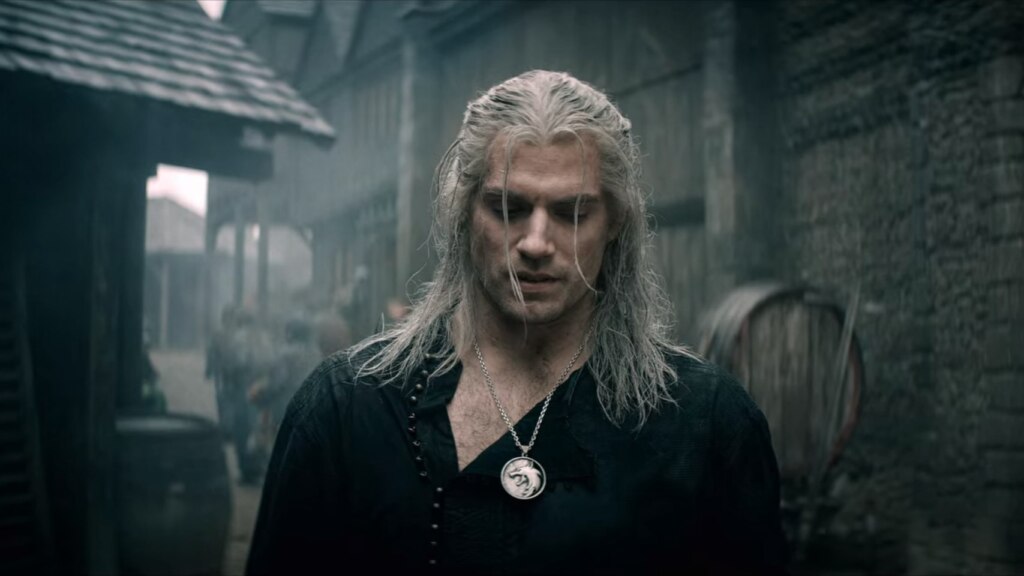
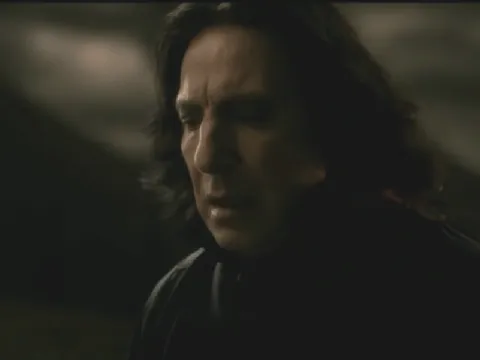
A man with long, damp light hair looks downward, eyes half-closed. He wears a dark shirt with an open collar, and on his chest hangs a chain with a medallion in the shape of a wolf's head. Behind him are wooden buildings and rough masonry, a street in haze, and blurred silhouettes of people in the distance.
This is not an interior but a village street. The facial expression is tired, as if the man has seen what he expected and did not want to see.
Where the hero comes from
Geralt of Rivia is a monster hunter from the book cycle by the Polish writer Andrzej Sapkowski. His wide fame came thanks to the game series, above all “The Witcher 3: Wild Hunt” (2015). The Netflix series premiered on December 20, 2019, and Geralt was played in it by Henry Cavill. The wolf medallion on his chest is the sign of the Wolf School of witchers.
The Geralt of the books is restrained and laconic, and the series kept this image. That is why a short, crude remark in a moment of irritation is perceived particularly vividly.
How the meme emerged
According to English-language catalogs, viewers noticed that Geralt often says this word when a situation goes wrong. On the premiere day, December 20, 2019, one Twitter user posted a video of such a moment, and on December 22 the series' official account published a frame with this word in a caption in the spirit of “when you binge-watched the series in one evening.” The post gathered thousands of likes, and by the end of December, compilations had appeared on Reddit.
What became the meme was not the word itself but the contrast: the hero's image is stern and does not suffer from wordiness, so a single word in place of a speech works as an exhaustive answer to any misfortune. The line itself is not quoted in the article: it is already well known from the original.
The template works well as a reaction to a long chain of small troubles: after the third in a row, the hero is no longer surprised but simply looks down. This weariness is what makes the picture universal.
Caption examples
“When I checked my inbox on Monday morning.” The only reaction to a whole shower of emails.
“When I realized I forgot to turn off my alarm for the weekend.” A minor tragedy delivered with epic seriousness.
“When the website said my cart was empty, even though I had already picked the items.” Geralt's pose expresses the resignation of someone used to pitfalls.
“When I refreshed the page and there are still no replies in the chat.” The comedy lies in the weary submission to fate.
How to apply the template
The frame suits short captions about a nuisance you saw coming. Usually the caption starts with “when”: the downward look and drooping shoulders complete the picture. Extra words in the caption are harmful: the hero is by definition laconic.
If you need a version that is safe for all platforms, it is enough to leave the caption without the word or replace it with an ellipsis. The meaning is still clear: Geralt is silent because words fail him.
The caption works best if the trouble is named concretely and without drama: the hero's pose does the rest. The calmer the incident is described, the stronger the familiar weariness from such trifles feels.