The song and the picture
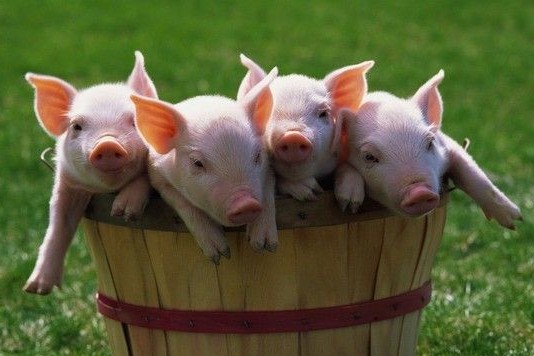
The image shows several pink piglets peeking out of a wooden barrel against a green background. In the meme, this near-greeting-card shot of cute animals is paired with the line 'The piggies rubbed each other's backs' from the children's song 'Khryushechki' ('Little Piggies'). The fragment became recognizable in short-form video and spawned a wide range of animated and situational variants. Posts about the trend describe its spread through short clips, but the exact first publication of the piglet picture specifically is hard to pin down independently. So this particular image shouldn't automatically be treated as the original, nor should the whole wave be credited to a single author.
The mechanics of the repetition
The song gives the joke a ready-made rhythm: a simple sequence of actions, rhyming words, and repetition are easy to remember. The picture reinforces the sense of togetherness: the piggies are literally pressed up against each other, with only their heads and paws visible over the edge of the barrel. In a clip, the musical fragment can accompany a shared routine, while the caption transplants it onto people acting together. The comedy here is gentle: it tends to rest on a recognizable everyday resemblance and cute absurdity rather than an unexpected plot twist.
How captions for 'The piggies rubbed each other's backs' are built
'My team and I rub each other's backs — meaning we both hit "refresh" at the same time and wait to see who cracks first.' The song's image of mutual care turns synchronized inaction into a collective ritual. The joke isn't made by an unexpected ending, but by a disproportionately solemn musical backdrop for a small work-related awkwardness. It fits friendly chats, as long as everyone involved understands the situation.
'Dorm neighbors before a deadline rub each other's backs — meaning they take turns using the one free outlet.' The caption conveys everyday cooperation and cramped quarters, echoing the composition of several piglets in one container. It works thanks to a precise match between the picture and the situation, but it shouldn't claim the characters are literally performing the action from the song's lyrics: it's a metaphor, not a documentary caption for the shot.
Where it's a good fit
The template supports themes of mutual help, cozy chaos, repetitive chores, and team routine well. In a short video, you can leave the musical line as a recognizable audio hook and add a single piece of context text over it; for a still picture, one phrase is enough. For your own version, pick a situation where several people or objects are tightly bound by a shared task. If the caption turns into a long explanation, or is about conflict, anger, and loneliness, the good-natured image of the piglets will start to clash with the content. It's better not to mock the children's song itself: its simplicity is the very source of its recognizability, not a flaw that needs exposing.
What's known about the origin
Posts about the trend point to the children's song 'Khryushechki' and its viral reuse in short-form video. The lyricist's name and the music's attribution turn up in reference material, but the origin of this particular photo of piglets in a barrel, and the chain of its early reposts, is a separate question — and the melody's history shouldn't be projected onto every picture that uses it. This article describes a durable internet technique: a familiar musical fragment plus a cute collective image plus a new caption tying the scene to everyday experience.