The song and the local image
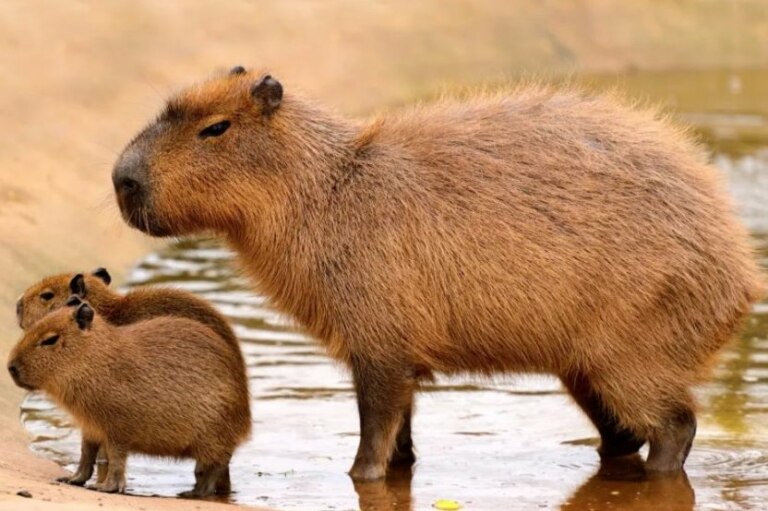
The local image shows an adult capybara and a baby. The animals' calm profile pairs well with the repeating song line "capybara, kakibara, capybara": the sound turns an ordinary shot into a rhythmic postcard. The track "Capybara" was recorded by the musician Sto-Lichniy Ona-Nas; the official audio release came out in February 2023.
Going viral does not mean the animals really behave like characters in the song. Capybaras are the largest living rodents and usually live near water in South America; the meme image of a soft, serene companion simplifies biological reality. For this article it is important to tell observed animal behavior apart from the human projection of calm onto it.
How musical repetition works
The chorus is easy to remember thanks to the repeated title and the slightly shifting sound of the word. A short excerpt can be laid over a slow walk, feeding time, or a group shot of capybaras. The repetition makes it feel as if the song is simply accompanying their unhurried pace, and the viewer needs no extra storyline.
The official audio release confirms the artist and the publication date, not the date of each meme version. The exact first video using the song and the specific event that set off its spread have not been established. So this article does not claim that the track created the trend itself or that it first appeared on any one platform.
Meaning and mood
In conversation, "capybara" can stand for wanting to stay calm, not giving in to bustle, and spending time in pleasant company. Sometimes it is just a musical caption under an animal video. The playful spelling "kakibara" is a game with the sound; it is not a separate species name or a scientific term.
A self-ironic version works just as well: someone can describe their state after a long week as "capybara mode." At the same time, real capybaras need suitable living conditions and are wild fauna; the meme should not give the impression that an exotic animal is a simple household accessory. For an ordinary joke, comparing pace or expression is enough, without romanticizing keeping one.
New ways to use it
For a workday: "While everyone is urgently changing the plan, I'm choosing capybara pace and checking facts." For a family album: "We went out for a ten-minute walk and came back an hour and a half later because nobody was in a hurry." The repeating sound works well as a backdrop for shots where animals walk calmly side by side or rest.
You can use the phrase without animals too: "Weekend plans: capybara, kakibara, a little more capybara." In that case the caption signals a relaxed mood and the song's recognizable rhythm. It's best not to overload the video with long text over the chorus: the musical repetition sets the structure itself, and the visuals can stay simple.
The caption can be built on repetition: "First I came to look at the capybara, then stayed for one more video." Or briefly describe the author's state: "Planned to answer messages quickly; accidentally put the song on and switched to rest mode." These are personal situations, not traits of the animals themselves.
For stories, you can keep one calm shot and end it on the chorus without any sharp transitions. The music then sets the mood by itself, and the caption merely helps tie it to a specific moment of rest.