How the meme sounds
The line "Will you eat some treats? Please. Do eat the treats. They're tasty" is spoken in a high, soft, and slightly unnaturally enunciated voice. Repeating the words "treats" and "eat" turns a simple food offer into an insistently gentle monologue. The sound suits videos that show a person or an animal being offered something nice.
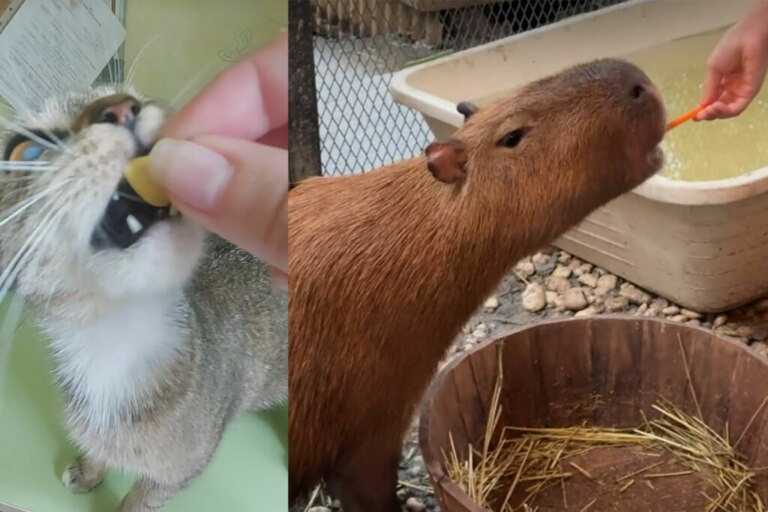
The exact history of the audio is not established. The viral spread picked up in summer 2024, and an early notable version showed a cat being offered a treat on a stick. After that, users began to adapt the sound to their own videos. The voice source and earlier variants may differ, so it is better not to say that the popular clip is the first recording.
Why the cat became part of the template
The cat in the video does not answer in words, so the whole scene builds on expectation: will it take the treat, show interest in the object, or pull back? The soft voice speaks to the animal as if coaxing it to accept a very tempting offer. The contrast between the human appeal and the pet's silent reaction makes the video easy to understand without much context.
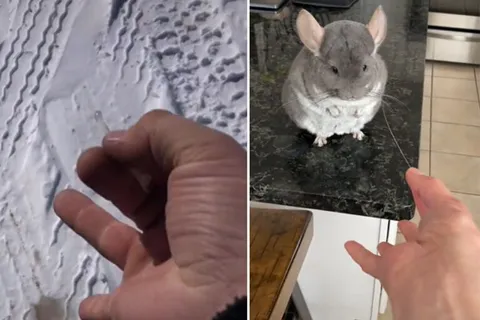
Later the sound was used with other animals, dishes, and gifts. Sometimes, instead of actual food, the "treat" was an idea, a bonus, or emotional support. This carries a childlike tone into adult situations and creates gentle irony. But do not feed animals unsuitable food just to recreate the meme: a video should not encourage harmful treatment of pets.
The mechanics of gentle repetition
Repetition works as persuasion. First comes a question, then "please," after which the speaker names the treat again and assures it is tasty. This sequence recalls how an adult might coax a child to try new food or how an owner offers a pet a treat. The exaggerated tenderness makes an ordinary offer almost ceremonial.
In meme versions the repetition can be applied to things the audience would not consider real treats. For example, the "treat" becomes a link to yet another work document or a recommendation to watch a series. The less edible the object, the more noticeable the transfer. But if the caption gets too complicated, a simple, clear scene (food, a gift, a surprise) usually works better.
Examples of new captions
"Will you eat treats? Here is a new 48-page manual for you." This version pairs the sweet voice with an unwelcome work file. Or: "Do eat the treats; these are the strawberries the kid has already picked out for every member of the family." The joke here is that appealing food is offered with excessive seriousness.
Another example: a pet is offered a toy and looks away: "See the treats? They're for you." An important condition is not to force the animal to eat and not to read invented emotions into its behavior. The caption describes the human voice and the situation; it does not prove that the cat actually understands the long phrase.
Where this audio reference fits
The sound usually suits cute animals, gifts, and harmless offers. It can convey a very gentle invitation or playful coaxing. In chat between friends the phrase also works for offering tea or sharing dessert, if the other person is comfortable with that manner. The audio does not have to be taken as the official voice of any character.
Do not use it to pressure someone who has turned down food, a gift, or participation. Repeating an offer after a clear "no" is no longer a cute meme. Also do not post a close-up of a stranger or a child without permission. A kind tone combined with respect for the answer keeps the reference warm rather than pushy.