The scene and its comic twist
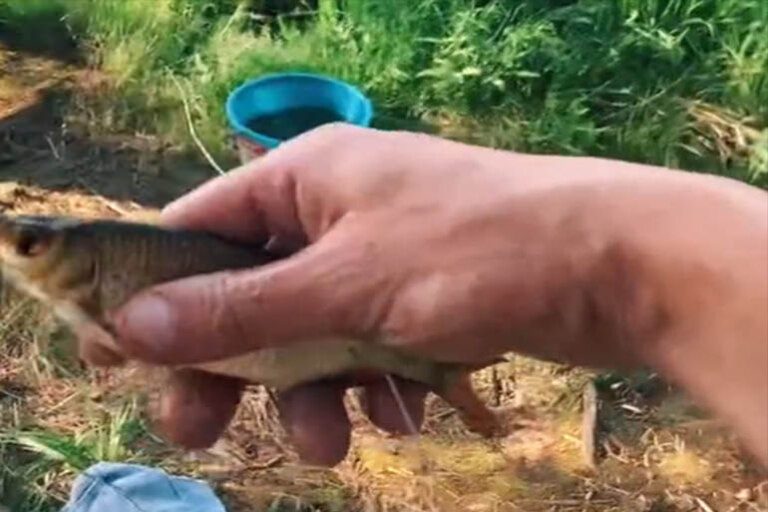
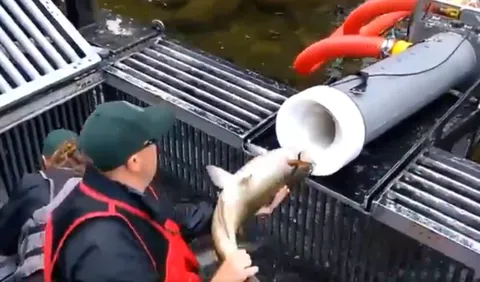
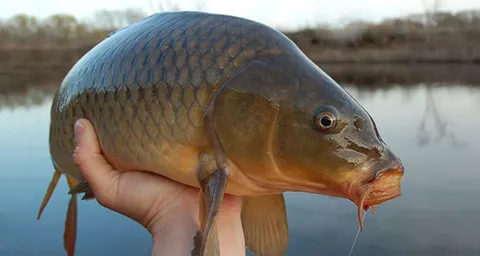
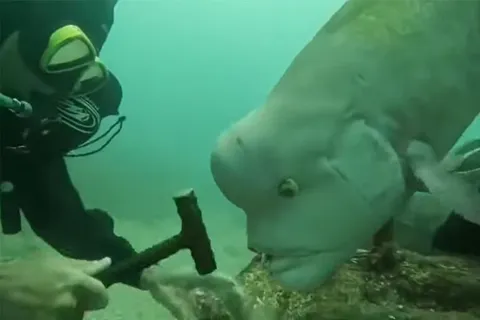
In the image a large fish is held by a hand; behind it is water and a shoreline setting that looks like a fishing spot. There's no basin anywhere in frame. In videos built around similar shots, a line in English is attached or dubbed in: "No, no, no, Mr Fish," after which the explanation switches to Russian. The person talks to the fish as if discussing its plans, even though the decision is entirely his. The mismatch between the serious tone and the ridiculous addressee is the basis of the joke.
The basin shows up in the voiceover, not in the image: in the well-known line, the narrator talks the fish out of going back to its "family" and says it's headed for the basin instead. This threat sounds pointedly mundane and illogical, as if the person were trying to politely negotiate with the catch. The English address creates the appearance of a conversation, and the Russian continuation breaks it. That's why it's important to separate what's actually heard from what's actually visible in the photo.
Where the line comes from
The template is tied to short comedic fishing videos in which the author comments on events using a mix of English words and Russian phrases. In particular, analyses of early posts link the phrase to the account undergroundfamily. However, individual reposts and clips may rearrange the episodes, audio, and footage; not every video containing this quote is necessarily the original recording.
The threefold "no" works as building insistence, and the address "Mr Fish" gives the fish an almost official status — it's this repetition, rather than the mere switch of language, that's recognized from a short caption alone, without video: the reader mentally fills in the pauses and the speaker's insistence.
How the meme is used now
The phrase is usually applied to a situation where an object or person seems to be refusing its expected fate. For example: "No, laptop, you're not shutting down before saving — you've got five more minutes of work" or "No, weekend, you're not ending after one evening." It works best when there's an obvious mismatch of interests: the speaker makes the decision for the object and pretends to be explaining the rules to it.
The template suits a reaction to minor resistance from a device, a pet, or a household item, as long as it's clear this is playful personification. The caption should keep the shape of persuasion rather than just repeating the English words. You can shorten it to the address plus one phrase so the final absurdity lands clearly. For an audience unfamiliar with the original audio, add a short explanatory caption.
How not to distort the meaning
The meme is about a comical way of talking to a fish; it's not a guide to handling animals and not a call to harm them. If you use the original shot out of context, don't present it as documentary evidence of cruelty or as the fish's actual speech. The joke rests on the human line and the obvious artificiality of the dialogue.
When adapting it, you don't have to copy the crude language or every word verbatim; what matters more is the repetition, the friendly address, and the sudden shift in logic. You can invent your own safe ending about a basin, a fridge, or a kitchen table, as long as it's clear this is everyday absurdity. Don't state the fishermen's names, the filming location, or the exact date of the original recording without confirmation: separate versions and trimmed copies circulate online.