A fish in hand
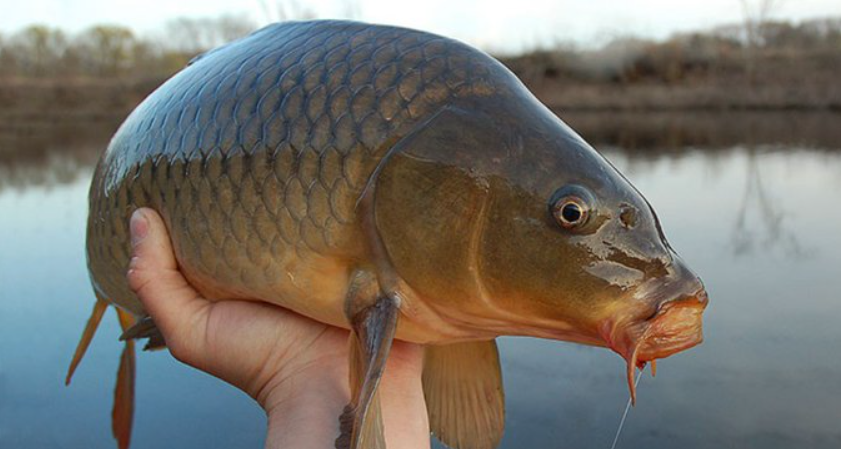
The image shows a carp with golden-brown scales, held in someone's palm against a background of water and shore. The fish's mouth is slightly open, its barbels are visible, and its round, attentive eye looks out, and a thin fishing line hangs from its mouth. There is no caption on the picture itself, and the frame looks like an ordinary fishing photo, with its photographer and origin unknown.
How it began
On December 18, 2020, the Twitter user @dm4uz3 posted a tweet with this photo and a “tweet #carp” button. Pressing it in the mobile app automatically created a new tweet with the same content. According to the author, the idea came from an earlier self-replicating tweet about Bingus, posted on November 25, 2020.
The mechanism used Twitter's conversational ad feature. Twenty minutes later, the author promoted the tweet as an ad, and the spread accelerated sharply. According to accounts of the trend, within about an hour the tag reached the trending list in the United Kingdom with tens of thousands of posts (around 65,600 is cited), and within two hours more than 200,000 tweets had been posted. These are estimates from retellings rather than official statistics.
Self-replicating tweets as a genre
Carp prompted discussion of a phenomenon in which a post multiplies on its own thanks to a button. The user doesn't need to invent anything: a single tap, and the tweet goes out to the feed — the same one-tap mechanic @dm4uz3 had already tested with the Bingus tweet weeks earlier, before pairing it here with a paid ad to speed things up.
Later such tweets became a joke about the platform itself: people discussed how an ad feature had turned into a game and mass entertainment. Details of the settings differ across accounts.
Why carp
The choice of fish had no particular meaning, and the meaninglessness was part of the appeal. The word is short, the photo is recognizable and slightly absurd. When hundreds of thousands of people write “carp” at the same time, the sheer scale becomes the joke.
After that, users began putting the carp into other contexts and discussing the mechanics of the tweet itself.
Caption examples
“carp.” The classic version: nothing extra, just like the original.
“Morning after the deadline: carp.” The fish's look stands in for words and conveys bewilderment.
“When someone asks about your life plans: tweet #carp.” The joke is that instead of an answer you are invited to press a button.
“The carp owes nobody anything.” The meme turns into a philosophical quote, and the fish's calm look amplifies the effect.
How to use it
Short lines and reactions to bewilderment work well. There is no need to explain the picture: it works because there are no explanations. Remember that historically this was a social media action: a photo without the word “carp” reads simply as a picture of a fish.
What makes the picture work
The photo of a carp in a hand looks both natural and a little comic: the fish lies on the palm like a small pet. The calm face shows neither joy nor fear. Almost any mood can be laid over such frames, and they hardly ever clash with the caption.
If you want your own version, play on the contrast between the seriousness of the occasion and the simplicity of the word. The more solemn the start of the phrase, the funnier the final “carp” will be.