A pig made from a single sheet
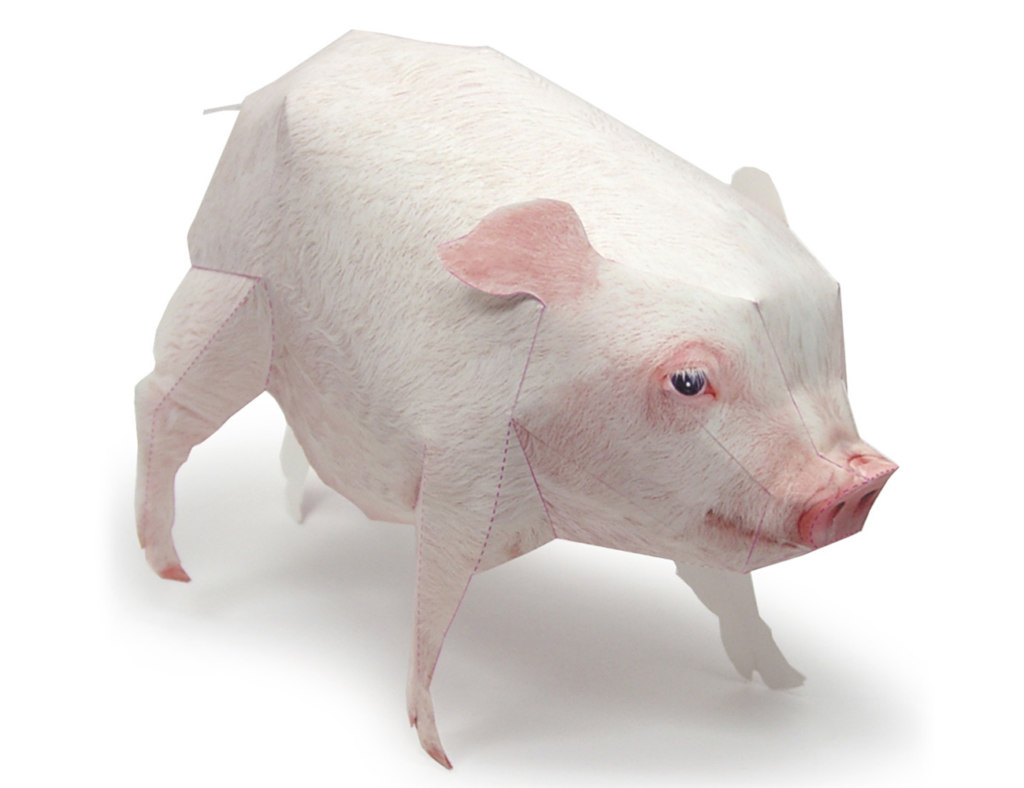
The image shows a white studio backdrop and a single figure: a light-pink pig standing on four legs, its head tilted slightly down, with a round snout. The fur, ear, and eye are printed on, but the volume here is real: the body is made up of flat facets, and thin dotted fold lines and dark seams are visible on the legs and along the snout. These details give away that this isn't a toy or a sculpture but a paper model, folded from a printed net.
What makes the shot recognizable is the contrast between the serious, realistic drawing and the obvious "cardboard-ness" of it. From a distance the pig looks real; up close it looks like a kit. That contrast is exactly what the jokes are built on.
What's known about its origin, and what isn't
The maker of this particular figure, the company behind the template, and the date the photo was first published are all unknown. In 2021, the pig made its way into TikTok and Twitter, but there's no independent confirmation of the first video or post, so the meme's exact "birthday" remains an open question.
What is known is this: making paper animal models from printable templates is a long-standing hobby. Printer and paper-craft manufacturers have been posting these nets online for free download for years, and in 2021 TikTok saw a wave of videos of people assembling paper animals and showing off the result. Whether this particular pig is tied to one of those collections specifically is unknown, and the figure's authorship hasn't been established.
Why a pig, and why paper
The joke works on several levels at once. The first is tactile: a paper figure comes across as something fragile and cute, and any absurd situation built around it instantly reads as funny. The second is accessibility: all you need to replicate it is a printer, scissors, and glue, so anyone can make "their own" pig and film a video.
The third level is the pig itself. In colloquial Russian speech, a pig is an image of sloppiness, gluttony, and stubbornness, but the pink paper piglet is almost entirely free of those connotations: it's neat, clean, and doesn't resemble a living creature at all. Because of that mismatch, it's easy to pair with either a heartwarming caption or a biting one.
Example captions
The captions below were invented for this card.
"My productivity on Monday: looks like work, but it's held together with glue." The joke rests on a literal coincidence: the figure really is held together by glued seams, and the comparison to one's work ethic needs no further explanation.
"When you said you'd start saving, then ordered delivery instead." The reader's mind fills in a piggy bank on its own, and the flat paper adds the feeling that there's nothing to save in the first place.
"My weekend plan after being folded in thirds." The facets and folds on the body suggest a metaphor for a plan that's shrunk and gotten lumpier.
"Passport photo: sort of me, but with someone else's angles." Here the joke rests on the resemblance to the original, which is never quite complete: we recognize ourselves in the shot, but notice the seams.
How to use the image
A plain white background works best: the caption can go above or below without covering the figure. Don't remove the dotted lines and seams — they're what makes the picture funny; without them it turns into an ordinary photo of a piglet.
The caption should emphasize how "put together" or fragile the thing is: quick, slapped together, held by a prayer. If the joke instead relies on the usual image of a pig (greed, filth), the shot loses its bite — the paper model is too clean for that kind of reading.