A man, a desert, and a very red flag
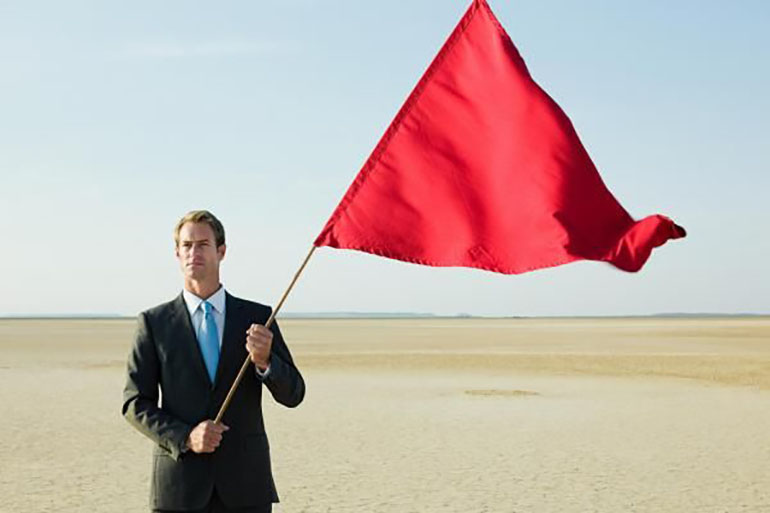
The photo shows a man in a dark suit and a blue tie standing in the middle of a flat, light desert. In his hand is a long pole with a large red flag that stretches to the right. The sky is clear and there are no people around. The shot looks staged, like an illustration for the topic.
The source of the photo and its author are unknown. The joke does not need this: the picture literally shows the idiom “raising a red flag.”
The idiom and its path into relationships
Red has long been a signal of danger, and the expression “red flag” in the sense of “sign of a problem” existed in English long before social media. The meme was built on conversations about relationships: first as serious advice, then as a joke.
According to reviews, the wave began on TikTok by spring 2021 at the latest. Users under the hashtag about red flags described warning signs in a partner, for example overly fast declarations of love or constant mentions of exes. Later, in October 2021, the format moved to Twitter, Facebook, and Instagram.
October 2021: a flag for every phrase
The pattern was simple: a phrase is written, and a line of 🚩 emojis follows. According to one publication, Twitter recorded a 455% rise in mentions of the emoji in a single week, and on one day the number of tweets using it exceeded one and a half million. According to the same data, the trend started with accounts of behavior in relationships, then grew into arguments about tastes, sports, and films.
At the same time “green flags,” signs of good qualities, appeared. Brands needed only a couple of days to join in, and the trend quickly turned into jokes about small things: “likes pineapple on pizza 🚩🚩🚩.”
How the mechanics work
The main device is disproportion. A serious warning signal is placed next to a harmless quirk, and there are so many flags on it that it seems to be about real danger. The smaller the reason, the bigger the effect.
The second layer is self-irony. Many red flags are written about oneself, and the meme becomes a confession of weakness. Finally, the image itself suggests the point: a man in a business suit carries a sign of alarm with complete seriousness.
Caption examples
“Always wears gray socks and gray sneakers at the same time.” The caption reduces the alarm to a matter of taste: the reason is trivial and the flag is huge.
“Replies to messages in exactly forty seconds, every time.” The joke mocks the habit of reading hidden meaning into pauses.
“Me, in any argument about coffee.” The red flag points at the poster, and the self-irony makes the post safe.
“Says they’ll only stay at the party for a little while, and still leaves last.” The gap between a promise and reality is a long-standing source of laughs.
How to use it
Keep the reason tiny and the flag enormous. If the reason is genuinely alarming, do not joke about it: real warning signs in relationships are not material for memes.
The picture of the man with the flag works well at the top of a post, with the list of “flags” below it. The reader first sees a solemn sign and then the everyday trifle.