From aesthetic to internet character
Neutral interiors and minimalism existed long before the meme. The internet character "sad beige mom" took shape around videos by comedian Haley DeRosh, who from 2021 onward parodied muted toys and children's clothing, sometimes narrating them in a melancholic documentary-style voice. By 2022, the series was spreading more widely, and the phrase "sad beige children" turned the design of a nursery into a comic plot.
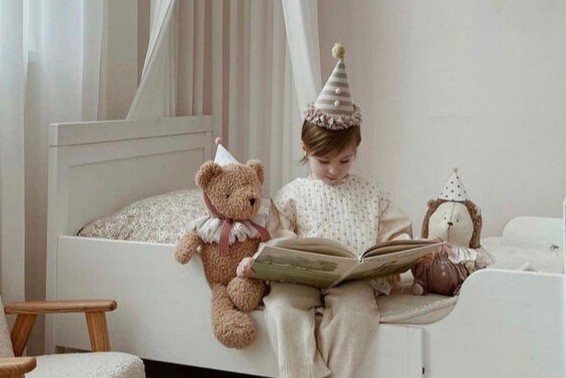
The image shows a small child with a book in a light room: white clothing, beige toys, and soft tones that barely stand out against the background. Visually, this resembles the aesthetic image, but a single photograph does not show how the family lives or what colors the child sees the rest of the time. The meme ridicules the selection and stylization of an image for the camera, not a specific child.
Where the joke's boundary lies
The technique usually exaggerates the idea that everything around must match the interior. A toy, clothing, and even a child's drawing are mentally subjected to color censorship. The humor appears where adult taste begins to look like a requirement for the child: as if an ordinary bright object could ruin a perfect frame.
The topic overlaps with parenting and public discussion of child development, so it is easy to move from a joke about a picture to unfounded accusations. A neutral palette does not automatically mean a child is forbidden from color or that they are suffering. Everyday exaggeration works better — for example, the idea that plasticine is chosen to match the sofa shade — than an assessment of real care or parenting skills. This distinction helps read the meme as satire on the pressure of perfect content on social media, not as a diagnosis of someone's parenting style.
Caption ideas for "Beige Mom"
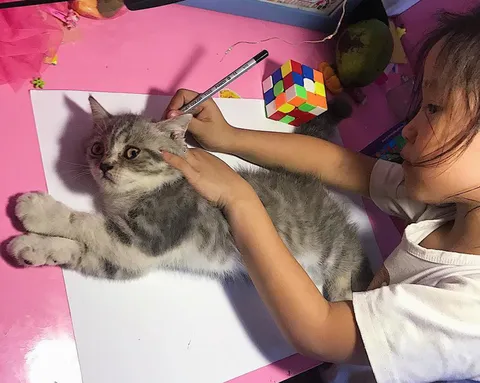
"Beige Mom buys her kid markers in the shades 'oatmeal,' 'latte,' and 'another latte.'" The joke turns a familiar set of bright markers into a palette from an adult home-decor store.
"When the toddler draws a red circle and Mom is already mentally recoloring it a warm greige." The humor lies in the collision between a child's self-expression and the picture of a room she wants to preserve.
"Beige Mom party: cake with no frosting, a sand-colored candle, and a request not to stain the napkins." The caption exaggerates the urge to control a festive picture; it suits a humorous description of the aesthetic, not condemnation of a real family.
Using it without being harsh
The meme works for conversations about interior design trends, perfectly composed photos, and the desire to hide the traces of everyday life. You can send it in response to a picture of a room where all items are in one color scheme, or joke about your own love of calm colors. Self-mockery usually sounds softer than a label pinned on a stranger.
If the joke concerns a real parent's post, do not make the child the object of ridicule or claim that living in neutral tones is harmful. A short exaggeration about toy colors helps keep the comic tone. And if the conversation about child development is genuinely important, it is better to separate it from the meme image and discuss specific facts rather than the color of walls in one photo.