Three lines in the picture
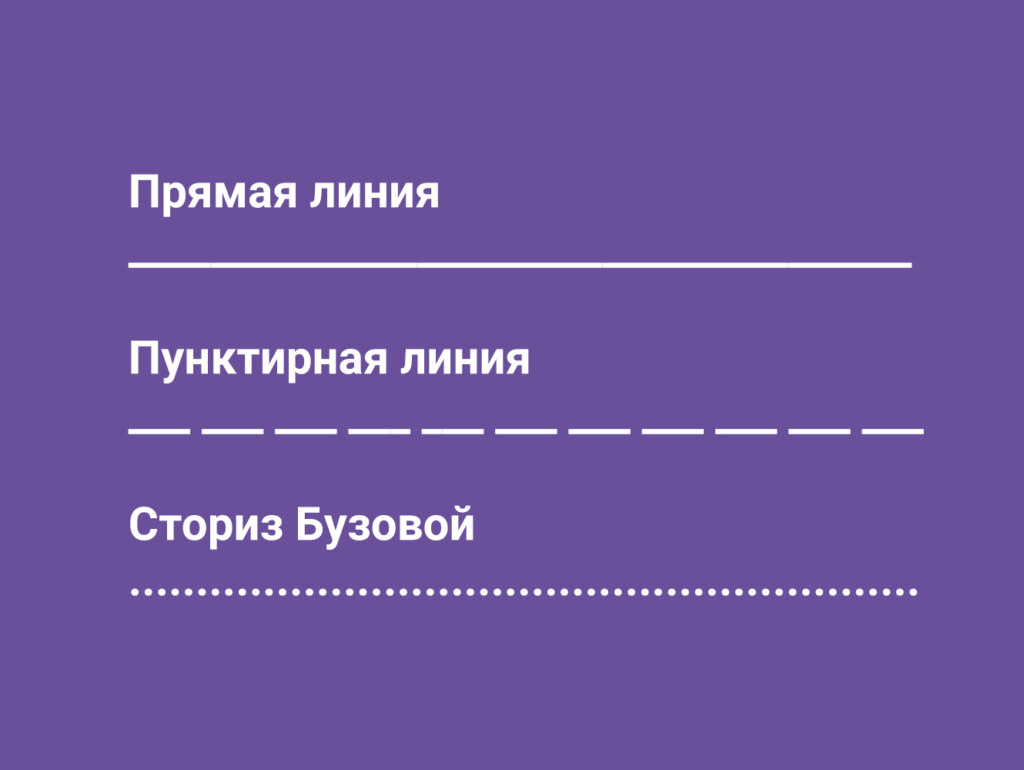
On a purple background, three captions are written in white type, with a line drawn under each. Beneath “Straight line” is a solid segment, beneath “Dotted line” a row of long dashes, and beneath “Buzova's Stories” a row of very small dots. The third caption contains the surname of Russian singer and TV host Olga Buzova, known for her active social media presence.
The construction works like a staircase: from even to ever finer. The eye immediately understands that the point is a matter of degree rather than plot, and the joke refers to the habit of posting stories often rather than to a person's private life.
Why the dotted line is funny
In story-based apps, a strip with segments is shown at the top, one segment per post. When there are few stories, it is one or two long segments; when there are many, the strip turns into tiny dots. This very image has been transferred to the picture: the more posts there are, the finer the divisions.
What is funny is that frequent behavior has been turned into geometry. The meme does not say the content is bad: it shows that a great deal of the same material fills the entire space. The solid line remains the norm, while the dashes and dots mark steps of abundance.
Where the format came from
The format is linked to late 2018; according to reports, the early examples were posted on social networks in December. The author of the format has not been established, and the exact date of the first publication remains an assumption.
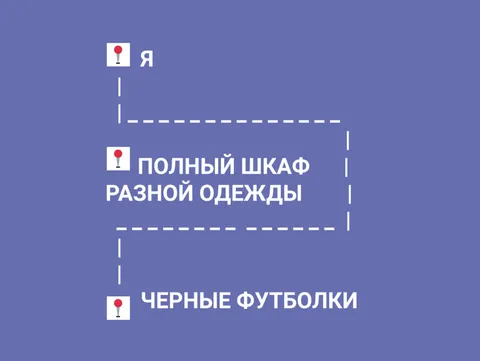
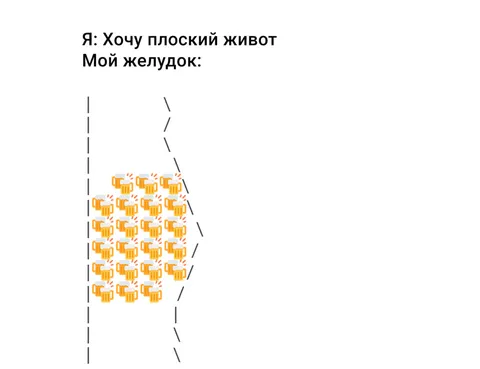
Later the “straight, dotted, dots” construction began to be used for very different topics: recaps of the year, repeated photos of pets, song quotes and everyday habits. The form moved far from its original subject because it is understandable without text: three lines of different density with a caption under each.
Example captions
Four captions written for this diagram. Each sets three levels: the expected, the additional and the excessive.
“Straight line: a review of the flights. Dotted: the weekly report. Stories: a photo of a salad.” The first two lines are ordinary, while the third shows what the feed is actually filled with.
“Straight line: coffee without sugar. Dotted: coffee with sugar. Stories: fourteen photos of the same coffee.” The number of frames is moved into the caption and becomes the main point.
“Straight line: a lecture. Dotted: notes. Stories: twenty frames of the notes from different angles.” The format works for studying too: repetition turns into a dotted line.
“Straight line: a summer vacation. Dotted: the vacation in detail. Stories: the same sunset in every frame.” The irony is built on repetition, not on judging people.
How to use it
The format suits short jokes about the feed and habits. It is best to make the third line specific, but without personal details about real people and without jabs at anyone: the staircase is what is funny, not the person.
The short contrast between the three lines works best: a long text blurs the dotted line. The format can be carried over to other topics where there is repetition, for example a shopping list, where one line means what is needed, the second means extras, and the third means what you had better not buy.