What the picture is made of
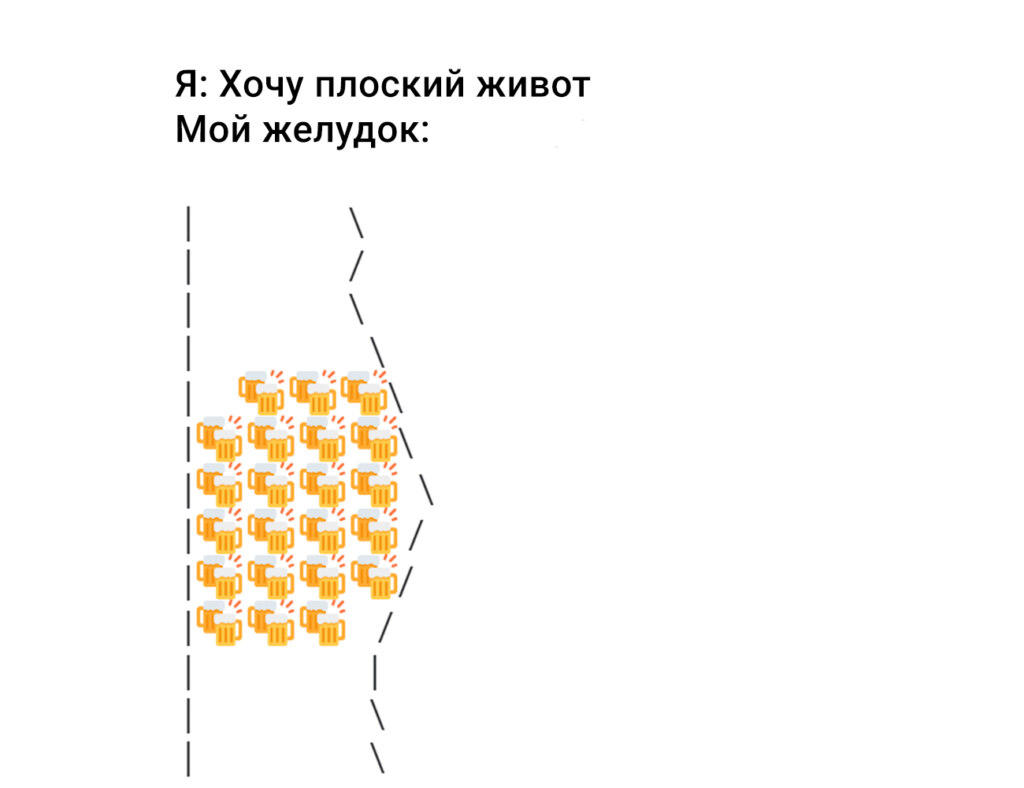
The picture is on a white background. At the top, in large black sans-serif type, it says 'Me: I want a flat stomach', with 'My stomach:' on the line below. Then a drawing made of symbols begins: on the left an even column of vertical strokes, on the right a jagged line of slanted dashes that first runs right and then comes back. The result is a belly profile: a straight line on the left, a rounded bulge on the right.
Between the lines are laid out beer-mug emojis with foam: about two dozen, six rows of three or four mugs. They fill the middle of the bulge and look like the contents that have stretched the outline. The top and bottom parts of the diagram stay empty, so the eye goes straight to the yellow mugs.
What is known about the origin of the format
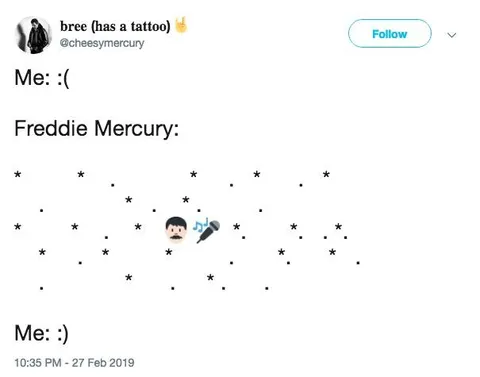
The format appeared on social media as text diagrams in which a stomach or another object is outlined with keyboard symbols and its contents are filled with emojis. Who first put together such a diagram and when it was published cannot be established: many users repeated and reworked similar pictures, so one single author cannot be named.
This version is Russian-language: captions in Russian, and the contents are chosen around the theme of nutrition. Other variants follow the same construction but swap the mugs for other emojis.
Why the joke is recognized
The laugh comes from the gap between the caption and the contents. The first line sets the ideal, the second shows what is actually inside. The text is calm and serious, while the picture parodies the charts that usually illustrate healthy habits.
The format is also very accessible: it needs only keyboard symbols and a couple of emojis, no software. That's why anyone can make their own diagram about sleep, money, work or the habit of putting things off.
Examples of captions with the same construction
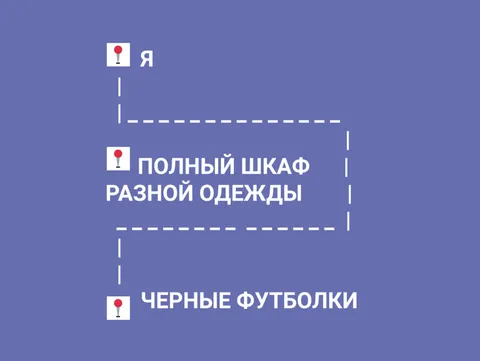
Three variants below, built on the same scheme: the ideal in the first line, reality inside the outline.
'Me: I want to get enough sleep. My phone: one more episode.' The desire for sleep against a specific habit, and the reader immediately understands who wins.
'Me: I want to save money. My wallet: food delivery.' An everyday purchase replaces beer, and the humor gets subtler.
'Me: I want to work more on the project. My to-do list: watching memes.' The self-irony rests on the promise and the behavior being clearly at odds.
Each example changes the contents, not the outline. The reader supplies the gap on their own, and the caption is needed only as a starting point.
How to adapt the diagram
It's easiest to change the contents rather than the outline: the same shape works for different habits. Inside, put only things that are genuinely recognizable, otherwise the diagram turns into a set of random symbols.
It's important not to transfer the format onto someone else's appearance: the meme works as self-irony, not as mockery of other people. The lines must match in meaning: a caption about sleep sounds good with symbols of sleep or a phone, and a caption about money with symbols of purchases. Then the joke needs no long explanation under the picture.