What the image says
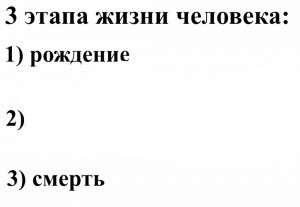
White background, bold black font, headline “3 stages of human life:”. Below are three items: “1) birth,” the second line “2)” is empty, then “3) death.” The image is simple, with no drawings or photos: all the work is done by text and the gap. The numbering sets a scheme in which each item is expected.
An empty item looks like a typing error, but in memes such gaps are almost always deliberate. The “three-step plan” frame is familiar, so the viewer starts looking for something to fill the middle with.
Origin of the template
The first known publication of this template is not established. Mentions date to both 2017 and 2019, but there is no confirmation of the first post, so any dates should be treated as approximate.
The form itself — a three-item list with a predetermined ending — resembles many ironic “plans” and “instructions” built as sequences. The template is easily transferred to any topic, so it lives longer than any single text.
Why the empty line is funnier than text
The joke works on two levels. First: life is described as a to-do list, which is ironic in itself. Second: the last item “death” puts a period, while the empty item between them offers neither peace nor an answer. The viewer expects something logical and gets a field for their own version.
The mechanism resembles a joke with a missing punchline: the mind fills the void, and the stronger the contrast between the solemn heading and the mundane middle, the funnier the answer. That is why the empty item works better than finished text.
Captions that fill the gap
Example 1: “2) Monday, which arrives sooner than you wanted.” The item deflates the pathos: instead of a big life stage, a recognizable everyday moment appears, and it is funny precisely because the register drops.
Example 2: “2) Experience nobody asked for.” The phrasing plays on the expectation of “accumulated experience” and turns it into a sarcastic verdict.
Example 3: “2) A salary discussed in the group chat rather than in the office.” The joke works as long as the form is kept and the detail is concrete.
Example 4: “2) The hope that someone will finally take the dishes away.” A domestic detail ends the list unexpectedly mundanely, and the contrast with “life stage” creates the effect.
All captions rest on one device: the item is short, in the same rhythm as “birth” and “death,” yet it lowers the scale. If the item grows into a paragraph, the gap stops being funny.
How to use the template
The template suits short comments and captions for posts. If an item takes more than two sentences, the gap loses its meaning. It is better to leave the line empty and invite the reader to write in their own version.
Do not fill the items with personal stories of specific people from other people's conversations. The template works with generalized everyday experience, which keeps it a gentle ironic form.
It is also important that the template needs no image: it can be assembled in a text chat, a post description or a comment. Since the visual part is minimal, the strength of the joke lies entirely in the rhythm of the list and the empty line in the middle. Someone writing their own version can keep the structure and change only the topic, and then the gap works again.