What's shown
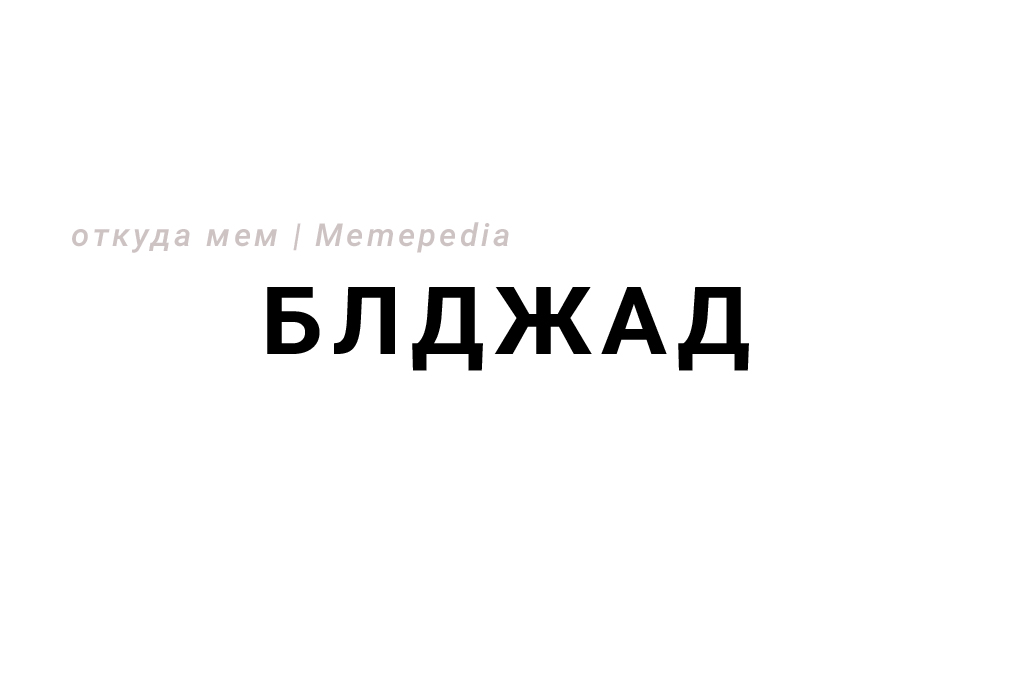
There are no characters or photographs in the image: a white background with the word "BLDZHAD" written in bold black capital letters in the center. Above it, a small light-gray typeface spells out an auxiliary label, and the whole thing looks like a strict typographic title card. This simplicity emphasizes that the meme works entirely through the word itself.
The visual element here is minimal, which is why the meme translates easily into text: there's no need to save the picture, you can just type the word in a comment. This format is typical of many language-based memes, where what matters isn't the image but the spelling.
Origin
The exact author and time of the word's appearance haven't been established. It has been seen in internet speech since 2009, though the specific first instance can't be dated.
Shortened and altered spellings of swear words have long existed in Russian, both offline and online. Writers drop vowels or swap letters to make a word look softer or to dodge automatic filters on forums and in chats. Within this tradition, "bldzhad" takes its place among similar euphemisms that arose spontaneously and spread through chat.
Researchers of Russian euphemism note that substitutions for profanity usually arise from a wish to preserve expressiveness while softening the harshness of the statement. "Bldzhad" fits this logic well.
How it's used
The typical use is in quick messages, comments, and messenger chats. The word expresses irritation, surprise, or exhaustion, but sounds less crude than the full curse word. For example, the phrase "bldzhad, everything's crashed again" conveys the same emotion, but with a touch of self-deprecating humor.
The euphemism also often functions as a joke in itself: people say it with deliberate seriousness, or, conversely, with exaggerated crudeness, emphasizing that the speaker knows the word is improper and is saying it as a kind of joke.
Why the word stuck
The word's strength lies in its phonetic awkwardness. The consonant cluster "bldzh" is unusual for Russian pronunciation and hard to say without a pause, so in speech it comes across as comical. That creates a distance between the curse word and the speaker.
On top of that, the word is convenient for writing: it's short, easy to type, and the reader understands the substitution instantly. The euphemism does double duty: it preserves the meaning while leaving room for irony. That's why it moved from chats into comments and image captions.
Place in the language
Today "bldzhad" is a recognizable element of internet speech that unites users across different platforms. It's known to anyone who communicates online a lot, and it's perceived as a marker of a certain style of chat.
Like many language-based memes, the word lives mainly in text form: it needs no picture, and its meaning is read straight from context. That makes it durable: as long as there's a need for a softened substitute for a curse word, similar forms will keep appearing.