What is visible in the picture
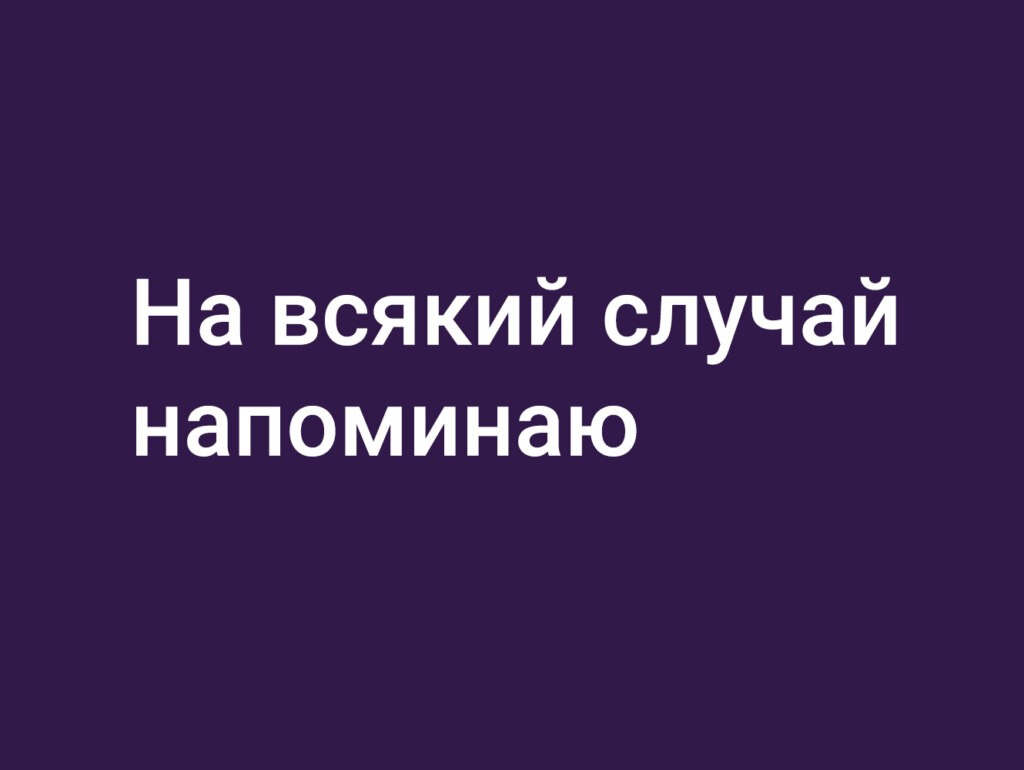
A flat dark purple background with large white sans-serif type. The phrase is set on two lines: “Just a friendly” and “reminder.” The text is left-aligned, and there is a lot of empty space around it. There are no drawings, logos, or author’s signature.
The simplicity of the design makes the picture look like a template: it is easy to drop into a comment and write the continuation yourself. The phrase is not finished in meaning, and it is in this unfinished quality that the potential for a joke lies.
Why the qualifier is there
The words “just a friendly” soften what is said. The phrase sounds like a casual disclaimer rather than a direct reproach. But the softening works in reverse here: when you remind someone of what everyone already knows, a light sarcasm appears. It is as if you are telling the other person they might have forgotten.
The scheme is simple: the introduction is polite, and what follows sounds almost like a threat or a snide remark. The contrast between tone and content is the essence of the meme.
The origin is unknown
The first appearance of the picture, its author, and its date remain unknown. The formula itself is older than the template and is freely used in speech, so it cannot be tied to a single post. Text pictures on a plain background are most often spread anonymously: they are made in a minute in any editor.
That is why this picture has no link to a single occasion: a simple text on a solid background outlives every specific situation in which it was once written.
Examples of captions
“Just a friendly reminder: you can’t judge a book by its cover, but people still do read it sometimes.” The joke leans on a well-known saying and adds an unexpected continuation.
“Just a friendly reminder: pineapple pizza is still pizza, just with character.” The polite tone collides with an eternal argument, and the contrast gets a smile.
“Just a friendly reminder: the person who argues loudly about a film has not necessarily watched it.” The surprise works: loudness is usually taken for knowledge, and the caption breaks that link.
“Just a friendly reminder: the fridge will not open with a glance.” The caption moves the formula into the everyday, and a minor annoyance sounds like an official warning.
Every example keeps a short first part, while the new subject gives the turn. The simpler the topic and the greater the distance between a serious tone and a trivial object, the more noticeable the effect.
When this picture fits
The formula suits replies to hasty conclusions: when someone in the comments judges a newcomer by their first words or declares a film bad without having watched it. The purple background and the short phrase let you say something sharper without raising your voice.
The picture is also useful in disputes about taste: where one participant is sure they know the right way, and the other simply chose a different option. A reminder does not cancel an opinion, but it shows that opinions have limits, and this often defuses tension faster than a direct answer. The joke stays harmless if the subject is a dispute about taste rather than the personality of the other person, so captions are better built around situations rather than faces.