What the picture shows
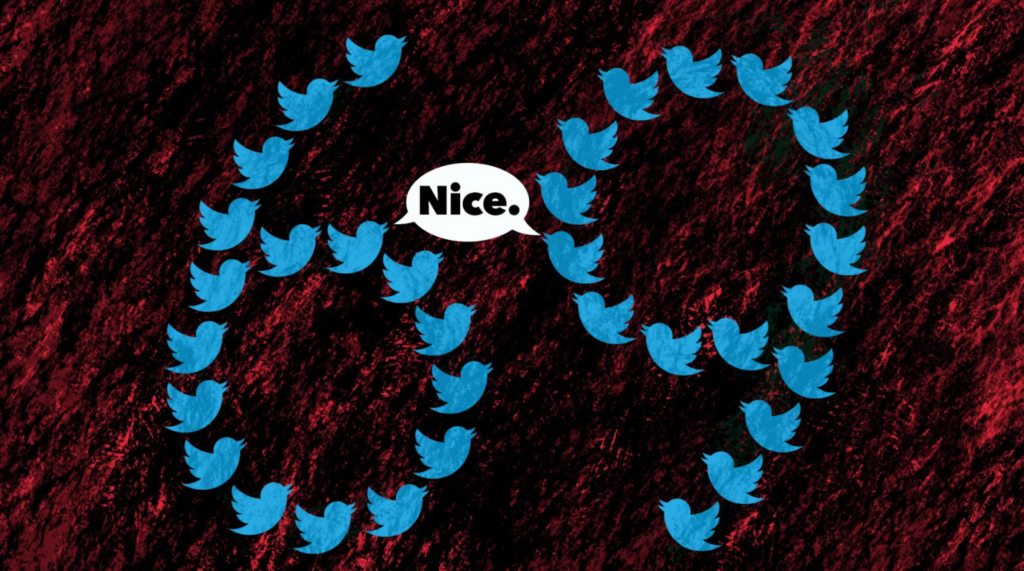
This is not a photograph but a graphic. The background is dark red with a rough scratched texture. On it, made from the blue bird logos of Twitter, are two digits, six and nine: the birds form a chain and trace the outline of each digit.
Between the digits hangs a white speech bubble with the bold black word “Nice.” and a period at the end. The bubble touches both digits, as if the remark were addressed to the number as a whole. Thanks to the period, the word sounds dry and slightly smug: the verdict has been delivered, and there is nothing to discuss.
How “Nice” stuck to the number
According to reviews of the meme’s history, the combination of “69” and “nice” began to appear online in the summer of 2008: individual early examples are known from May 30 and July 1 of that year. Whether they were the first is unknown, and the author of the joke has not been identified. One version holds that the habit of answering a suggestive phrase with “Nice” came from the American animated series South Park, but this has not been firmly proven.
On Twitter the reply is noticeable already in December 2009: a user answered “Nice” to a quote from a sports commentator in which the number 69 had been said. Gradually the answer turned into a reflex, and the number no longer needed a direct hint.
When the joke reached politicians
On May 13, 2016, Barack Obama wrote on Twitter that 69 percent of Americans want hearings on Merrick Garland’s nomination to the Supreme Court. Many people replied to the tweet with the word “Nice.”
On February 13, 2019, Donald Trump reported that according to a Gallup poll, 69 percent of citizens expected their finances to improve, and ended the tweet with the words “a 16 year high. Nice!” The coincidence was noticed at once: some called it the president’s best tweet, others joked that the number had been “cancelled.” The case showed how far the meme had traveled: the word “Nice” in serious news was already read as a line from the joke.
Why the answer seems funny
The reader expects a crude response and gets a mundane compliment. The contrast between the hint and the calm tone creates the smile. The more official the context, the stronger the effect: a report, a news story, sports statistics.
The meme relies on rhythm. The reply is almost automatic, so the picture works as a reminder of a habit rather than as a story. For the joke, the digit sign and a short remark are enough; there is no need to explain it.
Captions for your own version
1. “Quarterly revenue came to 69 million. The director’s comment: ‘Nice.’” A business report calls for a dry assessment, and the remark sounds like a reaction to a familiar joke while remaining polite.
2. “The elevator stopped on the 69th floor. Dispatcher: ‘Nice.’” An everyday and slightly alarming situation is turned into irony, and the reader supplies the calm comment themselves instead of panic.
3. “The recipe calls for 69 grams of salt. Head chef: ‘Nice.’” The number is ordinary, but the reply makes it significant. The caption explains nothing, and that is why it works.
In all three examples the scheme is the same: a neutral frame, a number, and a short reply. The shorter and calmer the remark, the sharper the contrast.
How to use the template
The picture suits any neutral situation involving the number 69. It already contains everything needed, so it is best to keep the text short. Mock the situation or the number, not a specific person: then the joke stays about the number rather than the personality.
You can also play on the meme’s own history: “The joke about 69 is more than ten years old. Nice.” This version works well where readers remember the context.