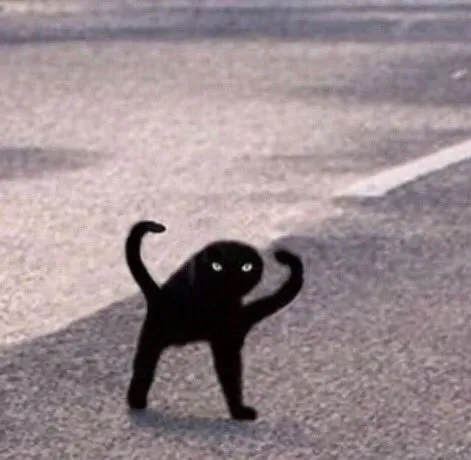
A picture from the spring 2018 wave
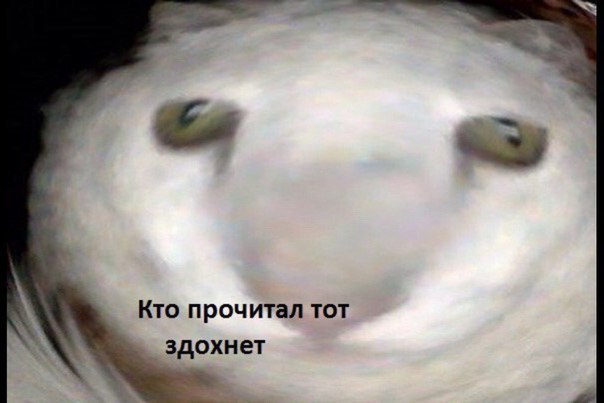
In late May 2018, the picture was actively played with by Russian-language meme pages, including FTP. By June 7 it already had a separate description as a spreading format. Variants changed the inscription, added consequences of reading it, or came up with a reply message. The name of the creator of the original picture has not been reliably established. The origin of the cat photo itself, from which this heavily altered muzzle was made, is also unknown.
Recognizability was built on a short formula reminiscent of frightening messages, in which the reader is predicted some misfortune. Here it was combined with a deliberately ridiculous image and a misspelled word. The new wave of remakes could do without any concrete story about who sent the message: it was enough to show the cat and then answer its inscription. The family therefore developed as a joke about its own contagiousness and about the viewer who unwittingly takes part in it.
A muzzle, an enlarged nose, and two lines
Almost the entire space of the picture is taken up by a white cat's muzzle. The nose is disproportionately enlarged, the eyes are spread apart, and the edges of the image are stretched and blurred. Instead of an ordinary animal portrait, we get a rounded, strange face looking straight at the viewer. In the lower part, black letters read: “Whoever reads this will die.” The text occupies two lines, and the comma after the first part is missing.
The word “здохнет”, spelled with a Cyrillic “з”, is a noticeable part of the recognizable form. Correcting it would remove one of the signs of the clumsy threat. The image does not look solemn or mystical: the enlarged nose and floating details make the cat resemble a ridiculous sender of a message. At the same time, the text is easy to read against the light fur. The viewer understands it before deciding whether they want to join the game the author proposes.
Reading becomes part of the trap
The inscription has a short causal loop. To learn the condition, a person must read the message, but the reading itself is already declared as fulfilling the condition. It is impossible to refuse in advance: the rule is revealed only at the end of the phrase. This small trap is what makes the viewer a participant in the joke. The cat does not tell of something that happened to another hero but addresses directly the one who is looking at the image right now.
In remakes, the causal link is deliberately broken or pushed to literalness. One can leave reading as the sole consequence, cancel the prediction with a counter-picture, or show a character trying to hide a message they have already seen. The absurdity is created by attributing incredible power to the ordinary act of reading text. The error and the distorted muzzle support the unserious tone. That is why the format is convenient for replying in chats: instead of a real argument, a short contest of invented rules emerges.
Invented replies to the ridiculous cat
The first invented reply shows a book closed in the middle of a page, captioned “The editor decided to finish reading the condition after lunch.” The joke depicts an impossible attempt to postpone a reading that has already happened. In a second invented variant, the cat gets the continuation “whoever saved it manages the archive.” The threat gives way to a boring duty, and the action with the picture becomes a reason for a new title. Such a twist moves the funny from disaster to a perfectly mundane result.
The third invented example is a reply image of a calm cat with the caption “Whoever reads it must pour the tea.” The two pictures seem to argue over the right to set the rules of one chat. The reply offers a new condition to the same reader and continues the game logic of the original meme. In all three cases, the main material is the address to the reader itself. The muzzle can be replaced, but without this link to the already-read message, the format's distinctive little trap disappears.