A cat in a teapot and a caption on the cup
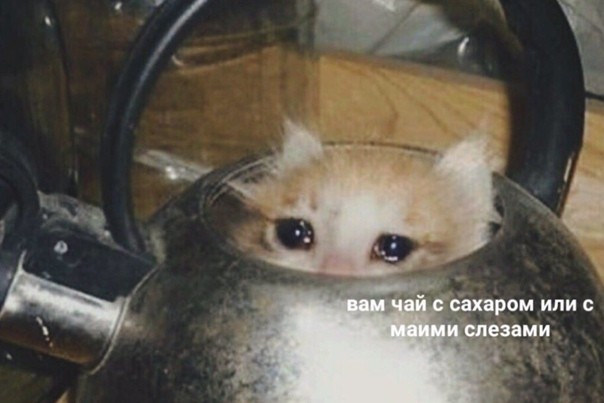
The image shows a white cat peeking out from behind the edge of a dark teapot or tea set. The shot is dim and slightly blurred; lines about tea with sugar or tears are overlaid on top. The picture lets you describe this particular version, but it's impossible to determine who photographed the cat or made the edit. There's no story of a real event visible here: the image works as a standalone joke.
The question has the familiar rhythm of hospitality — a host asking how to serve a drink. Then the expected word "sugar" collides with the overly personal and sad "my tears." The cat in the teapot turns tears into a literal ingredient and lends the image both coziness and absurdity at once.
What the original post confirms
On September 13, 2024, the account Uncle Knuckles published a clip titled "Would you like tea with sugar?" The description credits the voiceover to Uncle Knuckles; the line about the edit and the idea is left unattributed. This confirms the publication date and the voice part, but doesn't establish who took the original cat photo or made all the later images.
In the meme version, the question continues with "or with my tears?" It's delivered softly, almost caringly, even though the alternative itself sounds tragicomic. This isn't a quote from a well-known cartoon: the association with animation may arise from the expressive cat image, but it appears to be a separate short voiced post.
How a complaint became a universal line
The phrase simultaneously offers a service and announces that the speaker is about to cry. This double meaning is easy to apply to any emotion that feels too strong for an everyday occasion: tenderness, hurt, exhaustion, or sudden sympathy. Early remixes often came with photos of animals; later the question started living on its own, apart from the teapot and the cat.
In this image, the contrast between the cute face, the cozy drink, and the word "tears" is what matters. The viewer doesn't need to know the cat's biography or look for a real backstory. It's enough to see an everyday offer take on a tinge of emotional threat while being delivered tenderly.
New occasions to pull out the cup
"Would you like tea with sugar, or with my tears? I finished the last page and realized that was the finale." Here the joke comes from grief over a fictional story. "Shall I make you cocoa, or with my disappointment at the weather forecast?" — the dramatic mood is exaggerated after an ordinary everyday annoyance. "Coffee without sugar? I can add a tear for the price of coffee" — the second half turns a conversation about taste into a reaction to the cost.
These are invented examples, not lines from the original clip. They use the same structure but change the cause of the distress; it's best to pick a reason the reader will immediately recognize.
How to keep the gentle tone
The meme works better when the caption is short and the emotion is only slightly excessive. If the text sounds like a genuine, heavy complaint, the lighthearted cat may seem out of place; if the occasion is too trivial, it adds extra self-irony. You can keep the original question for recognizability, or swap the drink and the "tears" for a similar pair of words.
The image doesn't need to retell the audio exactly. For a post without sound, the caption alone carries the joke, while for a clip the soft delivery and the pause before the unexpected word matter. The cat is best described as a meme image, not attributed real feelings of sadness as an actual animal.