A chance phrase and a found drawing
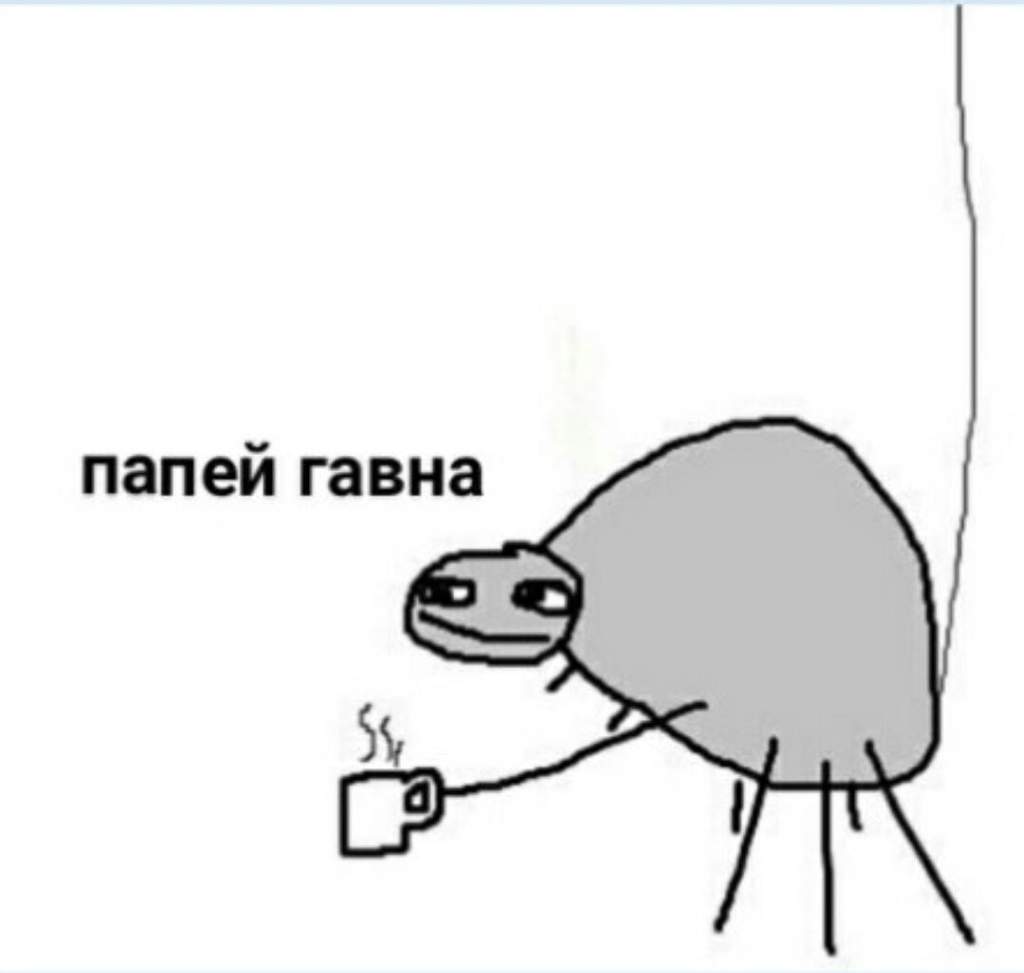
According to Danila Bryansky, the expression was born by chance in a conversation with friends on Skype. He decided to turn it into a picture and chose an already existing drawing of a spider hanging on a web with a cup. Thus a short chat dialogue acquired the visual gesture of hospitality.
Bryansky spread the picture in comments; the phrase's noticeable circulation is dated to the end of July 2018. The joke itself is simple: do not explain what is in the cup, but combine a friendly gesture with an impossible drink. Later, answers and continuations began to be added to the line.
A polite gesture spoiled by a caption
The spider offers the cup like an ordinary host. The drawing shows neither disgust nor dispute: the crude caption is delivered in a matter-of-fact way. That is why it is funny not only because of the swear word, but also because of the gesture of hospitality itself: the cup turns the obscene word into something like a menu item.
The spelling supports a conversational, deliberately helpless intonation. “Papey” and “gavna” look like a carelessly typed childish phrase. A literary correction would make it more straightforward and remove part of this intonation. The character only needs to hold out the cup; his character does not need to be filled in.
The interlocutor remains outside the drawing. Because of this, the line resembles the start of a short exchange: the spider makes an offer, and the viewer can mentally complete the answer.
In the frame itself, the caption stands to the left of the spider, while the cup is placed lower and to the left. The eye first catches the crude phrase, then notices that the spider really is offering a treat: the drawing turns the text into a small scene rather than just a string of cursing.
Replies keep the short exchange going
The variant “Papey yourself” reverses the direction: the addressee returns the offer to the sender. In another well-known remake, “well, I'm drinking it, so what,” the hero, on the contrary, accepts the offer and makes the absurd treat part of the conversation. Thus two short lines turn a single drawing into a miniature exchange of roles.
Since the picture was spread in comments, the format is easy to imagine as a reply in a chat. The cup sets the object, while the new phrase changes the attitude toward it: refusal, challenge, or deliberate agreement. This is more concrete than simply inserting a crude word into an unrelated picture.
Such variants do not require explaining what exactly is poured. The empty space in the story helps preserve the absurdity: one participant offers, and the second either refuses or accepts with composure.
Examples of new captions
Example: “After the third email from the sales department — 'papey trial period.'” The mailing becomes an intrusive treat: the spider again offers the cup, which you want to decline.
Example: “— There's a drink left that tastes like yesterday's pizza. — Papey yourself.” The reply swaps the roles, handing the dubious choice back to the one who came up with it.
Example: “A colleague proposes a fix that will break the report: 'papey decision from the intern.'” The intern is not the funny part; the joke is the confident delivery of risky advice as a useful treat, and the specifics tie the cup to the situation.