What is written and what is drawn
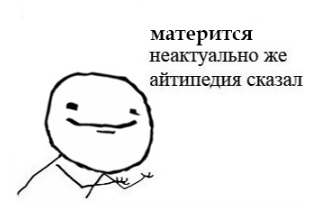
At the bottom left is a simple black-and-white character with a round head, a broad smug smirk, and a hand bent at the chest. To the right of it is text. The first line, in bold, “swears” serves as a stage direction: it tells us the character is cursing. Below, in regular type, comes the line: “It's outdated, ITpedia said.”
The result is a scene in which a confident person brushes off an interlocutor with a ready-made formula. The drawing is as simple as possible, so the template is easy to recognize and transfers to any topic.
Who ITpedia is
“ITpedia” is the name of a YouTube channel run by blogger Alexei Shevtsov. The channel is devoted to technology, the internet, and general advice. The joke doesn't require knowing the details: it is enough to understand that the character cites a source that isn't usually taken seriously.
It is important not to confuse the meme with a biography. The phrase mocks the habit of citing other people's words instead of arguments, and makes no claims about the channel author's personal life.
Origins and dates
According to reports, traces of this picture appear in autumn 2018 in Russian-language communities on the VKontakte social network. The exact date and first author are not established. Comment threads argued about who first drew the character and whether it was taken from other communities, but there is no confirmation of this.
The character itself belongs to the family of “rage comics,” where simple faces with recognizable grimaces are used for short lines. This gives the meme a clear visual language: the viewer knows in advance that this is a reaction, not a serious statement. Thanks to this, the caption can be cut to one line, and the rest is completed by the viewer, who is used to this style.
How the brush-off works
The word “outdated” cuts off the topic, and the reference to “ITpedia” turns the interlocutor into someone with nothing to say but someone else's source. People argue not about the fact but about where it came from. That is easier than analyzing arguments, which is why it looks comic.
The pose is funny too: the character doesn't prove or explain anything, but closes the question with a victorious look. The phrase works not only for tech but for fashion, rules, advice, and anything that goes out of date. It's better to aim the joke at the topic of the dispute, not at a specific person. It lands especially well in correspondence, where the interlocutor has just cited a long-outdated material: a short reply picture replaces a long explanation and immediately sets an ironic tone for the whole conversation.
Caption examples
Below are four invented captions.
“The article was written in 2014, but the author is sure nothing has changed since then.” The publication date becomes an argument against the source.
“You say this tool isn't needed anymore, and it came out last month.” A dispute about how fresh the information is, with a short answer and no breakdown.
“A three-year-old guide, and you're still quoting it.” The tone is casual, so the joke reads as a jab at an acquaintance rather than an insult.
“Checks against a video from an old compilation and announces that everything else is outdated.” The confidence resting on something outdated is what makes it funny.