What is visible in the frame
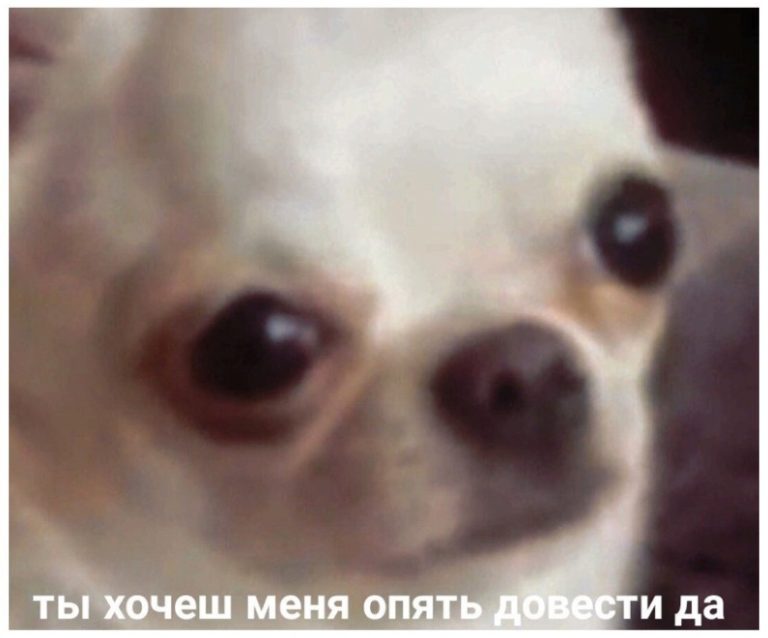
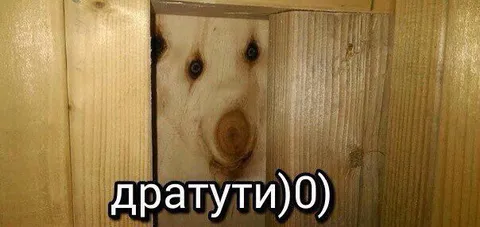
The frame is heavily enlarged and blurred: a very close view of the face of a small light dog that looks like a Chihuahua. Large dark shiny eyes, a dark nose in the middle, cream-white fur. To the right of the dog a dark background can be made out. Because of the blur, the picture looks almost like a screenshot from a video or a phone photo.
The white lettering at the bottom is colloquial and contains a typo: “you want to rile me up again, huh.” The spelling without commas and with an error makes the line sound like a live remark said under the breath. Without the caption the frame would convey only wariness; with it, a specific occasion appears.
What is known about its origin
The original source is not established: it is unknown which video the frame was taken from, who authored the original photo, or when the first version with this caption appeared. There are many similar pictures of wary and sad dogs, but a match with this particular frame cannot be confirmed.
The date also cannot be determined, so the time of emergence can only be judged indirectly: the meme appears in Russian-language collections and messages and is tied to everyday irritation. If early copies with this caption are ever found, they should be compared with each other and with the original video.
The meaning of the expression
The meme relies on a recognizable state: you are being nudged again over the same matter, you are already tired, but you keep up an outward appearance. The dog’s little face conveys restrained displeasure without aggression and without surrender. The words “rile me up again” name the source of tension, so the picture suits recurring situations rather than one-off annoyances.
There is also gentle irony here. The little animal looks as if it already knows the script. The contrast between the harmless look and the meaning of the phrase creates the humor: the dog is not really angry, so the reaction reads as a weary “well, go on, try,” not as a threat.
Caption examples and why they work
Three examples for illustration. First: “The neighbor turned on the drill at ten at night for the third time this week.” Repetition turns a trivial everyday matter into a small drama, and the dog’s grimace takes on the emotion that the caption does not need to describe.
Second: “The child asked again whether they could have one more candy, after the parent had already said no.” What matters is the sequence: the question comes again, and the dog’s look becomes the answer to it.
Third: “A friend started the conversation with: ‘I’m going to tell you one thing.’” The joke relies on anticipation: it is immediately clear that a long explanation will follow, and the reaction can be read in advance.
The general principle is one: the caption must contain a recurring trigger, and the picture adds the mood. If the trigger does not repeat, the meme looks random, and if the text tries to explain the grimace, it gets in its way.
When to use it
The picture fits conversations where the other person keeps returning to one topic, or situations where someone once again asks for something that has already been declined. The caption is best kept short, one line: a long text pulls attention from the face onto itself.
Do not send the meme as a reply that puts a specific person in an awkward position in a group chat. It is meant as a joke about a situation, not as a way to publicly expose an interlocutor. Used that way, it remains a light reaction to a familiar irritation.