What is shown in the frame
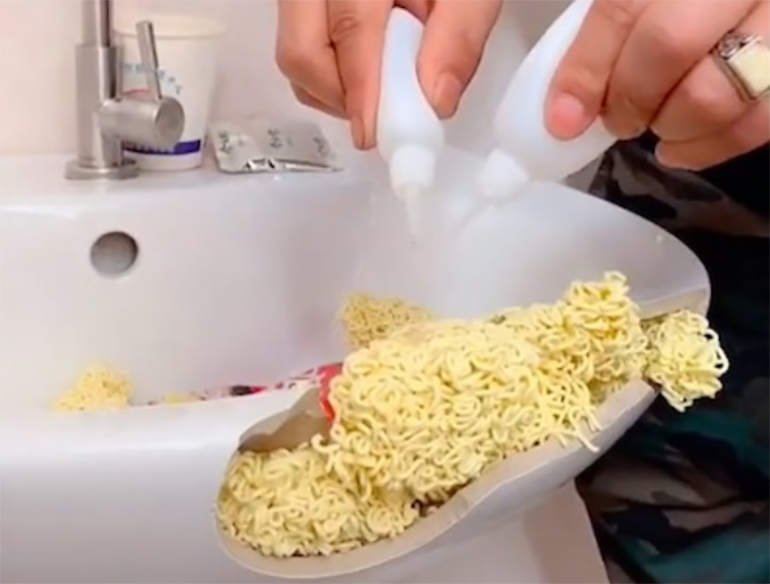
The frame shows a white sink with a tap in the upper left corner; nearby, on the edge, lie a plastic cup and a foil package. From above, two hands hold white plastic bottles with narrow nozzles, similar to glue bottles, and squeeze their contents out. One hand wears a ring. Beside it is the dark camouflage fabric of a sleeve.
The sink in the foreground is broken: its edge is chipped. Into this gap is piled a heap of yellow instant noodles, and some strands also lie on the sink itself. The noodles are working here as a patch, not as food. The frame shows a stage of the process rather than the result, so the viewer sees only the start of the “repair.”
How the series of “Fixes” appeared
The videos in which things are fixed with noodles and glue spread in 2019, and the source is usually traced to a video from China. Who exactly filmed them does not matter for the topic, and the author's name is not given here. The exact date of the first video and the order in which the others appeared remain unestablished, so the earliest video cannot be named with confidence.
The principle is the same in all the clips: a household breakage is shown to the camera, then an unexpected material is taken and shown “holding.” The noodles work well because they look obviously unfit for repair, and the viewer immediately expects a failure. In compilations of funny “life hacks,” such videos quickly spread across social networks and turned into templates.
What the joke is about
The comedy comes from the combination of the serious tone of an instruction and absurd material. The videos look like tutorials, but the result almost always remains in doubt, and it is this uncertainty that becomes the reason for jokes.
Related compilations of unsuccessful homemade modifications exist in the English-speaking internet under the common name “DIY fails.” The noodle meme is close to them in mood: food that is fit for neither glue nor support ends up in the role of a serious tool. The caption usually adds a confident household comment, and the contrast becomes even sharper.
Four captions for the template
The examples are built on the theme of homemade repair, and each addresses the noodles in its own way.
“The table broke, and the only spare parts are glue and noodles. The warranty lasts until the first draft.” The businesslike tone and the limited resources together create everyday irony.
“The engineering department checked the load: three cans of canned food and everything else is held up by noodles.” The caption turns the frame into an official memo and places the absurd claim in a formal context.
“How to fix a laptop: first noodles, then glue, then silence.” The list of steps looks like an instruction, but the last step hints that the result is dubious.
“Don't tell the guests that the shelf is held up by noodles.” The joke is built on a secret: the caption pretends the viewer has uncovered a mystery, and this device usually works better than a direct description.
How to use the template
The frame suits posts about failed repairs and homemade solutions. A short caption works better than a long one: a single phrase with an unexpected turn is usually stronger than a paragraph of explanation. It works well when the text carries the calm confidence of a craftsman who knows exactly what he is doing.
Do not use the meme to mock real people who have suffered from a failed repair, or the joke shifts onto someone else's misfortune. It is better to joke about the idea itself rather than about a specific person.